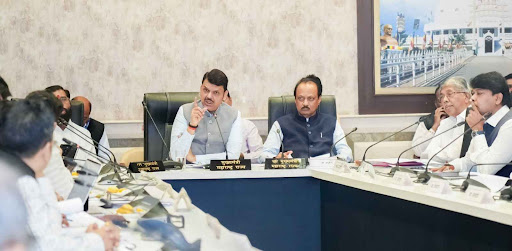
The Maharashtra government has approved a revised investment plan to expand sewage treatment capacity across 27 rapidly developing villages within the Pune Metropolitan Region, signalling a renewed push to upgrade essential urban infrastructure and improve environmental outcomes for nearly four million residents. The decision, taken at the latest meeting of the regional development authority, reflects the state’s effort to address the pressures of rapid urbanisation and strengthen long-term resilience in the metropolitan area.
The Pune Metropolitan Region Development Authority (PMRDA), which spans 697 villages across nine talukas, has emerged as one of India’s fastest-growing urban clusters. Officials at the meeting noted that the revised outlay for sewage infrastructure is intended to support settlements currently lacking adequate treatment systems, thereby reducing pollution loads on downstream rivers. An official present at the meeting said the expanded programme would “provide cleaner water, healthier neighbourhoods and a more balanced urbanisation pattern,” especially in peri-urban pockets where development has outpaced civic provisioning.
Alongside water management, the government reviewed ongoing township and growth-planning initiatives. Twenty-three villages that were merged with the Pune Municipal Corporation in 2021 will now be integrated into the city’s formal planning framework, a shift that urban planners say could enable more coherent transport, housing and environmental strategies. The meeting also discussed a proposal to prepare a dedicated Growth Hub plan through the state’s transformation institution, aimed at guiding land use and economic activity in a more structured manner. The state leadership raised concerns about delayed township schemes, particularly the Man–Mahalunge project and 15 other integrated township plans.
Calling for faster execution, a senior policymaker emphasised that predictable timelines are critical for investor confidence, citizen services and the overall sustainability of high-density developments. Industry experts noted that township projects could become models for low-carbon, mixed-use neighbourhoods if anchored in green mobility, water recycling and inclusive public space planning. The review meeting also assessed a wide portfolio of regional works collectively worth over Rs 32,000 crore. These include major river rejuvenation projects for the Pavana, Indrayani, Mula and Mutha, traffic decongestion interventions, tourism nodes and new multimodal hubs intended to improve accessibility for a growing workforce. A proposed 20-km tunnel linking Yerawada and Katraj, currently under feasibility study, is one of the more ambitious transport concepts aimed at reducing vehicular congestion and emissions.
The government further called for better fire preparedness, noting that over Rs 300 crore collected in service charges must be directed towards a city-wide mitigation plan. Attention was also drawn to recurring accidents near Navale Bridge, prompting instructions to develop a parallel service road along the highway. Officials stressed that the success of these initiatives will depend on coordinated governance, transparent timelines and a commitment to equitable urban development. As the region continues to expand, planners argue that embedding sustainability, safety and inclusivity into the infrastructure pipeline will be crucial for shaping a resilient metropolitan future.
Pune Steps Up Rs 1209 Crore Infrastructure Push Across 27 Villages Regionwide