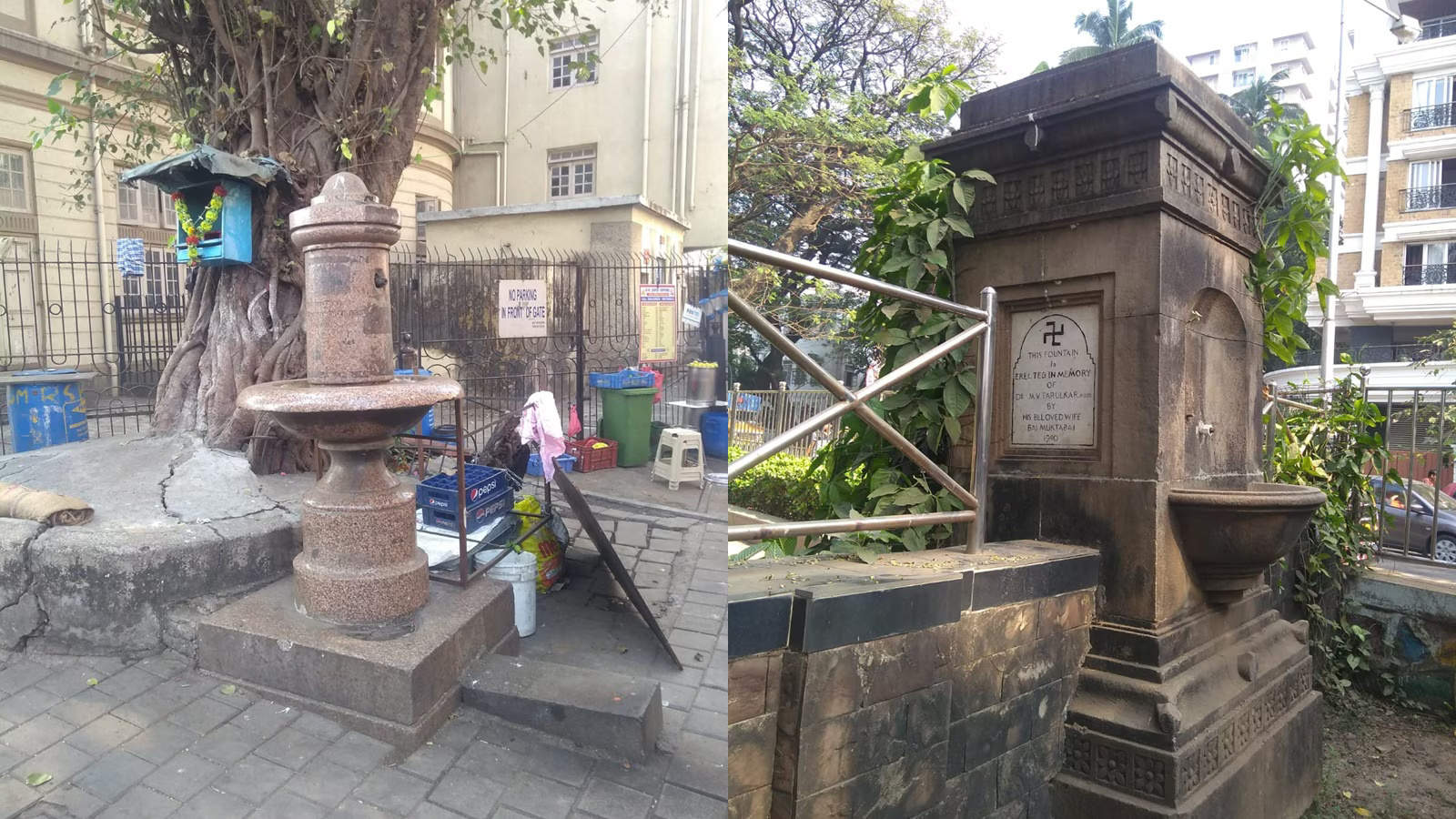
Mumbai’s civic administration has initiated a fresh heritage-conservation push by inviting bids for the restoration and landscaping of 17 British-era public drinking fountains scattered across the city. The initiative, valued at around ₹16.35 crore, aims to revive the pyaavs—ornamental water dispensers built more than a century ago—as functional and culturally significant public assets over an 18-month period.
The structures, mostly erected between the late 19th and early 20th centuries, once served as essential community water points. A civic official noted that these fountains were envisioned as acts of philanthropy, often installed in the memory of family members and designed to supply clean drinking water round the clock. Their intricate stonework and distinct architectural styles have since become markers of Mumbai’s layered history, though years of neglect and rapid urbanisation have left many in need of structural care. According to officials overseeing the heritage portfolio, the restoration will include structural repairs, cleaning, mechanical upgrades, and the integration of adaptive public-use features. Landscaping will be carried out around each fountain to create safe and accessible micro-public spaces. The official added that the project aligns with global practices where historic water infrastructure is repurposed to support inclusive and climate-sensitive urban design.
Urban planners observe that Mumbai’s return to neighbourhood-scale water points reflects a growing interest in decentralised infrastructure that improves resilience in dense urban environments. While the fountains may no longer serve as primary water sources, experts argue that they can symbolically reconnect the city with sustainable public utility traditions. The addition of shaded seating, improved lighting, and pedestrian-friendly edges is expected to reinforce the precincts as sociable public spaces, particularly in areas underserved by open spaces. The initiative also fits within the city’s broader efforts to strengthen its heritage management strategy. Many of the pyaavs are protected structures listed under heritage regulations, and a coordinated restoration is expected to enhance their longevity while avoiding piecemeal interventions. Civic engineers involved in the tender process said that the selected contractor would be required to follow conservation protocols, use context-appropriate materials, and consult with heritage architects during each phase.
For residents, the revival of the pyaavs offers both functional and emotional value. Citizens’ groups that have long advocated for the preservation of historic neighbourhood assets view the move as an opportunity to reimagine public infrastructure with a community-oriented vision. The enhanced landscaping is designed to offer accessible spaces for rest, shade, and social interaction—critical for a city with limited walkable public areas. As Mumbai continues to adapt its heritage to contemporary needs, the pyaav restoration programme highlights the potential for older infrastructure to support future-facing goals: equitable access to shared spaces, sustainable cultural tourism, and a more human-scaled urban fabric.
BMC Launches Restoration Drive For Seventeen British Era Fountains Across Mumbai