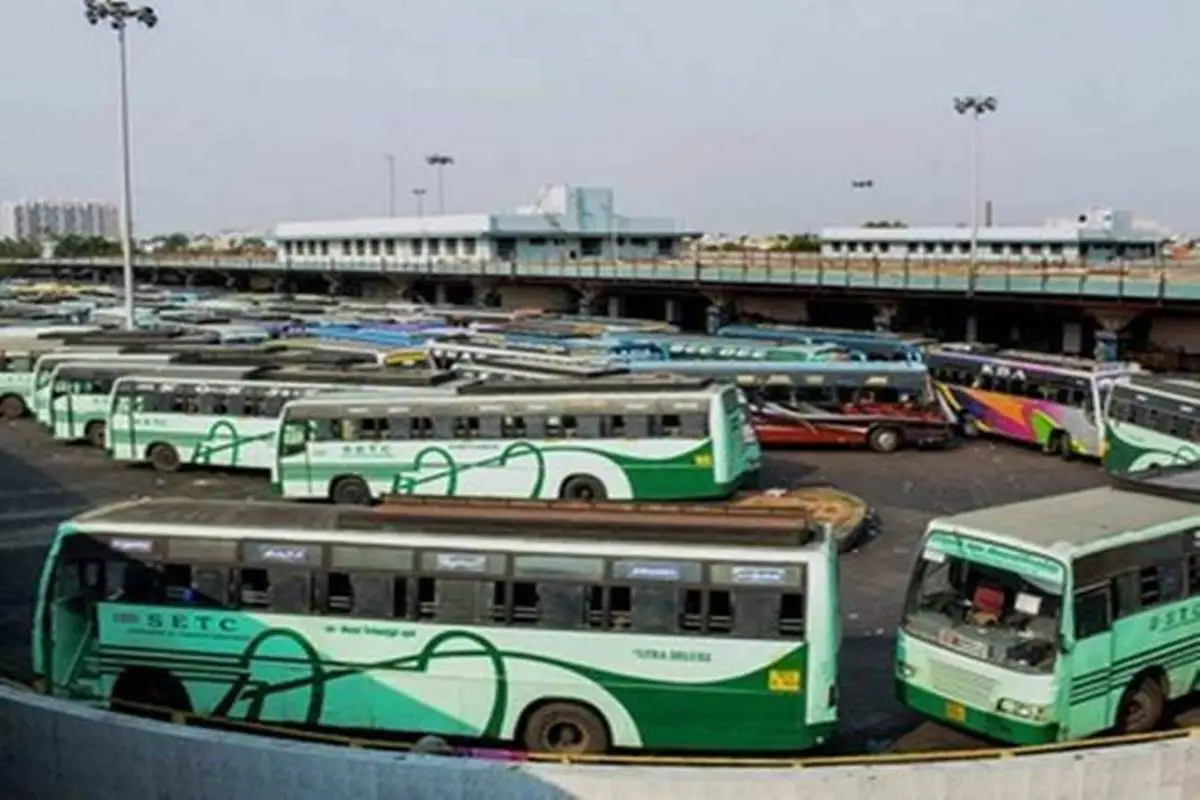
Tamil Nadu Transport Growth Blocked By Delays
Railway expansion across Tamil Nadu has run into significant delays, with the Union government attributing the slowdown primarily to the state’s sluggish land acquisition process. The setbacks are affecting several key projects aimed at improving regional mobility, connectivity to underserved districts and long-term shifts towards cleaner, low-carbon transport infrastructure.
According to details shared by the Union Railway Minister in Parliament, Tamil Nadu currently requires 4,326 hectares of land to execute its ongoing railway works. However, the state has managed to transfer only 1,052 hectares, or 24 per cent, leaving nearly three-quarters of the requirement pending. Officials noted that while funding and technical clearances are in place, work cannot proceed without the land parcels that local authorities must secure. Over the last three financial years, the Centre sanctioned 28 surveys for new lines and doubling projects covering 2,493 kilometres in Tamil Nadu. Yet, progress on many of these schemes has remained limited. Industry experts say this creates long-term challenges not only for passenger accessibility but also for achieving climate-conscious mobility outcomes in a state that records high inter-district travel volumes. “Railways are central to reducing road congestion and emissions, but timelines depend on coordinated state action,” an urban transport planner observed.
Several new lines—including the Morappur–Dharmapuri (36 km), Mannargudi–Pattukottai (41 km) and Thanjavur–Pattukottai (52 km) stretches—require substantial land parcels that remain to be acquired. The situation is similar for the Rameswaram–Dhanushkodi line, sanctioned in 2019 at a cost exceeding ₹730 crore, which has yet to begin despite the foundation stone being laid years ago. Officials say the state’s non-initiation of land processes has kept the project in limbo. Budgetary support from the Centre has sharply increased over the last decade. Annual allocations for the state stood at roughly ₹880 crore between 2009 and 2014; this figure has risen to over ₹6,600 crore in 2025–26. As of April 2025, Tamil Nadu has 15 sanctioned projects spanning 1,700 kilometres, with 665 kilometres already commissioned and over ₹7,590 crore spent. Yet, the minister emphasised that financial backing alone cannot compensate for administrative bottlenecks at the state and district levels.
A separate proposal the Chennai–Cuddalore line via Mahabalipura has also slowed following Puducherry’s request for a revised alignment and doubling of an adjoining stretch. With the Union Territory unable to bear the additional cost of its proposed changes, the plan remains stalled. For Tamil Nadu’s cities and districts, the delays mean prolonged dependence on road-based travel, which worsens congestion, raises emissions and limits mobility for women, students and lower-income communities. Urban policy experts suggest that a more coordinated state Centre approach, along with transparent land acquisition practices, could accelerate delivery while supporting a transition towards equitable, low-carbon regional transport.
Tamil Nadu Transport Growth Blocked By Delays