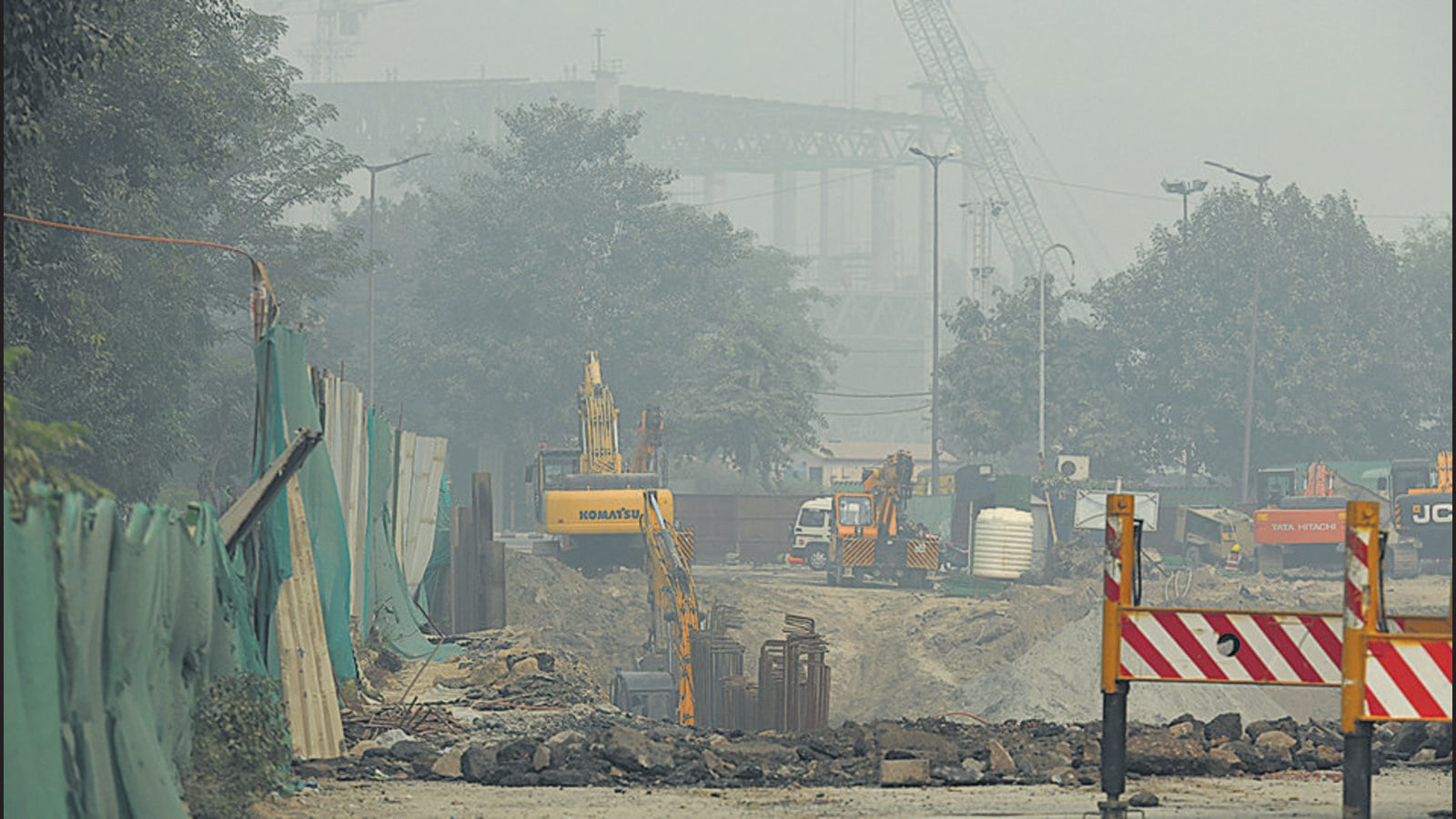
Delhi has initiated a renewed crackdown on unauthorised roadside construction material shops as part of its wider effort to control persistent dust pollution across the Capital. The Delhi Pollution Control Committee (DPCC) has issued directives for the immediate removal of informal vendors stocking and selling construction and demolition (C&D) materials in the open—an activity repeatedly flagged as a major contributor to particulate matter levels.
The move seeks to align city agencies with national clean-air frameworks and strengthen enforcement during another season of poor air quality. The order, issued under the Air (Prevention and Control of Pollution) Act, comes after years of instructions from the Supreme Court, the National Green Tribunal and the Commission for Air Quality Management (CAQM). Officials stated that despite these directions, roadside dumping and trading of sand, gravel, cement, stones and similar materials continued to flourish in several neighbourhoods. “The unchecked handling of loose materials remains a persistent source of fugitive dust,” a DPCC official said, adding that the latest order pushes agencies towards stricter and sustained compliance.
Under the directive, no vendor will be permitted to store, transport or sell building materials in the open or without proper covering. Local bodies have also been instructed to clear all encroachments on pavements, footpaths and other public land used for material stocking. Urban planners note that this intervention, though not new, signifies a shift towards stronger enforcement critical for cities aiming for cleaner, healthier and more inclusive urban environments. In parallel, CAQM’s flying squads conducted fresh inspections across the city to assess dust accumulation on key arterial and secondary roads. Of the 79 stretches inspected managed by various public agencies including the Delhi Metro Rail Corporation, the Delhi Development Authority, and the state industrial development corporation nearly one in five displayed high levels of visible dust. A further 36 stretches showed moderate accumulation. Only a small fraction met the expectation of visibly clean surfaces. A senior CAQM representative said the findings underscore the need for continued vigilance and regular mechanised cleaning.
Officials noted that a re-inspection of areas under the city’s municipal agencies showed a 50% reduction in high-intensity dust compared to earlier rounds, indicating partial improvements where compliance had been enforced. Environmental experts say that consistent monitoring is essential, given that road dust contributes significantly to PM10 and PM2.5 concentrations and disproportionately affects lower-income communities living closer to busy corridors.
Meanwhile, DPCC has also raised concerns about renewed encroachments in the Mayapuri Industrial Area, where open dismantling of vehicles and unregulated storage of spare parts had earlier been identified as another source of pollution. In its latest submission to the tribunal, the agency noted the return of several violations, reinforcing the need for continuous monitoring rather than short-lived enforcement bursts.As Delhi continues its fight for cleaner air, the current drive reflects both the complexity of urban pollution and the administrative resolve required to build healthier, more equitable cities. Ensuring compliance across agencies, vendors and industrial clusters will be central to achieving long-term progress.
Delhi Orders Removal Of Roadside Construction Material Shops To Reduce Dust Pollution