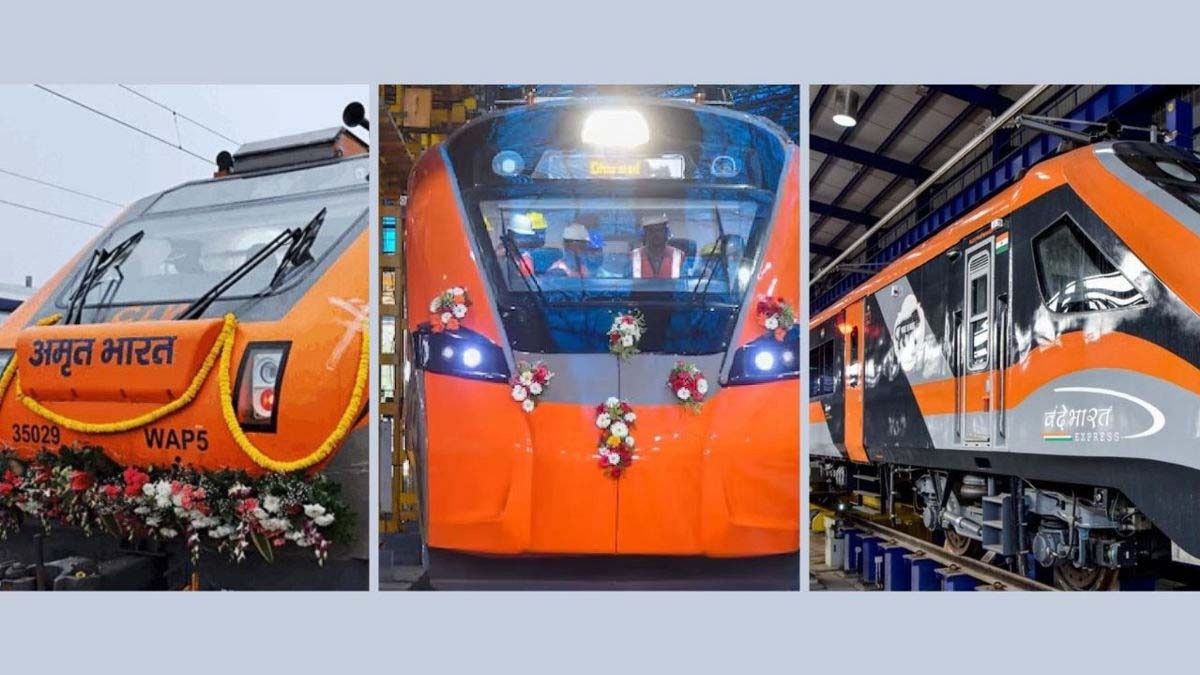
India’s long-distance rail travel is set for a significant upgrade as the first Vande Bharat Sleeper service prepares to commence operations between Patna and New Delhi this month. Designed for high-speed overnight mobility, the new service aims to combine quicker journeys with enhanced comfort, offering passengers a premium alternative on one of North India’s busiest corridors.
Developed by the state-owned manufacturer in Bengaluru, the initial train set is in the final stages of commissioning and is expected to begin trial operations shortly. According to railway officials, the service is designed to complete the 1,000-km journey in roughly eight hours, bringing a marked improvement over existing travel times. Once cleared for commercial operations, the train is expected to run six days a week in both directions. Railway planners describe the sleeper edition as a response to rising demand for comfortable overnight travel, especially on intercity routes where air travel remains either cost-prohibitive or operationally constrained. “This is part of the broader modernisation strategy to offer safer, faster and more inclusive rail options,” an official involved in the rollout said. The government has already deployed more than 160 Vande Bharat services across the country, though all previous versions were chair-car configurations.
The sleeper variant features 16 coaches accommodating 827 passengers, with separate sections for First AC, Second AC and Third AC travellers. Officials highlight that the interiors are designed to replicate a hotel-like ambience, with features such as contactless washrooms, improved ladders for upper berths, reading lights with USB charging, and a dedicated hot-water facility in premium cabins. The addition of accessible berths and toilets aims to improve comfort for older adults and passengers with reduced mobility an element increasingly prioritised as India works towards more inclusive transport ecosystems.
Safety has also received significant attention. The train is equipped with the indigenous KAVACH anti-collision system, coach-wide CCTV coverage, automated doors and emergency communication units. Engineers involved in the testing claim the upgraded suspension system ensures a stable ride even at its operational speed of 160 km/h. A railway official noted that the improved acceleration and braking would reduce time lost during deceleration at stations, further contributing to quicker end-to-end travel.
Industry experts view the launch as a step towards creating cleaner and more energy-efficient mobility solutions for Indian cities and their surrounding regions. Faster, reliable overnight services can reduce dependence on short-haul flights, contributing to lower emissions while offering a more accessible mode of travel. If successful, similar sleeper services are expected to be extended to other long-distance routes, creating a network of intercity connections that support sustainable transport ambitions. As the trial runs now approach, the Patna–Delhi Vande Bharat Sleeper stands poised to redefine long-distance rail travel with a blend of speed, comfort and inclusive design aligning with India’s evolving vision for high-quality public transport.
Delhi Patna Vande Bharat Sleeper Covers 1000 Km In Just Eight Hours