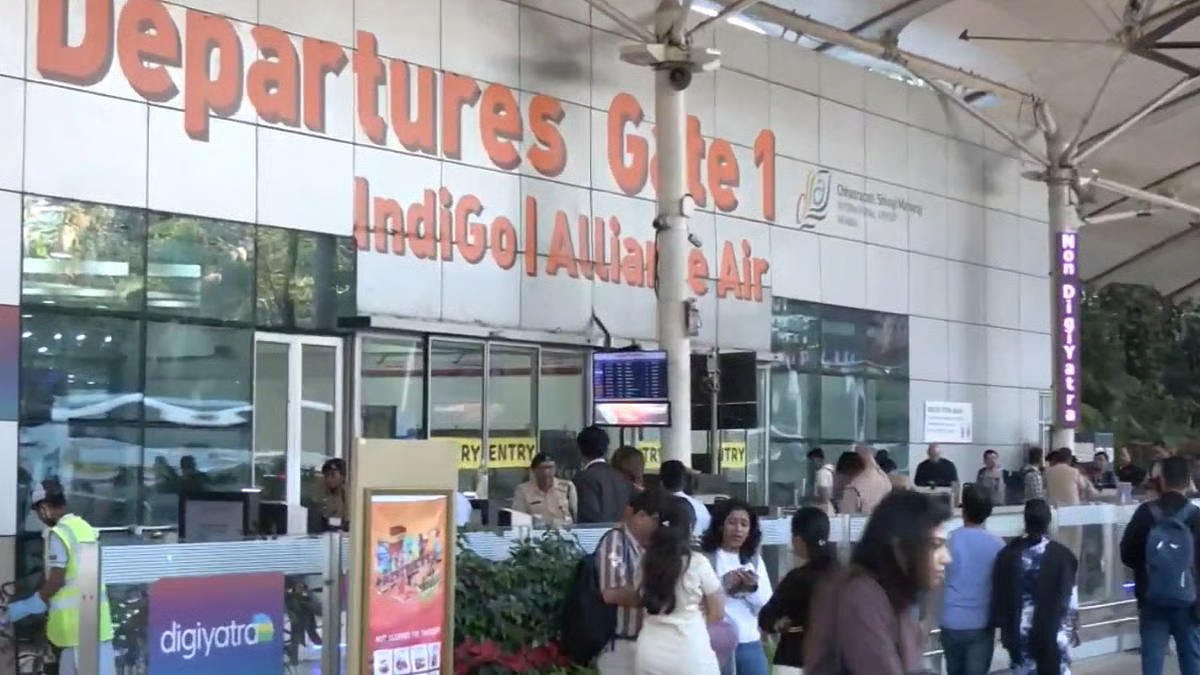
Mumbai’s air travel network remained in turmoil on Tuesday as the nationwide IndiGo operational crisis entered its eighth consecutive day, creating large-scale flight cancellations and stranding passengers across the city. Chhatrapati Shivaji Maharaj International Airport, one of the airline’s busiest hubs, recorded 31 cancellations by morning, including 14 arrivals and 17 departures. The disruptions compounded commuter uncertainty during peak hours, with long queues and repeated rescheduling announcements.
Across India, over 200 IndiGo flights were cancelled today, affecting major airports in Bengaluru, Hyderabad, Chennai, and Kerala. While the crisis is nationwide, Mumbai’s heavy reliance on the carrier for both business and leisure travel has amplified local disruptions, highlighting the city’s vulnerability to airline operational shocks. A senior airport official noted that passengers were increasingly frustrated by last-minute cancellations and limited alternative options. Industry experts attribute the crisis to the airline’s struggle to implement India’s revised Flight Duty Time Limitations (FDTL), introduced in November to reduce pilot fatigue and mandate extended rest periods. IndiGo has reportedly faced challenges aligning these requirements with an ongoing pilot shortage, creating a bottleneck in crew scheduling that directly impacted flight operations. A regulatory source confirmed that the Directorate General of Civil Aviation (DGCA) temporarily eased certain night-duty and rest requirements to stabilise operations and allow emergency rostering flexibility.
The operational breakdown has sparked criticism from government and aviation stakeholders. The Civil Aviation Minister highlighted that IndiGo had not communicated impending operational challenges prior to the crisis, stressing that internal planning deficiencies were the primary cause rather than regulatory changes. In response, the government has opted to curtail IndiGo’s winter schedule, redistributing certain routes to other carriers to mitigate passenger inconvenience. For Mumbai, the ongoing cancellations have economic and social implications. Frequent business travellers, air cargo operators, and tourism-dependent services have been particularly affected, underscoring the broader connectivity risks posed by single-carrier dependency. Urban mobility analysts suggest that diversifying airline options and enhancing contingency planning at major hubs could reduce such systemic vulnerabilities in future.
As IndiGo works to restructure crew rosters and restore operational stability, the crisis remains a cautionary tale for Mumbai’s transport ecosystem. Airports and regulators are monitoring the situation closely, ensuring passenger safety while seeking to minimise long-term disruption to India’s busiest domestic travel corridors.
IndiGo Flight Crisis Hits Mumbai Hard With Over 30 Cancellations Today