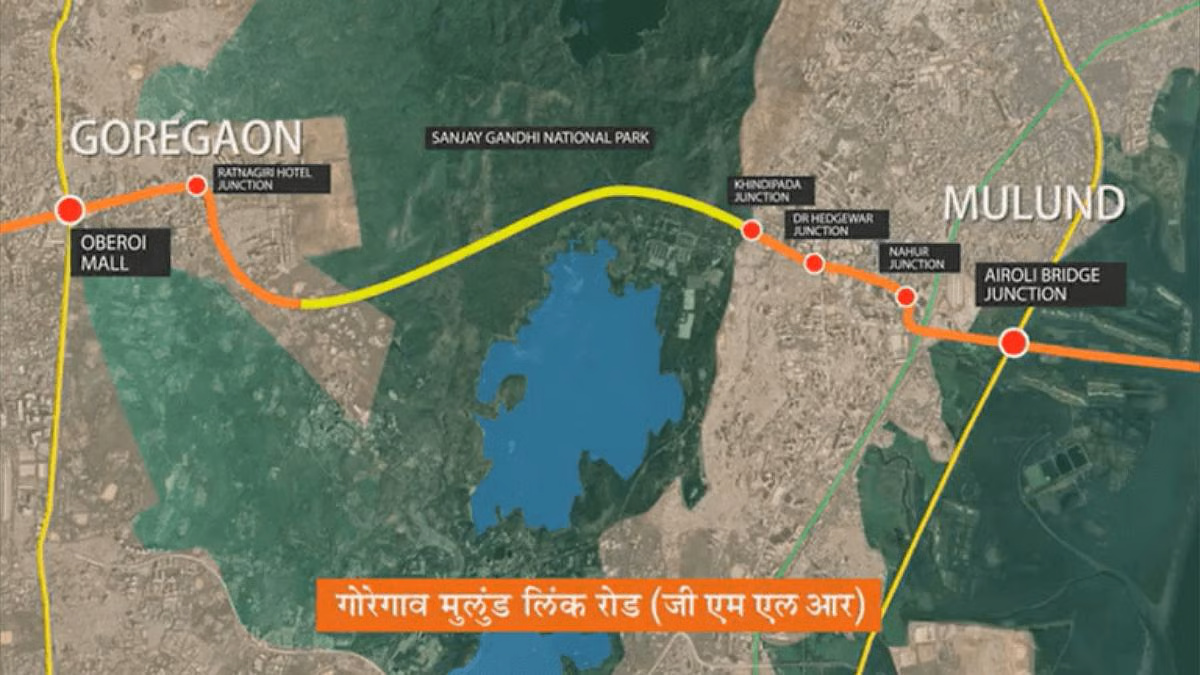
Mumbai’s ambitious Goregaon–Mulund Link Road (GMLR) project has encountered another setback, with the municipal administration imposing a penalty of over ₹2 crore on the contractor responsible for Phase 3 works and extending the project timeline by nearly a year. The decision reflects growing concern over execution delays affecting one of the city’s key east–west mobility corridors, which is expected to improve access while reducing congestion and emissions once completed.
According to officials, the fine was levied after repeated slippages in construction milestones, particularly on the western stretch where a six-lane flyover was earlier scheduled to be ready by July 2025. The latest projections now indicate the structure may open only by May 2026. On the eastern side, only one arm of the Mulund flyover is expected to be operational within the same period, with the remaining sections requiring additional months due to unresolved bottlenecks. The civic body noted that delays stem primarily from utility diversions and right-of-way constraints around the Mulund junction, including water pipelines and longstanding encroachments. While such challenges are common in dense urban environments, officials acknowledged that inadequate on-site coordination and slow mobilisation compounded the timeline pressures. A senior project engineer said penalties recovered recently covered lapses across July and August, and further action would follow if progress remained unsatisfactory.
The broader package, which includes the flyovers, elevated rotary, and an upcoming cable-stayed bridge, carries a combined cost of over ₹700 crore. Once completed, it is expected to offer motorists a seamless route connecting Dindoshi, Sanjay Gandhi National Park and, later, the underground tunnels forming the core of Phase 3. Urban mobility specialists argue that the corridor forms a critical piece of Mumbai’s long-term efforts to create low-emission, efficient transport networks that reduce reliance on longer, more congested routes. However, the project has drawn criticism from local representatives who argue that the delays and quality concerns are having a direct impact on residents. A legislator from the area claimed that lapses in housekeeping, safety compliance and construction quality had contributed to deteriorating air conditions in parts of Mulund. The representative also pointed to nearly 100 recorded violations along a two-kilometre inspection stretch, despite multiple notices and smaller fines already issued to the contractor.
Infrastructure experts caution that while stringent oversight is essential, persistent adversarial action can risk slowing work further. They recommend improved coordination between service utilities, community engagement to address encroachments and more transparent progress reporting. These measures, they say, could help Mumbai deliver large-scale mobility projects while aligning with broader goals of sustainable and equitable urban development. For residents of the eastern suburbs, the extended delay means a longer wait for smoother and safer connectivity. Yet officials maintain that once the corridor is completed, it will offer significant long-term mobility benefits, reduce travel time and support a more climate-resilient transport ecosystem for the city.
BMC Penalises Contractor Rs 2.09 Crore As GMLR Flyover Faces 2026 Delay