Ramgarh Coal Action Highlights Safety And Governance Gaps
Odisha is rapidly becoming a focal point in India’s mining supercycle, propelled by growing coal mining operations and strategic expansions in ferrochrome production. Industry leaders like IMFA are scaling smelting capacity while adopting renewable energy solutions, and coal mining projects are simultaneously increasing output to supply steel and energy sectors. These developments mark a shift towards securing critical minerals and fortifying India’s industrial self-reliance.
The National Critical Mineral Mission, with an allocation of nearly ₹163 billion, underpins this momentum. Designed to ensure access to minerals essential for clean energy, advanced manufacturing, defence, and electronics, the programme addresses India’s historical dependence on imports. “Strategic expansion in mineral production is now tightly linked to national industrial priorities,” an industry official noted, highlighting the policy-driven push towards domestic self-sufficiency.IMFA, Odisha’s leading integrated ferrochrome producer, exemplifies this trend. The company operates captive chromite mines at Sukinda and Mahagiri, generating over 700,000 tonnes of ore in FY25. Its smelting facilities in Therubali and Choudwar offer a combined annual capacity of 284,000 tonnes. IMFA is expanding further with a greenfield Kalinganagar project adding 100,000 tonnes and acquiring Tata Steel’s ferrochrome plant for ₹6.1 billion, lifting total capacity to 534,000 tonnes. International sales account for more than 90% of output, underscoring India’s growing export potential.
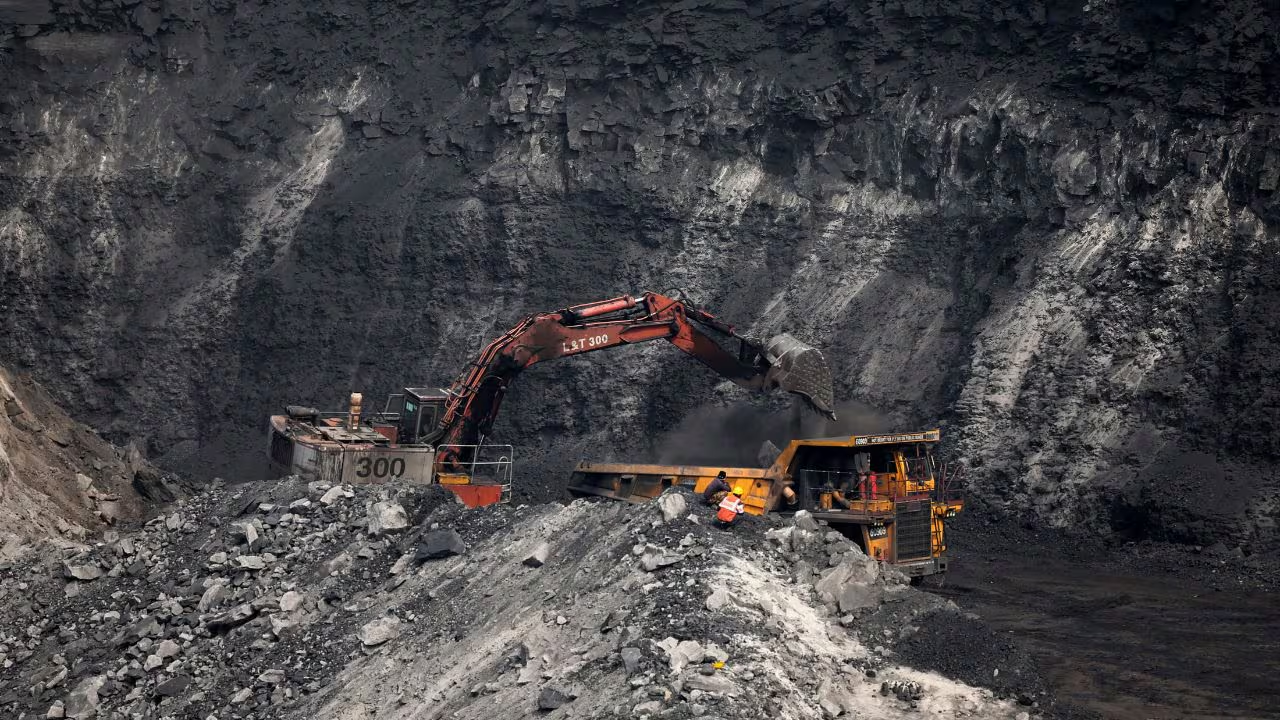
Complementing ferrochrome growth, Odisha’s coal mining sector is scaling operations to meet energy and industrial demand. Modernisation efforts and increased production capacity ensure a steady supply for steel manufacturing and power generation. Simultaneously, IMFA is integrating hybrid renewable energy projects totalling 110 MW, combining solar and conventional sources, to reduce its carbon footprint while supporting uninterrupted operations.In Karnataka, Sandur Manganese is also expanding, raising its iron ore and manganese production limits to 4.45 MTPA and 0.599 MTPA, respectively. The company’s recent consolidation of Arjas Steel strengthens its downstream manufacturing capabilities, reflecting a broader industry shift from raw mining towards vertically integrated operations.Analysts highlight that these expansions are well-timed, given rising domestic and global demand for metals driven by infrastructure projects, renewable energy development, and industrial growth. “Firms investing in integrated, sustainable operations are best positioned to benefit from the upcoming mining supercycle,” a senior urban planner said.
With coal mining, ferrochrome expansion, and renewable integration, Odisha is becoming a critical driver of India’s industrial resilience. The sector’s strategic growth not only addresses supply security but also aligns with sustainable, low-carbon industrial development, signalling a more self-reliant and future-ready mining ecosystem.