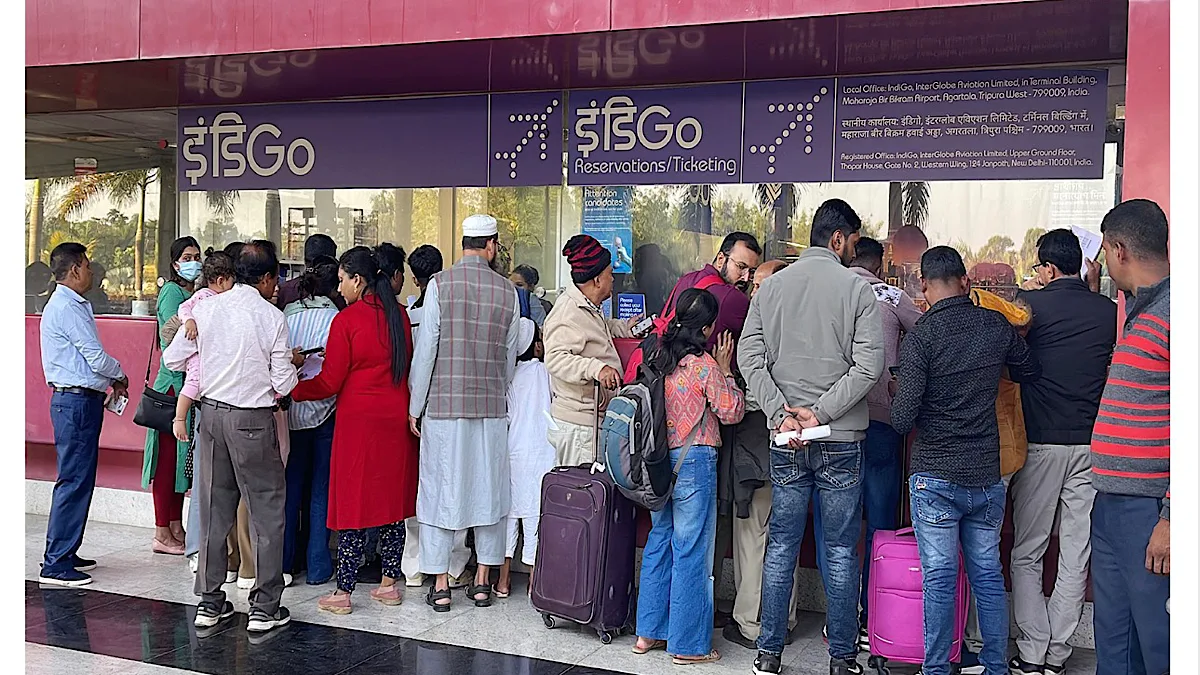
Delhi and Mumbai witnessed continued disruption in IndiGo flight services for the fifth consecutive day on Saturday, with more than 200 flights cancelled across both cities. The crisis follows the Directorate General of Civil Aviation’s (DGCA) temporary relaxation of flight duty and rest period norms, aimed at alleviating pilot fatigue and operational pressures, but which has sparked safety concerns from pilot associations.
According to industry sources, Mumbai airport recorded 109 cancellations 51 arrivals and 58 departures while Delhi saw 106 flights affected, including 54 departures and 52 arrivals. This marks a significant, albeit reduced, operational disruption compared to Friday, when the airline cancelled over 1,000 flights nationwide. The airline’s CEO, addressing the crisis via a one-way video message, expressed regret for the inconvenience caused to passengers and indicated that fewer than 1,000 flights were expected on Saturday.
DGCA had previously relaxed night duty regulations, allowing pilots six night landings instead of the standard two, and adjusted night duty hours from midnight to 5 am instead of 6 am. While aimed at easing operational strain, the move was sharply criticised by the Airlines’ Pilots Association (ALPA) India, which called the relief “selective and unsafe,” warning it undermines regulatory parity and elevates risk for passengers.Following discussions convened by the Ministry of Civil Aviation with pilot associations, the revised Fatigue Duty Time Limit (FDTL) regulations were placed in abeyance. ALPA India highlighted that postponing FDTL enforcement contradicts court directives, which mandate scientifically grounded fatigue mitigation standards. The association urged the regulator to prioritise pilot and passenger safety over commercial considerations.
IndiGo was the first carrier to resist the FDTL norms introduced in January 2024, citing the need for additional crew to meet the new weekly rest and night landing requirements. Despite initial opposition from domestic carriers, including Air India, the norms were gradually implemented from July, with the second phase reducing night landings from six to two taking effect from November 1. Industry observers note that the ongoing disruption underscores systemic vulnerabilities in Indian aviation, including staffing constraints, regulatory compliance, and operational resilience.
Experts suggest that long-term solutions may require integrated planning between airlines, regulators, and unions, alongside improved adoption of digital scheduling tools to reduce passenger disruption. As Delhi and Mumbai airports continue to grapple with cancellations, the episode highlights the challenge of balancing operational efficiency with safety standards, a critical concern for sustainable urban mobility in major Indian cities. Passengers are advised to monitor airline communications closely and plan travel with contingencies in mind.
Delhi Faces Day Five Of IndiGo Crisis With Over 200 Flights Cancelled