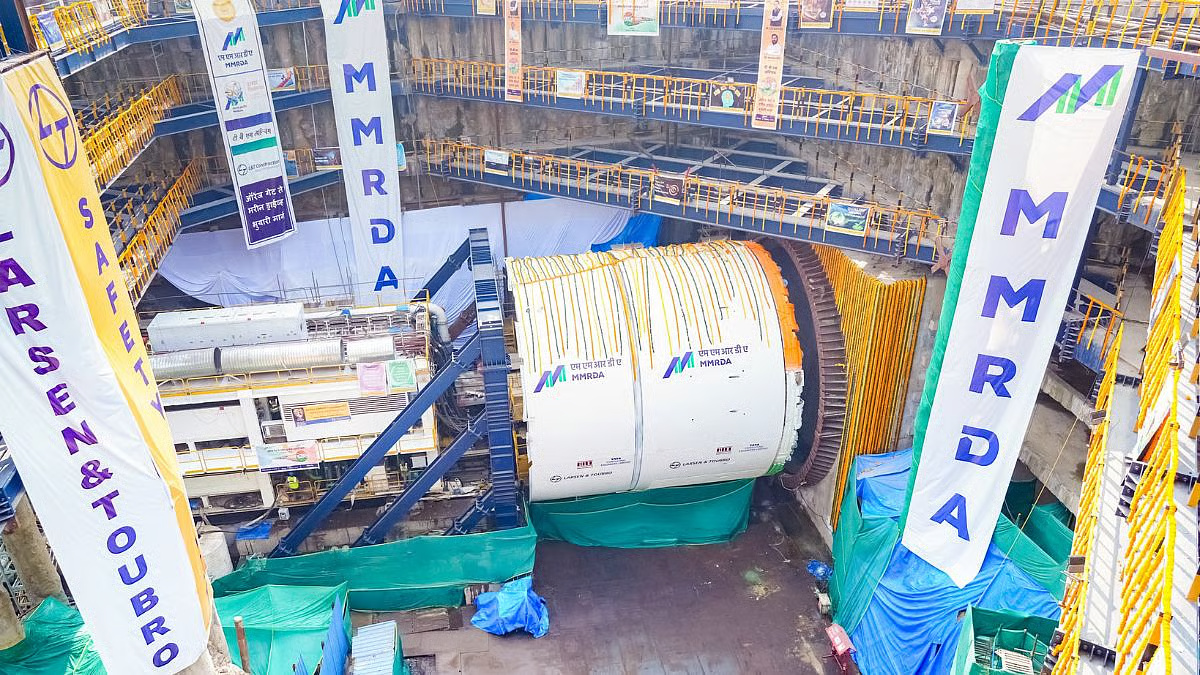
Mumbai has officially commenced tunnelling for the ambitious Orange Gate to Marine Drive underground corridor, a 9.24-kilometre east-west link designed to significantly reduce congestion across the city. Maharashtra’s Chief Minister inaugurated the Tunnel Boring Machine (TBM) on Wednesday, marking the start of a Rs 8,056-crore project that will create India’s first urban tunnel of this complexity, running beneath South Mumbai’s densely populated neighbourhoods.
The corridor includes a 6.51-kilometre twin-tube tunnel, engineered to pass beneath critical infrastructure such as the Central and Western Railway tracks and the underground Metro Line 3. Planners have meticulously aligned the tunnel below over 700 structures, including heritage properties in Dongri and Khetwadi, ensuring minimal surface disruption. The design reflects advanced urban engineering principles, integrating safety, efficiency, and long-term city planning. Each tunnel tube will accommodate two 3.2-metre traffic lanes, complemented by a 2.5-metre emergency lane. The tunnel will operate at a designed speed of 80 km/h, with cross passages every 300 metres to support emergency evacuation. Modern systems, including fire-resistant infrastructure, mechanised ventilation, intelligent lighting, and an Intelligent Transport System (ITS), will optimise traffic management and commuter safety.
Industry experts note that the tunnel’s completion, anticipated by December 2028, could cut travel time between the Eastern Freeway and Marine Drive by 15–20 minutes, offering a high-speed alternative to heavily congested arterial roads. By connecting major mobility hubs, including the Eastern Freeway, MTHL, Coastal Road, and the Bandra-Worli Sea Link, the project is expected to strengthen integrated metropolitan connectivity, linking the city’s eastern and western suburbs more efficiently. Urban planners highlight that the project sets a precedent in sustainable urban infrastructure. “By routing traffic underground, surface-level congestion is reduced, emissions from idling vehicles are minimised, and heritage areas are preserved,” said a senior urban mobility consultant. This integration aligns with Mumbai’s broader strategy to achieve greener, more resilient, and equitable urban transport networks.
Beyond mobility gains, the corridor is expected to catalyse economic activity along its route. Faster commute times will improve workforce accessibility, enhance business logistics, and support urban densification in surrounding areas. City authorities emphasise that the tunnel is not merely an engineering feat but a transformative element for long-term urban development, providing a model for sustainable city planning in India. As tunnelling progresses, officials have pledged ongoing monitoring and public communication, particularly regarding safety, environmental impact, and construction disruptions. The project underscores Mumbai’s commitment to modernising urban mobility while preserving the city’s cultural and architectural heritage.
Mumbai Launches Orange Gate Marine Drive Tunnel Connecting Dongri Khetwadi SoBo