


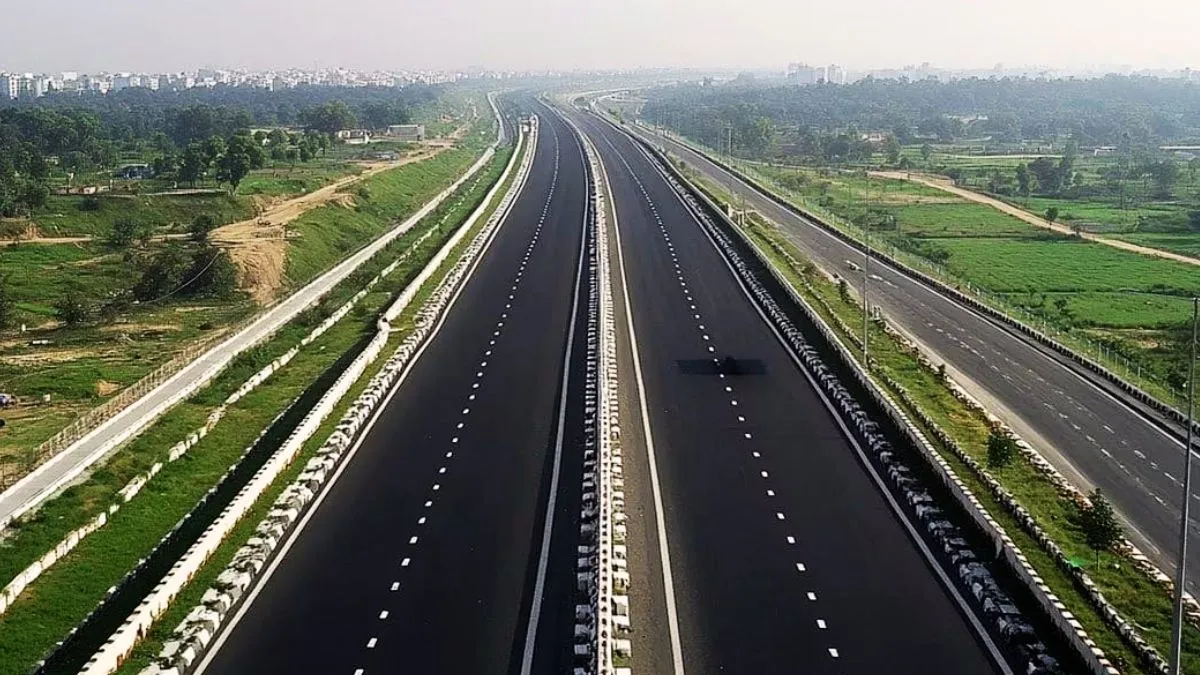
The long-delayed elevated stretch of the Lucknow–Kanpur Expressway is poised to move into its final phase of construction, with power authorities preparing to lift and relocate a major high-tension transmission line that has obstructed work for months. The shift, scheduled between mid-December and 18 December, is expected to clear the last technical hurdle on the 62.5-km corridor, which aims to offer faster, safer and more reliable mobility between the two major urban centres.
Officials from the national highways authority confirmed that the Power Grid Corporation has approved a phased shutdown to facilitate the realignment of the 400kV overhead line near Banthra and the Scooters India precinct. The cable, currently positioned at roughly the same height as the proposed elevated road, will be raised to about 25 metres to ensure safe passage for heavy vehicles. Engineers say the redesigned clearance also reflects evolving norms that prioritise resilience and public safety across India’s rapidly growing transport infrastructure.
The expressway, a mix of a nearly 18-km elevated route and a completed greenfield section, has been marketed as a critical connector for the region’s economy. While most of the elevated structure is already in place, a 100-metre portion in Sarojini Nagar could not be built until the transmission line was shifted. Construction teams are preparing to resume work immediately after the relocation, with a targeted completion timeline extending into late January.
Urban planners following the project note that such coordination between energy and transport agencies is increasingly central to India’s broader mobility transformation. “As cities expand and regional corridors become busier, infrastructure must be planned with more foresight,” said a senior urban development expert. “Clearances, safety buffers and environmental considerations all contribute to long-term sustainability.” Industry observers also highlight that the expressway’s progress aligns with India’s shift towards more efficient, low-emission urban systems. Reduced travel times between Lucknow and Kanpur could lower fuel consumption, ease congestion on existing routes and create more equitable access to jobs and services across the wider metropolitan region. These outcomes, they argue, contribute quietly but meaningfully to the national goal of shaping cleaner, more inclusive and climate-adaptive cities.
Authorities maintain that the project remains broadly on schedule despite the bottleneck. Once operational, the corridor is expected to streamline inter-city movement, support logistics growth and encourage more balanced development along the Lucknow–Kanpur belt. For residents, the expressway promises both convenience and a safer, more predictable travel experience—an essential element of urban liveability as Indian cities work towards greener, people-centred mobility futures.
Also Read : Bengaluru Issues Fresh Ward List Corrections – Urban Acres
Lucknow Kanpur Expressway Work Back On Track

