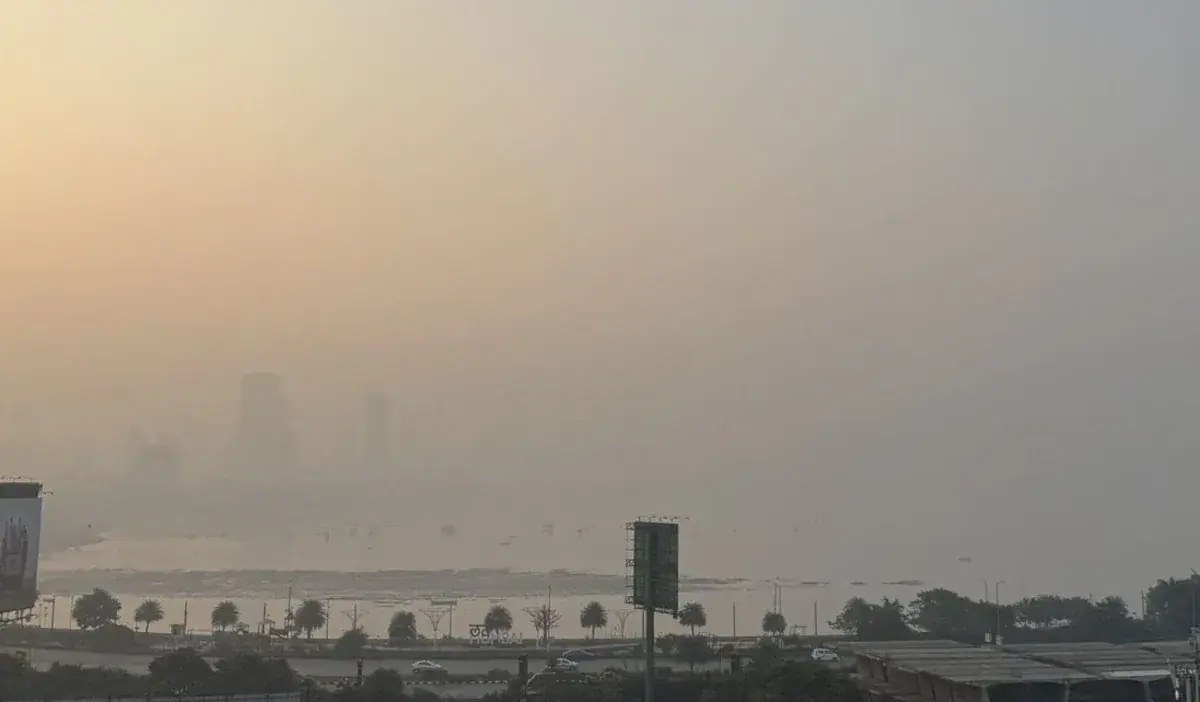
Mumbai’s civic administration is preparing to activate the city’s toughest air-quality restrictions if pollution levels rise again, even as overall conditions improved this week. The Brihanmumbai Municipal Corporation (BMC) announced that Stage IV of the Graded Response Action Plan (GRAP) a category involving stringent limits on construction and industrial activity will be triggered if neighbourhood-level Air Quality Index (AQI) readings exceed 200 for three consecutive days.
The alert reflects growing concern about the capital’s winter air, which has been marked by recurring pockets of high pollution. While Mumbai’s AQI eased to the “moderate” range on Monday, officials noted sharp variations across neighbourhoods. Data from the Central Pollution Control Board showed most of the city’s 30 monitoring stations registering “moderate” or “satisfactory” readings, although pockets such as the Bandra Kurla Complex and Mazgaon recorded crosses into the “poor” zone in recent weeks. Mazgaon, an area undergoing extensive construction activity, saw its AQI reach 305 twice this month.
A senior BMC official said the city’s pollution profile has shifted as infrastructure-intensive development from Metro corridors to major road and bridge expansion continues to reshape older industrial and residential pockets. This has increased the contribution of dust and construction emissions to winter smog, a trend also visible in satellite towns undergoing rapid redevelopment.Despite these fluctuations, Mumbai has avoided the level of toxic air currently affecting Delhi. The national capital has remained in the “very poor” category for weeks, yet Stage IV restrictions have not been activated. Instead, the Commission for Air Quality Management recently withdrew Stage III curbs while reinforcing earlier stages, citing slight improvements in concentration levels. Experts say this contrast underscores the different atmospheric and urban conditions of both cities, but also highlights the need for preventive rather than reactive action.
As part of its pollution-control strategy, the BMC has intensified inspections at construction sites and industrial units. Civic teams have been directed to enforce dust-suppression protocols, including mandatory barricading, green covers, controlled demolition practices, debris management, and onsite air-quality monitoring. Water sprinkling on roads, footpaths, and high-traffic corridors has been expanded to reduce suspended particles. Notices were issued last week to several non-compliant sites.Hospital reports of rising respiratory complaints have reinforced the urgency. According to a senior public health official, spikes in coughing, wheezing, and breathlessness were observed during hazy mornings last week. The civic body believes stricter enforcement, combined with long-term shifts towards cleaner mobility and construction methods, is essential to sustain improvements.Urban planners note that Mumbai’s move toward electrified transport fleets, improved waste management, and cleaner industrial fuels will be crucial for maintaining a healthy urban environment. They argue that as the city grows vertically and infrastructure expands, embedding low-emission practices into its systems is central to ensuring a more equitable and climate-resilient future.
Mumbai May Invoke GRAP-IV As AQI Hits 200, Delhi Suffers