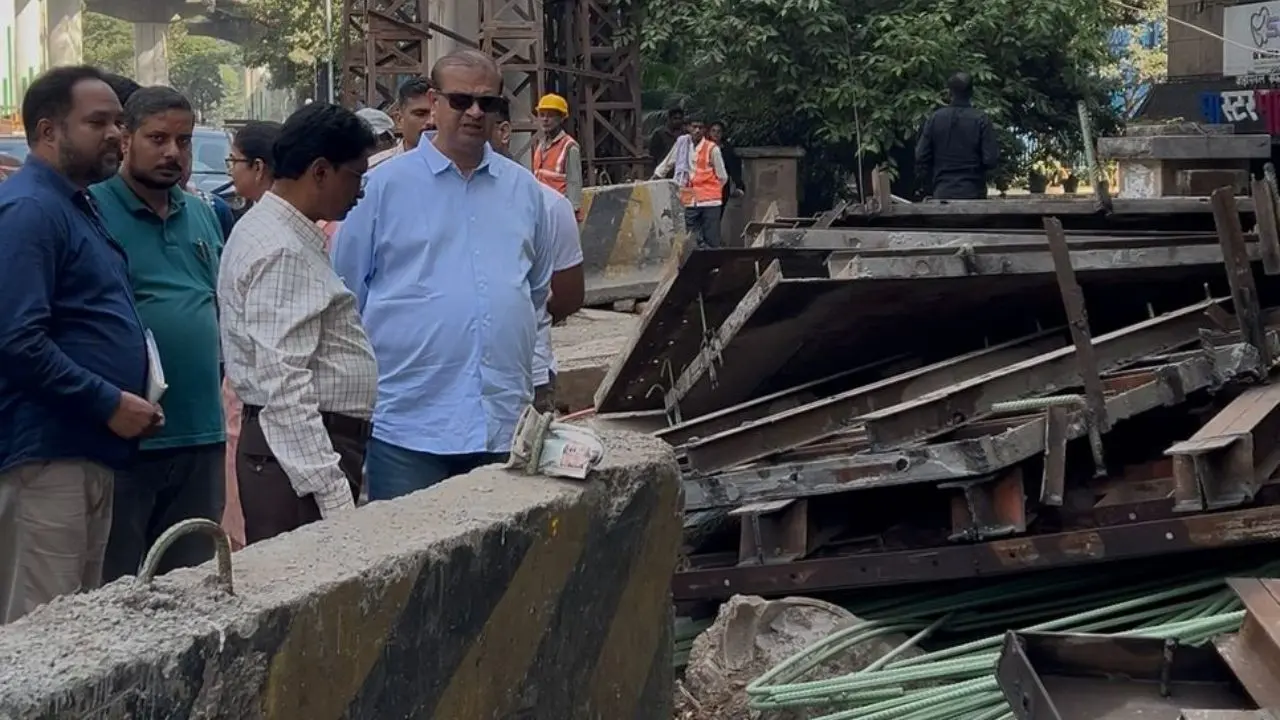
Mumbai’s worsening winter air has once again pushed local infrastructure practices into the spotlight, with residents in Mulund raising concerns over excessive dust from the ongoing Metro Line-4 works. Days after the locality recorded an Air Quality Index (AQI) of 286—categorised as ‘poor’—a review by a local legislator has pointed to gaps in debris management, contractor compliance, and basic environmental safeguards along the LBS Road construction stretch. The episode has revived the debate on how Indian cities can build essential mass-transit networks without compromising public health.
During an inspection of a two-kilometre section of the corridor, the legislator—accompanied by officials from the metropolitan transport authority and the local ward office—identified nearly a hundred locations where construction waste, broken pavements, discarded metal and concrete fragments had been left unattended. According to officials familiar with the assessment, several portions lacked mandatory barricading, while footpaths that had been dug up months ago were yet to be reinstated. Urban planners say the concerns raised in Mulund are not isolated. Across major Indian cities, rapid metro expansion has frequently come at the cost of dust emissions, reduced walkability and compromised pedestrian safety. “Construction management remains one of the biggest gaps in India’s infrastructure delivery. Simple measures such as covering debris, using water sprinklers and limiting roadside dumping can prevent significant deterioration in air quality,” a senior environmental expert noted.
In Mulund, residents have reported that cement particles from elevated-corridor works have begun settling on roadside plantations, weakening the health of newly planted saplings. Local businesses along LBS Road have also expressed worry over declining visibility during peak traffic hours. According to an official overseeing the corridor, the executing contractor bears responsibility for housekeeping, waste removal and temporary restoration of public spaces. However, enforcement of these provisions varies widely across Mumbai’s large infrastructure portfolio. The metropolitan development authority has assured citizens that the corridor will be cleaned and restored within a week, and that corrective action will be taken against the contractor for safety and environmental lapses. Officials are also reviewing whether weekly audits and digital monitoring of construction sites can help improve accountability. Experts argue that such measures are essential for cities working toward climate-resilient and citizen-centric transport systems.
While the expansion of metro infrastructure remains critical for reducing long-term emissions and cutting private-vehicle dependency, the Mulund incident highlights a recurring challenge: ensuring that today’s construction does not worsen tomorrow’s air. For residents in high-density neighbourhoods, cleaner construction practices—dust control, safe footpaths, regular debris clearance—are fundamental to building an equitable and liveable Mumbai. The episode may also prompt stronger compliance frameworks as the city scales up work on multiple green mobility corridors.
Mumbai Faces AQI Spike As MLA Blames Metro Line-4 Construction Dust Pollution