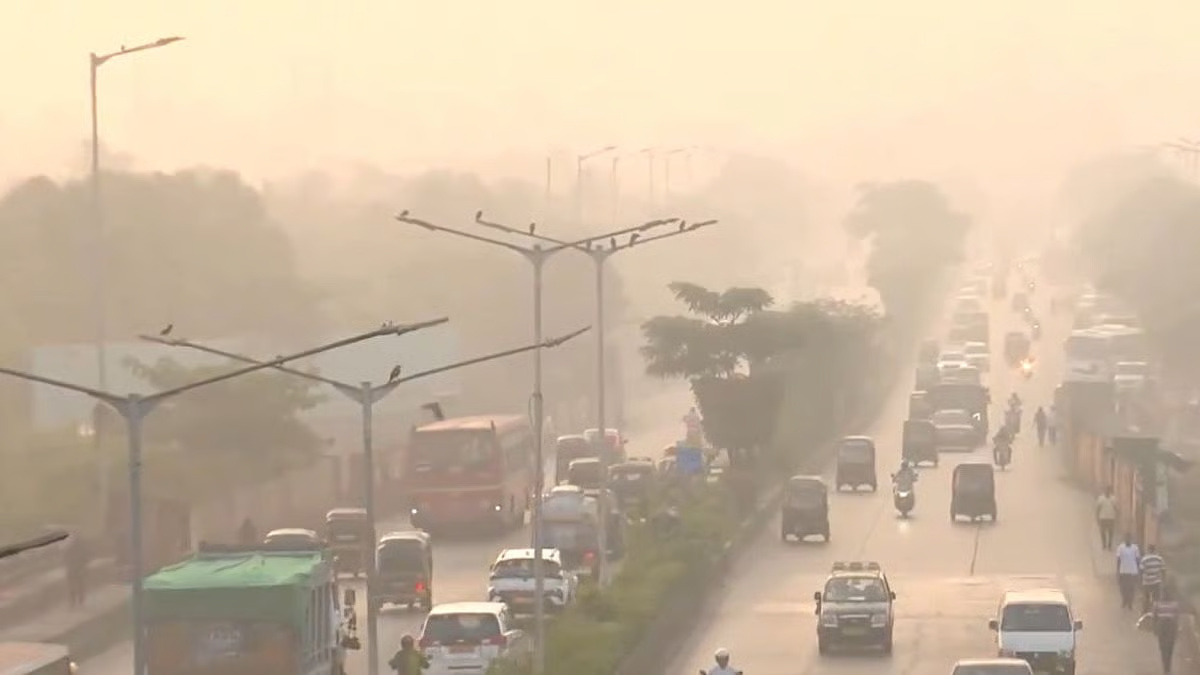
Mumbai began Tuesday under a veil of persistent smog as air-quality levels dipped sharply across the metropolitan area, renewing concern about the city’s growing vulnerability to pollution-linked health risks. Although the morning started on a cooler note, the early chill quickly gave way to poor visibility and discomfort for commuters, signalling a deeper deterioration in urban air conditions that has been unfolding through the month.
The city’s overall Air Quality Index reached 316—categorised as severe—indicating pollutant levels high enough to trigger respiratory distress among vulnerable groups. According to monitoring data reviewed by civic officials, several locations that previously recorded moderate or poor conditions have now slipped into the severe bracket. The spread of pollution across industrial belts, coastal zones and dense residential clusters suggests that the problem is citywide rather than localised. A senior environmental specialist noted that the absence of strong winds has allowed pollutants to accumulate closer to the surface, worsening morning smog. “When dispersion slows, emissions from vehicles, construction and industrial activity tend to settle over the city. The result is the dense haze residents have been experiencing throughout November,” the expert said. The situation highlights how climatic shifts—particularly stagnant winter air—are intensifying pollution exposure in dense urban regions.
The day’s most alarming readings emerged from the Wadala Truck Terminal, where the AQI touched 364. Other severely affected pockets included Chembur and Colaba, while western neighbourhoods such as Juhu and Worli also saw hazardous levels. Civic officials pointed out that pollution concentrations are no longer limited to traditional hotspots, as elevated levels were detected even in comparatively low-emission areas. Northern suburbs recorded slightly better conditions, though still categorised as poor. Kandivali East reported an AQI of 140, the lowest in the city, yet far from safe levels. Meanwhile, transport-heavy corridors including Sion, the airport precinct, Malad West and Bandra continued to register severe conditions. Health professionals warn that prolonged exposure to such air poses risks even for healthy individuals, with irritation of the eyes and respiratory tract becoming increasingly common.
Urban planners observe that Mumbai’s recurring winter pollution episodes expose longstanding structural challenges, from slow adoption of clean construction norms to traffic congestion and constrained green cover. Experts argue that the path forward requires a unified approach that strengthens public transport, accelerates electrification, expands urban tree cover and enforces dust-control measures across active infrastructure sites. “Only systematic, year-round action can break the cycle of winter smog,” a civic official said. Although the India Meteorological Department expects clear skies through the day, there is little clarity on when meaningful improvement in air quality will occur. For now, city authorities continue to monitor conditions closely while urging citizens to limit outdoor exposure. As Mumbai grows and densifies, its struggle with toxic air underscores the urgent need for climate-resilient, people-centred planning that prioritises cleaner neighbourhoods and equitable access to breathable air.
Mumbai Reels Under Heavy Smog As Pollution Soars And AQI Hits 316