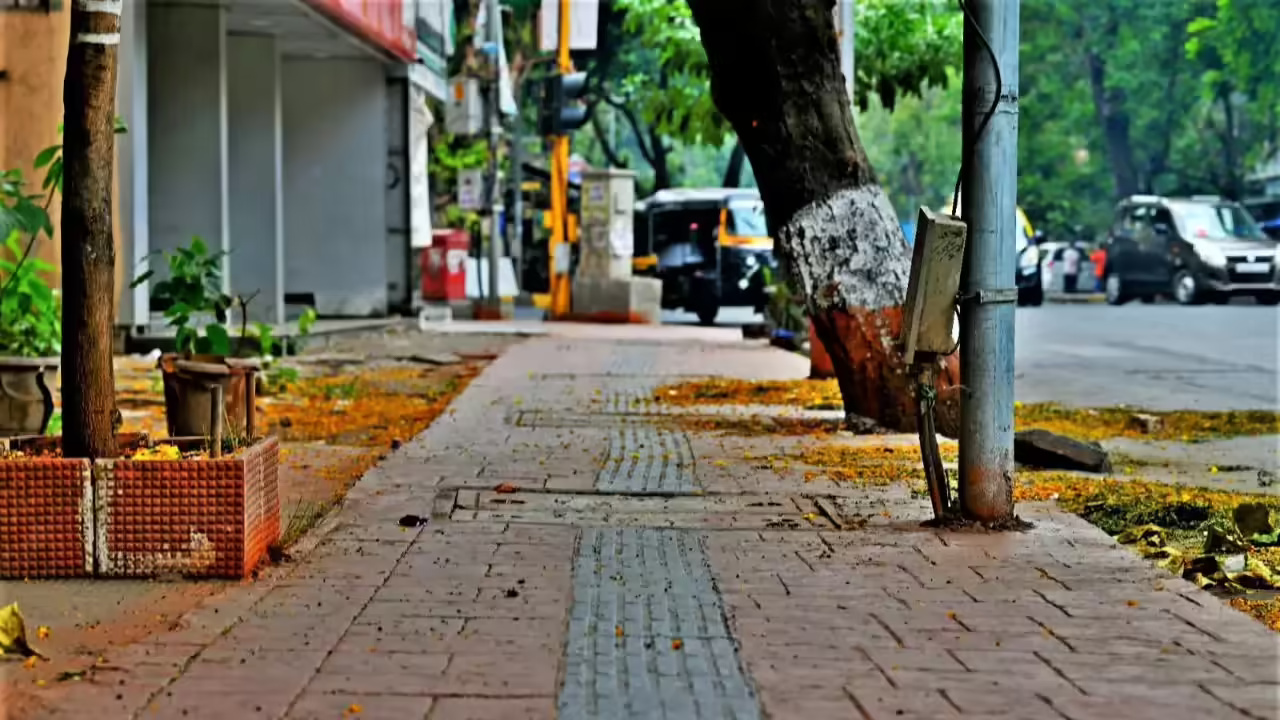
Mumbai has begun a large-scale upgrade of its pedestrian infrastructure, with the municipal corporation launching a ₹100-crore footpath improvement programme covering 14 major roads across the island city and suburbs. The initiative aims to make walking safer, more accessible, and more appealing in a city where narrow, uneven, and obstructed pathways have long limited mobility. Civic officials describe the effort as part of a wider shift towards sustainable, people-centred urban transport.
According to senior officials from the Brihanmumbai Municipal Corporation (BMC), the project will create “model footpaths” that may serve as templates for future citywide rollouts. These stretches will be redesigned to align with the Indian Roads Congress (IRC) code, offering a consistent and well-planned pedestrian experience. The corporation is adopting a phased approach—piloting ideas on selected corridors, studying commuter response, and refining designs before wider implementation. The upgrade will include redesigned civil infrastructure, thermoplastic road markings, improved kerbstones, clearer pedestrian signage, and better-organised street edges. Officials noted that the intention goes beyond cosmetic improvements. The new pathways are expected to reduce conflict between road users, improve safety near junctions, and promote walking as a practical alternative to short vehicle trips—supporting the city’s broader climate and congestion-reduction goals.
Urban planners have been brought in to steer the redesign process, with a focus on safety, accessibility, and visual clarity. A senior urban planner involved in the project said the new standards will “prioritise seamless movement and universal access”, ensuring that footpaths accommodate Mumbai’s heavy footfall. The design approach emphasises functional layouts, simplified street edges, and consistent materials that can be maintained easily. Improving inclusivity is a central component of the upgrade. The project follows national guidelines under the Sugamya Bharat Abhiyan, ensuring footpaths are wheelchair-friendly and accessible to citizens with varied mobility needs. Features such as gentle ramps, tactile tiles, capped height levels, and smoother, obstruction-free surfaces will form part of the core design. BMC teams will also conduct specific accessibility audits to identify zones requiring immediate improvement.
The initial set of pilot roads spans the island city, eastern suburbs, and western suburbs, including corridors such as Juhu Tara Road, Veera Desai Road, Saki Vihar Road, Mahatma Gandhi Road, DN Road, and Senapati Bapat Marg. These roads were chosen due to high pedestrian volumes and their role as key mobility arteries. Civic officials believe the investment reflects Mumbai’s growing commitment to non-motorised transport and equitable public spaces. Rising awareness of walkability’s role in public health, urban liveability, and emissions reduction has strengthened the case for better footpaths. If the pilot proves successful, the city may witness a gradual transformation of its pedestrian network—one that prioritises safer, greener, and more inclusive movement for millions of daily walkers.
BMC Launches Rs 100 Crore Footpath Revamp To Transform Walkways Across Mumbai