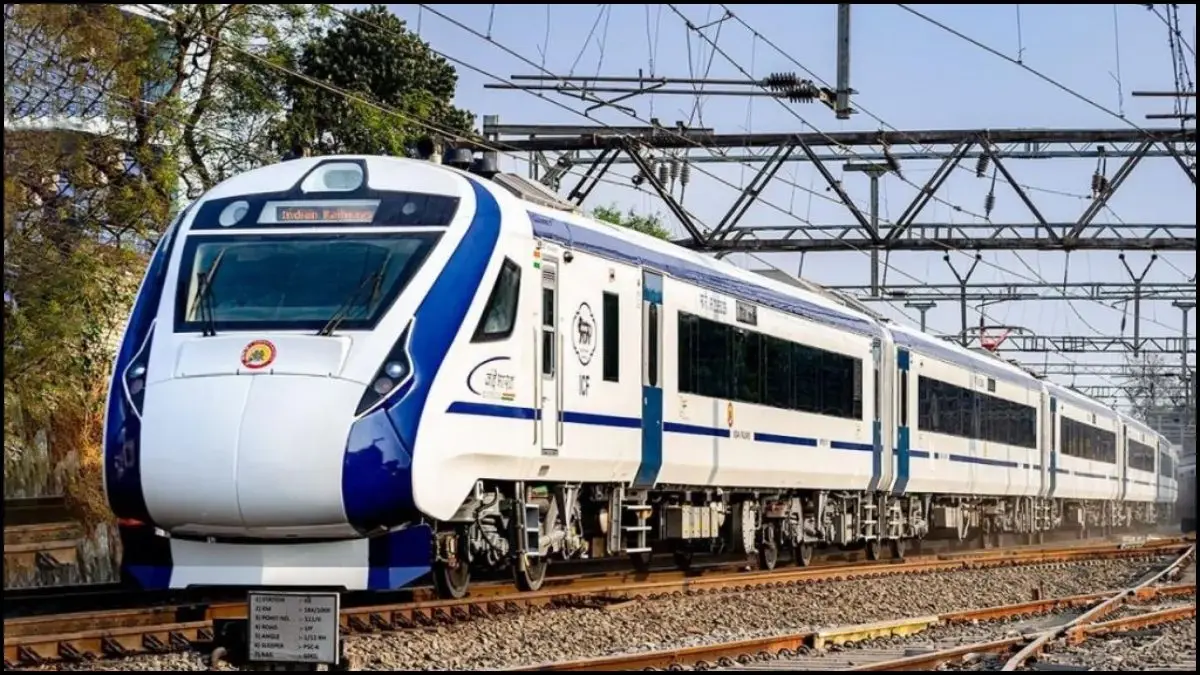
Indian Railways has expanded the coach capacity of the Nagpur–Indore Vande Bharat Express to address rising passenger demand along one of central India’s busiest inter-city corridors. From 24 November, the service will transition from an eight-coach to a sixteen-coach configuration, nearly doubling the number of seats available and improving connectivity across two fast-growing urban centres.
Officials stated that the upgraded rake will include two Executive Class coaches and fourteen Chair Cars, enabling the service to carry more than 1,100 passengers on each journey. The expansion reflects a wider pattern of sustained demand for high-speed, energy-efficient trains that offer quicker, more reliable regional mobility. A railway official noted that the move aims to reduce waiting lists, improve passenger comfort, and ensure that the premium service remains accessible during peak travel periods. The Vande Bharat network has become an important component of India’s broader mobility transition, offering electric propulsion, regenerative braking systems, and better energy efficiency than older express trains. Transport experts say that increasing capacity on such routes not only expands access but also encourages a modal shift away from private vehicles and short-haul flights, contributing to lower transport-related emissions. For cities like Nagpur and Indore, both of which are seeking to strengthen regional economic integration, high-capacity inter-city trains are critical to supporting sustainable growth.
In addition to the enhanced Nagpur–Indore service, Railways has announced new halts for two other Vande Bharat routes on an experimental basis. The CSMT–Solapur Vande Bharat will now stop at Daund, improving access for daily commuters and local businesses along the Pune–Solapur belt. Meanwhile, the Pune–Hubballi Vande Bharat will begin halting at Kirloskarwadi, expanding regional mobility in an industrial zone that relies heavily on dependable rail connections. Officials emphasised that these additional stops are part of an ongoing effort to calibrate routes based on passenger patterns and regional demand. According to transport planners, smaller but strategically located halts can help promote more inclusive public transport networks by improving access for towns that often fall between major urban nodes. Such decisions also align with a broader national objective of ensuring equitable mobility infrastructure across tier-2 and tier-3 locations.
While the enhanced coach configuration on the Nagpur–Indore service is expected to ease congestion, railway representatives acknowledged that demand for premium trains may continue to rise as more passengers opt for faster, electric-powered inter-city travel. They added that further adjustments could be made in the coming months depending on utilisation trends. As cities across India shift towards more sustainable and high-quality transport systems, the expansion of Vande Bharat services marks a significant step in strengthening low-carbon mobility. Increased seating capacity, improved connectivity, and better integration with regional travel corridors all contribute to building a more inclusive and climate-resilient transport ecosystem for the future.
Nagpur Vande Bharat Doubles Coach Capacity To Meet Rising Passenger Demand From November 24