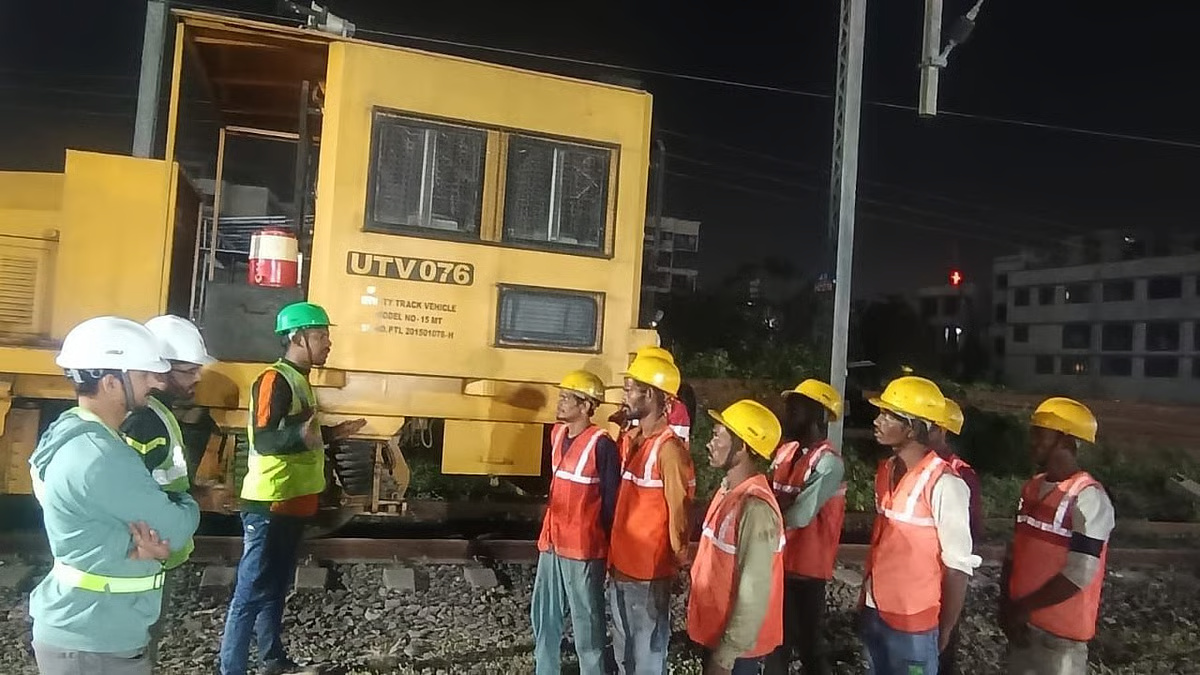
Suburban mobility across Navi Mumbai faced significant disruption on Sunday as rail services between Belapur and Panvel remained suspended for more than two hours beyond the notified block period. The interruption, caused by ongoing yard remodelling works linked to the Panvel–Karjat suburban corridor, left thousands of commuters stranded and underscored the growing tension between infrastructure upgrades and the city’s dependency on accessible, reliable public transport.
The Mumbai Rail Vikas Corporation had scheduled a traffic and power block to facilitate major modifications within Panvel yard, including track realignments, overhead equipment adjustments, and installation of new turnouts and crossovers. Officials said the block was expected to conclude by late morning, allowing train operations to resume. However, a technical complication delayed the reopening until nearly 2 pm, pushing back the first outbound service from Belapur and creating a cascading impact on commuter movement. Sources within the transport system noted that the extended block placed considerable stress on passengers who rely on suburban rail as their primary mode of cost-effective and low-carbon mobility. Many were forced to depend on alternative transport options, including municipal buses, shared autos, and app-based cabs. While the local civic body deployed additional buses in anticipation of the block, the sudden extension meant the contingency plan could not fully absorb the passenger surge, resulting in long queues and slow-moving services.
For many residents, the breakdown highlighted wider concerns about urban mobility planning. Commuters reported inflated fares from rickshaw and taxi operators, with shared transport costs in some cases increasing threefold. A frequent traveller from Belapur said passengers were left with “little choice but to pay whatever was demanded”, pointing to the vulnerability of citizens when public transport systems face unexpected interruptions. Urban mobility experts believe the incident reflects the layered challenges of upgrading metropolitan rail networks while ensuring minimal disruption to daily life. As the Panvel–Karjat line progresses, it is expected to improve regional connectivity and reduce congestion across several growth corridors. However, experts also argue that infrastructure agencies must design more resilient transition strategies—especially in rapidly expanding cities like Navi Mumbai, where sustainable transport access is central to economic equity and commuter well-being.
Officials acknowledged that the extended disruption caused inconvenience and said coordination mechanisms with civic agencies would be strengthened to avoid similar bottlenecks. Transport planners emphasised the need for integrated mobility responses, including flexible bus fleets, on-ground guidance for commuters, and real-time updates to reduce uncertainty during project-related blocks. As Navi Mumbai continues to expand, maintaining dependable and inclusive public transport remains essential for transitioning towards a climate-resilient, low-emission metropolitan region. Incidents such as Sunday’s disruption highlight the importance of aligning infrastructure upgrades with commuter needs, ensuring that progress does not come at the cost of accessibility.
Belapur–Panvel Trains Halted Over Two Hours, Thousands Of Commuters Stranded