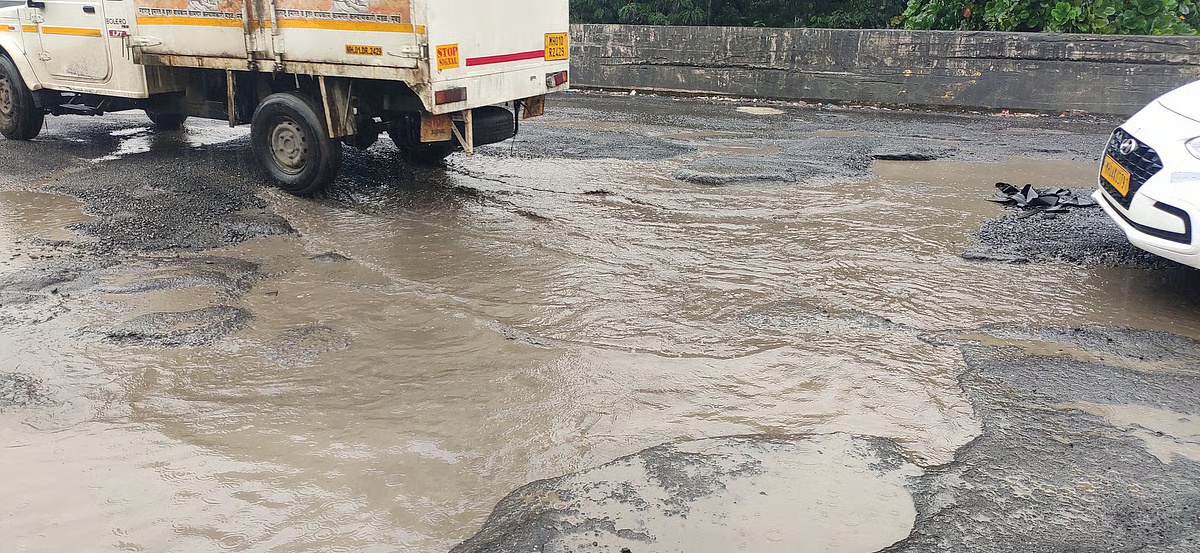
Bhiwandi’s key arterial flyover named after a former President has come under sharp public scrutiny after significant structural deterioration surfaced less than a decade after its inauguration. The compromised condition of the structure, which cost nearly ₹62 crore to build, has renewed concerns about the city’s ageing transport infrastructure, administrative oversight, and the mounting financial burden of frequent repair cycles. Residents argue that continued neglect threatens mobility, safety, and the broader goal of building resilient and sustainable urban corridors.
Local communities report that large potholes, eroded surfaces and poor drainage systems have led to persistent waterlogging on the flyover, especially during the monsoon. According to residents, water has begun seeping into damaged concrete layers, raising fears that prolonged exposure may weaken the structural integrity of the bridge. They warn that if deterioration continues unchecked, heavy vehicles may soon be restricted from using the flyover, forcing all traffic back to the congested internal roads below. This, they say, could significantly increase accident risks in the already strained Vanjarpatti area. Community groups also expressed frustration that even basic upkeep such as correcting the name signage has been ignored. For many, this oversight symbolises deep-rooted issues of civic indifference towards public infrastructure and the memory of leaders after whom such assets are named. A local social activist said the situation reflects an alarming pattern of short-lived infrastructure performance, similar to the decline previously witnessed on another major flyover in the city. The activist added that despite substantial public investment, citizens continue to experience unsafe and unreliable mobility infrastructure.
Several civil society representatives have demanded an immediate structural audit by a reputed engineering institute, stressing that long-term repairs must prioritise durable materials and sustainable maintenance practices. One community representative argued that the flyover should be resurfaced using more resilient methods to prevent frequent breakdowns and reduce the recurring financial burden on taxpayers. According to residents, the continued silence of elected representatives has amplified public frustration, particularly at a time when Bhiwandi is grappling with increasing freight pressure and rapid urbanisation. Municipal authorities acknowledged the concerns, stating that continuous movement of overloaded trucks has significantly accelerated road and bridge erosion across the city. A senior municipal engineer said that stricter enforcement of weight limits is crucial for preventing rapid wear and ensuring the longevity of key transport infrastructure. The official confirmed that a formal request has been sent to a leading technical institute to conduct a structural audit of the flyover. Once the findings are available, the corporation plans to undertake resurfacing and repair works based on expert recommendations.
As Bhiwandi continues to expand as a logistics and manufacturing hub, residents and experts emphasise the need for infrastructure that supports safe mobility while aligning with broader sustainability goals. Strengthening maintenance regimes, ensuring accountability, and adopting climate-resilient engineering practices will be essential for building a safer, more reliable urban environment for all.
Bhiwandi Flyover Crumbles Just Nine Years After Inauguration, Triggering Public Outrage