


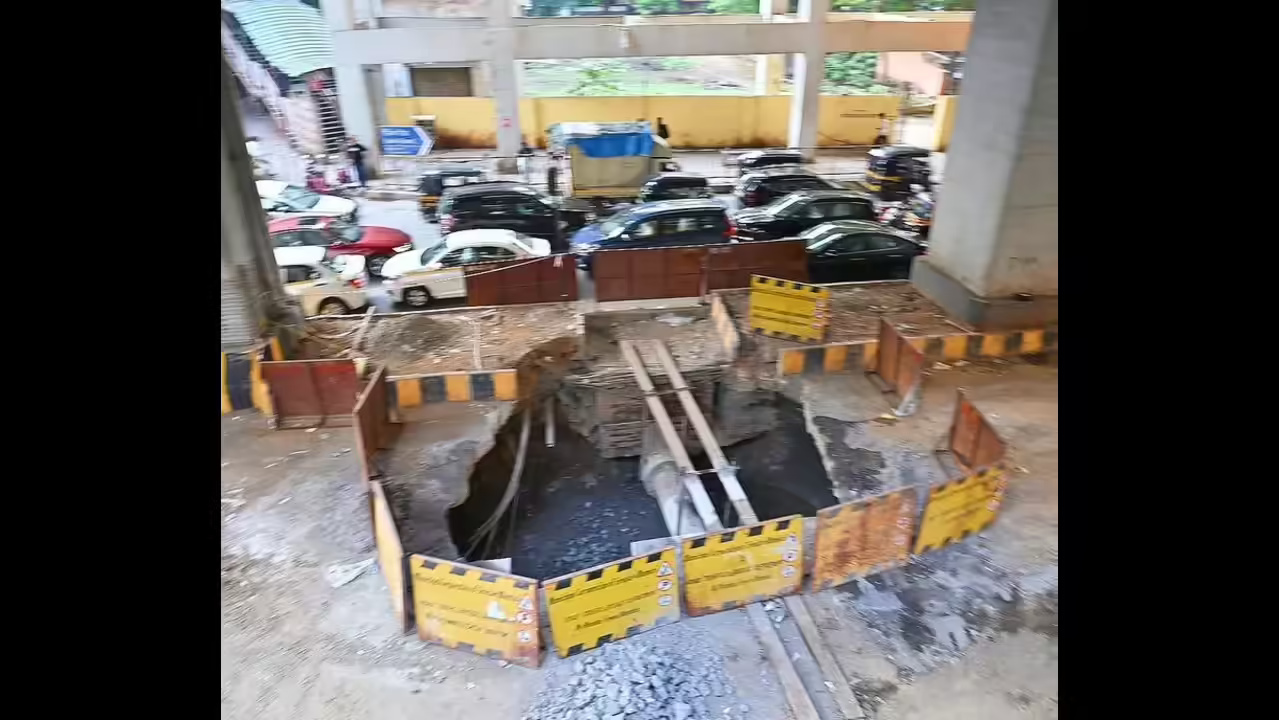
Mumbai’s civic administration has raised concerns over growing damage to roads and underground utilities across several neighbourhoods, attributing the deterioration to ongoing metro and bridge construction activities. In a strongly worded communication sent this week, the city’s civic chief asked the regional development authority undertaking these transport projects to address recurring road failures and safeguard key urban infrastructure.
The development has renewed attention on the broader challenge of managing large-scale construction in a dense, climate-vulnerable metropolis striving for safer and more sustainable mobility systems. According to officials, the civic body’s field inspections identified multiple road cavities, disrupted sewer lines and repeated surface reinstatement issues in areas where metro work is under way. A recent cave-in near a metro station, which remained unrepaired for weeks, triggered the latest alert. The incident forced traffic diversions during evening peak hours, raising discomfort among commuters and prompting residents to question safety practices at construction sites. Officials noted that such disruptions not only inconvenience road users but also heighten risks for pedestrians, cyclists and public transport riders who depend on reliable, well-maintained corridors.
The civic administration has argued that heavy equipment, piling vibrations and inadequate protection of buried utilities have contributed to repeated network failures, particularly along corridors where ageing sewer lines run parallel to new metro infrastructure. An official explained that prolonged seepage from damaged pipes weakens soil layers and accelerates cavity formation, making the surface more susceptible to collapse during monsoon months. The communication also highlighted poor road reinstatement, including excessive use of loose grit and insufficient concrete reinforcement, which undermines long-term durability. Industry experts say such conflicts between executing agencies and civic departments are not uncommon in rapidly expanding cities, where overlapping infrastructure works place sustained pressure on legacy networks. They emphasise the need for coordinated planning, shared digital utility maps and climate-resilient construction standards to prevent repeated failures. A transport observer noted that while metro expansion improves sustainable mobility, project execution must not compromise basic amenities that support urban health, sanitation and road safety.
The civic body has also alleged that utility diversions were undertaken without mandatory approvals, leading to defects that fall short of municipal norms. It has urged the development authority to rectify pending issues at the earliest and strengthen oversight mechanisms to minimise future disruptions. Officials added that collaborative planning is essential, especially as Mumbai transitions toward integrated mobility and cleaner transport systems intended to reduce carbon emissions and improve liveability. As both agencies work toward expanding public transport infrastructure, the episode underscores the constant balancing act required in densely populated cities: building long-term mobility solutions while preserving the safety and reliability of existing services. A coordinated response, supported by transparent technical standards, could help Mumbai advance its infrastructure goals without compromising the resilience or equity of its essential civic networks.
Also Read : Mumbai Metro Glitch Disrupts Versova–Ghatkopar Services And Triggers Heavy Evening Crowds
