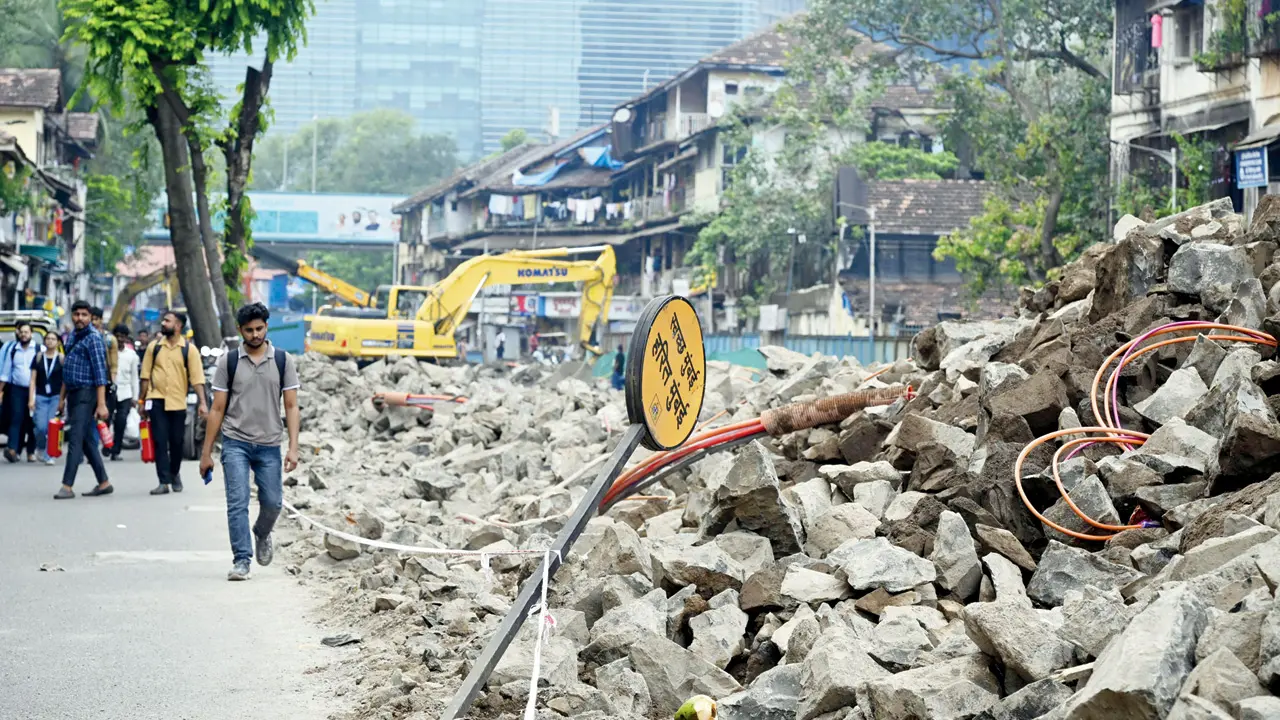
Mumbai’s Parel neighbourhood is urging the Mumbai Metropolitan Region Development Authority to pause demolition of the ageing Elphinstone bridge after a promised vibration-level study was delayed, heightening safety concerns for residents living in decades-old structures surrounding the site. The technical assessment, expected earlier this week from a leading engineering institute, has yet to be submitted, leaving households and small businesses anxious about the structural impact of heavy machinery operating metres from their buildings.
Local families say the prolonged wait for the report has deepened their sense of vulnerability. Several residents report that demolition work has caused visible cracks to widen in their walls, with frequent tremors felt each time machinery is activated. Shopkeepers describe falling footfall and a climate of uncertainty as customers avoid what they perceive to be an unsafe zone. For many, the delay in sharing the vibration findings has led to frustration that authorities are not treating the issue with adequate urgency. Officials from the development authority maintain that they themselves are awaiting the report from the technical institute. According to a senior official, the document will be shared with residents as soon as it is received. The demolition, part of a long-planned infrastructure overhaul intended to improve connectivity, is being carried out in a dense urban setting, where the condition of surrounding buildings varies significantly. Many structures in the area are more than four decades old and fall into categories requiring careful monitoring during construction activity.
Technical experts associated with the study say the delay stems from the need for detailed assessment rather than administrative lapses. A senior engineer from the inspection team explained that vibration reports require precise analysis and cannot be compiled hastily, emphasising that accuracy is vital to understanding the potential risk to nearby structures. While urging residents to remain patient, experts acknowledge that the concerns of those living closest to the site are legitimate and require clear communication. Urban planners note that such conflicts between infrastructure upgrades and neighbourhood safety are increasingly common in older parts of Indian cities, where redevelopment must balance modern mobility demands with the lived realities of residents. They argue that transparent reporting, timely updates, and proactive risk-mitigation measures are essential for public trust, especially in dense localities already vulnerable to structural stress.
Community representatives have renewed calls for demolition activities to be suspended until the vibration-level report is publicly shared and appropriate safeguards put in place. They say the pause is necessary to prevent potential structural failure and to ensure that urban development remains people-centric and equitable. As metropolitan regions pursue large infrastructure upgrades, experts emphasise that citizen engagement and safety-first planning will be key to building resilient, inclusive, and sustainable cities.
Mumbai Locals Demand Pause On Elphinstone Bridge Demolition Pending Vibration Safety Report