


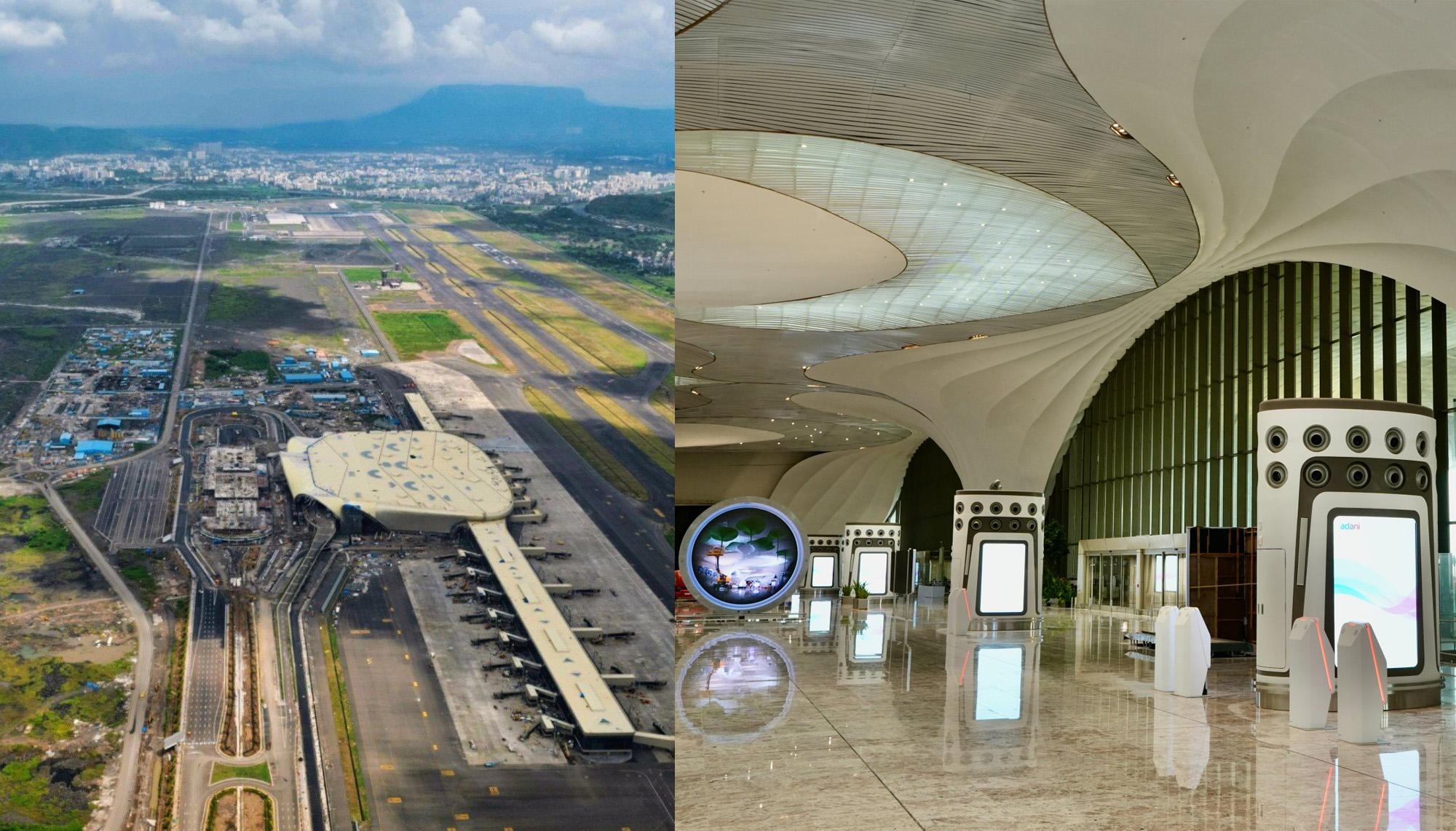
Navi Mumbai International Airport is preparing to begin commercial operations on 25 December, marking a major milestone in the Mumbai Metropolitan Region’s long-awaited aviation expansion. The new greenfield airport is expected to ease rising congestion at the existing airport in Mumbai while offering a modern, sustainability-focused gateway designed to serve Western India’s growing travel demand.
The first phase of operations will run for twelve hours daily, from 8 am to 8 pm, with 23 scheduled departures. Airport officials confirmed that the initial traffic plan allows for up to ten aircraft movements per hour. This calibrated rollout, supported by extensive readiness trials, has been designed to ensure reliability and passenger comfort during the early months of service. The inaugural flight to touch down at the airport will arrive from Bengaluru, followed by an outbound service to Hyderabad. Three airlines—IndiGo, Air India Express and Akasa Air—will operate during the early phase, connecting Navi Mumbai to sixteen domestic destinations. An official involved in the planning said the phased approach aims to “establish stable operations before traffic increases and round-the-clock services commence”.
From February 2026, the airport plans to move to 24-hour operations and expand to 34 daily departures, reflecting the region’s rising aviation needs. Industry analysts note that this additional capacity is crucial for Mumbai, which has been operating at saturation for years. They also point out that decentralising air traffic across the region fits broader goals of building more accessible, balanced and sustainable urban systems. The airport is being developed by Navi Mumbai International Airport Limited, a special purpose vehicle formed through a public-private partnership between a leading airport operator holding 74 per cent equity and the state development authority holding 26 per cent. The project covers more than 1,100 hectares and is designed for a final capacity of 90 million passengers annually, with two parallel runways, modern terminals and integrated cargo infrastructure.
Sustainability features form a core part of the airport’s design, with plans for renewable energy integration, green building standards and efficient water and waste systems. Urban planners observe that such design principles are increasingly central to next-generation transport infrastructure, especially in dense metropolitan regions where environmental impacts must be carefully managed. In its first phase, the airport will handle up to 20 million passengers and half a million tonnes of cargo annually. A senior urban mobility expert noted that the project “has the potential to reshape regional connectivity, distribute economic activity more evenly across the metropolitan region and support low-carbon mobility when linked with future mass transit routes”.
As Navi Mumbai prepares for operations to begin, the airport’s launch is expected to influence not only aviation patterns but also the broader development of a more equitable and connected metropolitan region.
Also Read: Major milestone for Metro Line 4: 52m steel span installed On Andheri – JVLR
