


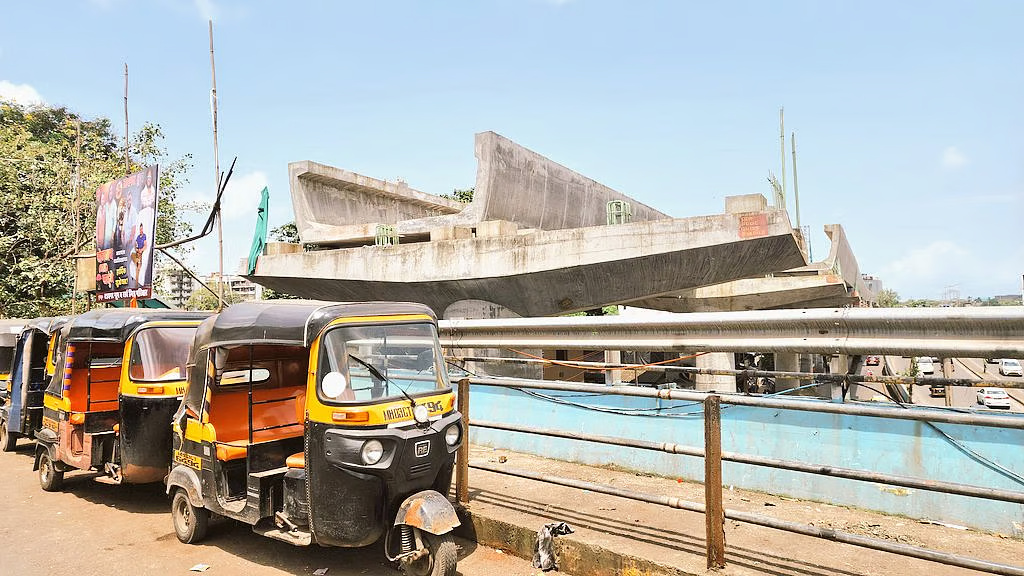
Mumbai’s Metro Line 2B will continue to be constructed at its approved elevation above Kurla’s Halav Bridge, with the city’s planning and civic agencies reiterating that the alignment cannot be altered due to aviation safety regulations. The clarification follows renewed concerns from local residents about the limited clearance between the British-era flyover and the elevated metro girders, raising questions of accessibility for emergency vehicles and everyday mobility.
Metro Line 2B forms part of the 23.6-kilometre Yellow Line, linking DN Nagar in the western suburbs with Mankhurd in the eastern corridor. The stretch passing through Kurla West sits within the approach funnel of the Chhatrapati Shivaji Maharaj International Airport. According to officials from the transport authority, any changes to the height or positioning of the viaduct would conflict with guidelines set by aviation regulators, making realignment technically and legally unfeasible. City officials noted that the gap between the existing flyover and the metro structure is narrower than ideal, but stressed that the project has progressed only after all statutory approvals. They added that they have held multiple meetings with resident groups to explain the constraints imposed by airport safety norms. An official familiar with the project said the construction methodology and alignment were finalised after detailed assessments, and no deviations have been made since clearances were granted.
The issue resurfaced when neighbourhood associations in Kurla reiterated their concern that the low clearance could restrict the movement of larger emergency vehicles once the metro girders are fully placed. While civic engineers confirmed that ambulances can pass within the available 3.5-metre gap, fire engines may require alternative routes. Officials emphasised that these routes will be mapped based on the location of fire stations to ensure response times are minimally affected. Local community representatives argued that raising safety issues is part of their civic responsibility, especially when infrastructure affects daily life in an already congested transit node. However, city authorities clarified that the work on the Halav Bridge section has not been halted at any stage, and that construction activity has continued in line with project schedules.
Once operational, Metro Line 2B is expected to strengthen east–west connectivity in Mumbai and integrate several key transport networks. The line will connect commuters to the Western and Eastern Express Highways, the suburban rail systems, and multiple existing and under-construction metro routes. Urban mobility experts note that despite design constraints, the line will significantly expand access to employment centres, public institutions, and residential hubs, supporting a more sustainable and inclusive mobility ecosystem for the city. By balancing regulatory compliance with last-mile mobility planning, officials say the project aims to deliver a safer and more efficient transit corridor. As work progresses, the focus is expected to remain on ensuring emergency access, commuter safety, and equitable mobility—critical components of a resilient urban transport network.
Also Read: Mumbai CNG Supply Hit After Pipeline Damage As MGL Targets November 18th Restoration
