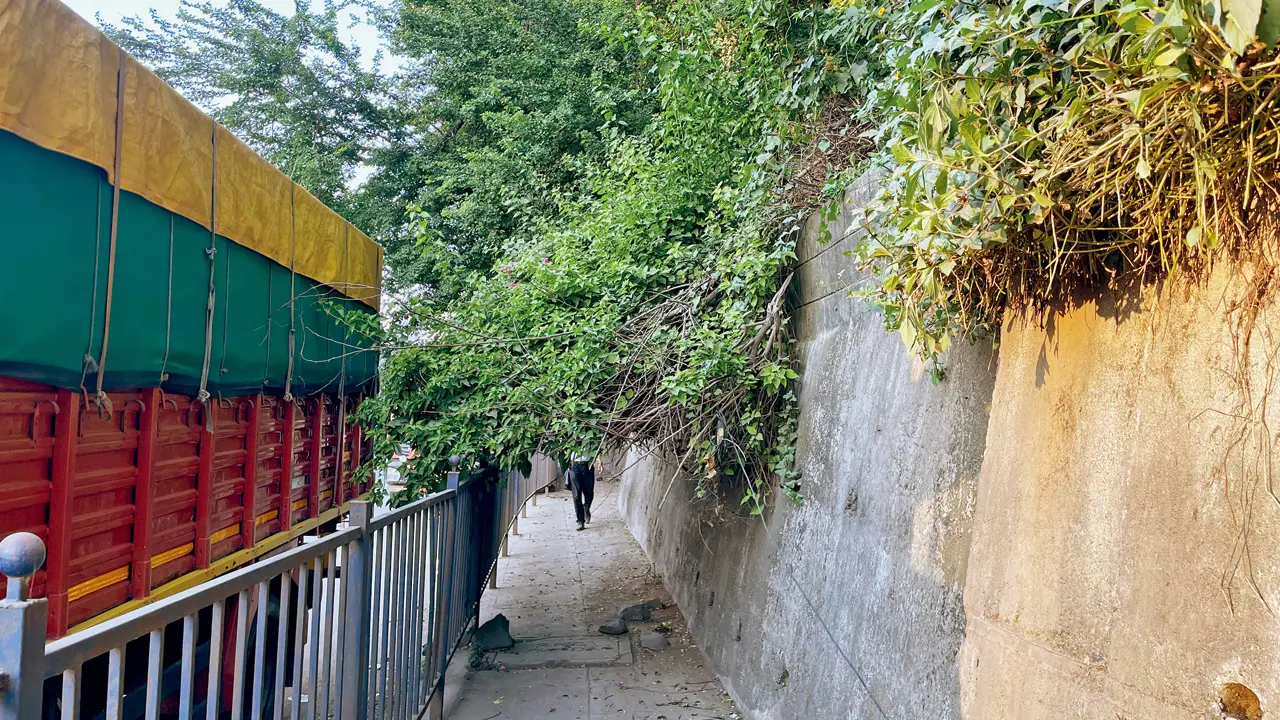
Mumbai’s Western Express Highway (WEH) is witnessing an unusual pedestrian trend, with many walkers choosing the busy carriageway over a dedicated footpath along the Goregaon East stretch between Oberoi Mall and the Aarey Metro station. Overgrown trees, restricted exits and poor maintenance have made the 550-metre walkway difficult to navigate, raising concerns about pedestrian safety and the wider state of walkability in the city.
Residents say the footpath, despite being relatively wide and structurally intact, has become inaccessible due to vegetation that hangs low enough to obstruct visibility and movement. Walkers report constantly bending or swerving to avoid branches, while several shrubs have expanded across the walking surface. According to daily commuters, this has pushed many people—especially women—onto the adjoining highway, where fast-moving traffic creates a significant safety risk. A commuter who uses the route regularly explained that low visibility, limited escape points and a fenced boundary make the stretch particularly uncomfortable for women and senior citizens. The footpath has only three exit points, creating a sense of entrapment, especially after dark. Safety experts note that walkability audits across Indian cities have repeatedly highlighted how poorly lit, visually obstructed or enclosed footpaths disproportionately affect women’s sense of safety and restrict inclusive mobility.
The physical conditions add to the problem. A broken drain lid, uneven pavement blocks and weeds bursting through tiles increase the risk of falls, particularly for the elderly and people with disabilities. Urban planners say such maintenance gaps undermine the city’s shift toward sustainable, low-carbon mobility, where walking and public transport are expected to account for a significant share of daily commutes. Many pedestrians say the issue is not simply about tree growth but the absence of regular upkeep. While residents express appreciation for urban greenery, they emphasise the need for trees to be pruned scientifically so that footpaths remain functional. Several walkers pointed out that vegetation spilling from private plots often obstructs public movement, a recurring challenge in parts of suburban Mumbai.
A civic official from the local administrative ward confirmed that much of the overgrowth originates from private properties. The official said notices may be issued to owners and, if required, the corporation would undertake pruning and impose penalties. Repairs to the broken drain lid and pavement checks have also been initiated, the official added. As Mumbai expands its metro network and encourages modal shift from private vehicles to public transport, ensuring safe, accessible and well-designed pedestrian infrastructure becomes essential. Urban mobility experts note that reliable footpaths are key to shaping equitable, climate-aligned cities. Addressing such gaps, they say, will be crucial to improving first-mile and last-mile connectivity for thousands of commuters in Goregaon and beyond.
Mumbai Footpath Neglected As Overgrown Trees Force Pedestrians Onto Highway