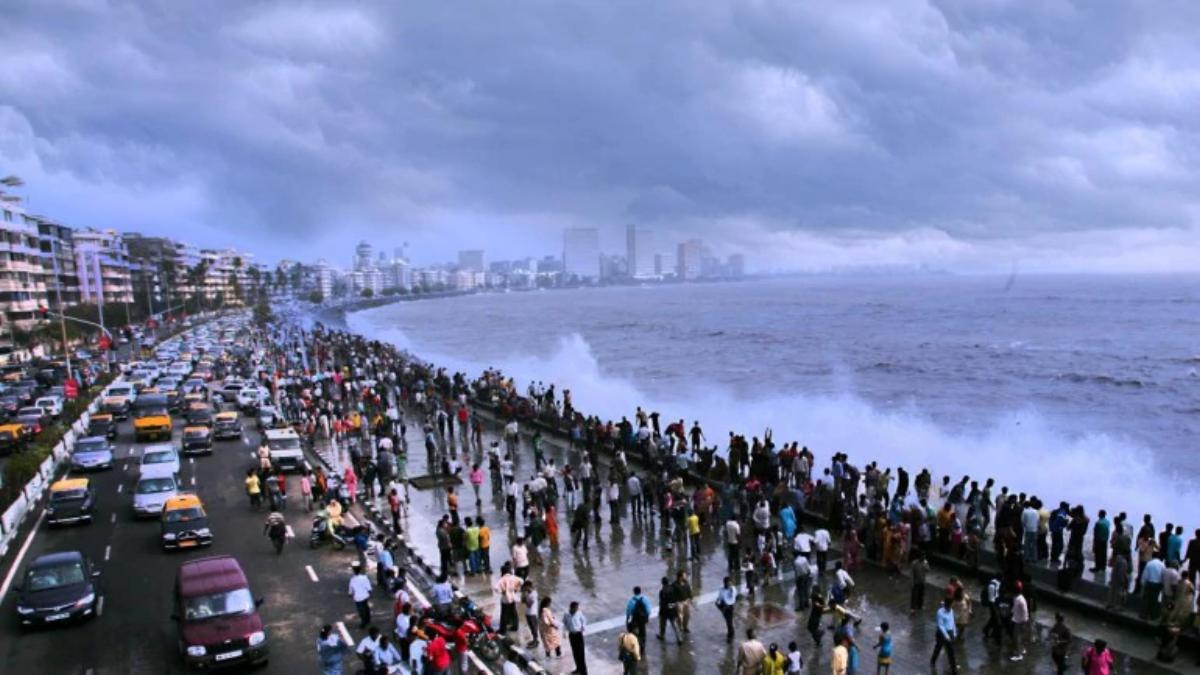
India’s major coastal cities, including Mumbai, Chennai, and Kolkata, face increasing threats of severe flooding as global sea levels continue to rise, according to recent assessments by national research bodies. The findings underline an urgent need for climate-resilient infrastructure and local adaptation strategies to safeguard millions of urban residents and critical assets.
A 2025 study by the Indian National Centre for Ocean Information Services (INCOIS) projects that relative mean sea levels (RMSL) could rise by 62 centimetres in Visakhapatnam and up to 87 centimetres in Bhavnagar by the end of the century. When combined with tidal surges and storm events, this could push extreme sea levels several metres higher, exposing densely populated coastal regions to recurrent flooding. Experts highlight that India’s coastal topography magnifies the risk. Much of Mumbai, Kolkata, and Chennai lies within 10 metres of the current sea level, making even small rises catastrophic. Research shows that under high-emission scenarios, flooding in Mumbai’s southern and eastern zones could disrupt administrative and economic activity. Similar vulnerabilities are reported in Kolkata’s riverbank areas and Chennai’s waterfront corridors.
Scientists and urban planners warn that climate impacts will not be uniform. Local factors such as ocean currents, land subsidence, and storm frequency could intensify flooding in some cities more than others. “The north Indian Ocean has historically experienced high cyclone activity and storm surges. Combined with sea level rise, these conditions will amplify flood risks in Indian coastal regions,” said a senior climate researcher. India’s climate agencies have taken early steps toward coastal resilience. The Coastal Management Information System (CMIS) and the National Centre for Coastal Research (NCCR) are mapping erosion patterns and shoreline changes to inform regional planning. However, experts say that city-level flood models, hazard zonation maps, and responsive drainage systems remain underdeveloped.
Mumbai’s Climate Action Plan 2022 includes flood-resilient measures and expanded stormwater capacity, but implementation lags. Urban planners emphasise that cities must integrate early warning systems, robust monitoring networks, and clearly defined response protocols. “Technology exists, but execution and governance coordination are key,” noted an urban climate expert from a leading institute. Analysts recommend combining hard infrastructure like seawalls and surge barriers with nature-based defences such as mangrove restoration and wetland buffers. Medium-risk cities like Kochi and Mangaluru are advised to strengthen natural barriers and early alert systems to mitigate future disasters.
India’s coastal resilience will depend on how effectively national and state governments align emissions reduction with long-term adaptation. Without decisive investment and urban design reform, rising seas could turn climate change from a distant concern into an annual urban crisis.
Indias Coastal Regions Brace For Intensifying Flood Risks Amid Accelerating Sea Level Rise