


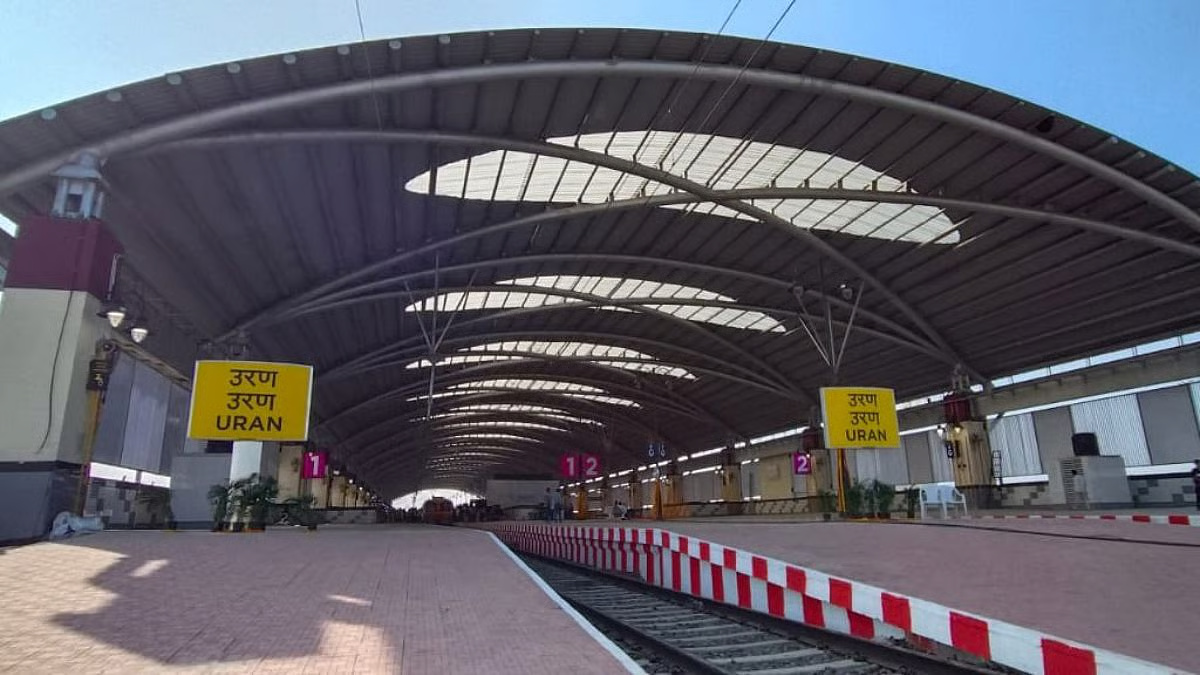
Suburban train services on the Belapur–Uran corridor in Navi Mumbai were suspended for over three hours on Wednesday following a petroleum pipeline leak near the tracks. The disruption, which affected hundreds of commuters, highlighted the continuing challenge of maintaining safety in infrastructure zones where transport and industrial networks overlap.
Officials from Central Railway confirmed that power to the overhead electric lines between Kharkopar and Uran stations was shut off around 1:10 pm as a precautionary measure after a leak was detected from a nearby petroleum pipeline. The suspension lasted until 4:45 pm, during which teams from the railways and petroleum authorities carried out safety inspections to contain the leak and prevent potential ignition. According to a senior railway official, the power supply was disconnected immediately after the leak alert was raised to eliminate any risk of sparks or fire in the vicinity of flammable material. “Safety of passengers and railway assets was the top priority. Operations were resumed only after clearance from the concerned safety teams,” the official said.
The Divisional Railway Manager of Central Railway’s Mumbai division also confirmed the suspension on social media, assuring passengers that restoration was undertaken as soon as safety checks were completed. Emergency services were kept on standby throughout the operation. The Belapur–Uran suburban line serves as a critical link for residents of Navi Mumbai and Raigad district, especially those commuting to industrial zones and the Jawaharlal Nehru Port area. The corridor, developed as part of the city’s eastward connectivity expansion, has significantly reduced travel time for daily commuters. However, the temporary suspension underscored the vulnerability of urban transport systems when essential infrastructure corridors—such as pipelines, power cables, and rail networks—run in close proximity.
Urban planners and infrastructure experts noted that such incidents call for improved inter-agency coordination and stricter zoning norms to ensure safe co-existence of utilities and mobility corridors. They also emphasised the need for real-time monitoring and early-warning systems, especially in densely developed industrial regions like Navi Mumbai. The episode serves as a reminder of the delicate balance between industrial growth and commuter safety in India’s rapidly urbanising regions. Strengthening resilience through advanced surveillance, coordinated emergency response, and sustainable planning frameworks will be key to ensuring both safety and reliability in the country’s expanding transport networks.
Also Read : Mumbai Airport Achieves 98.7% Waste Diversion, Reduces Energy Intensity by 5.5%
