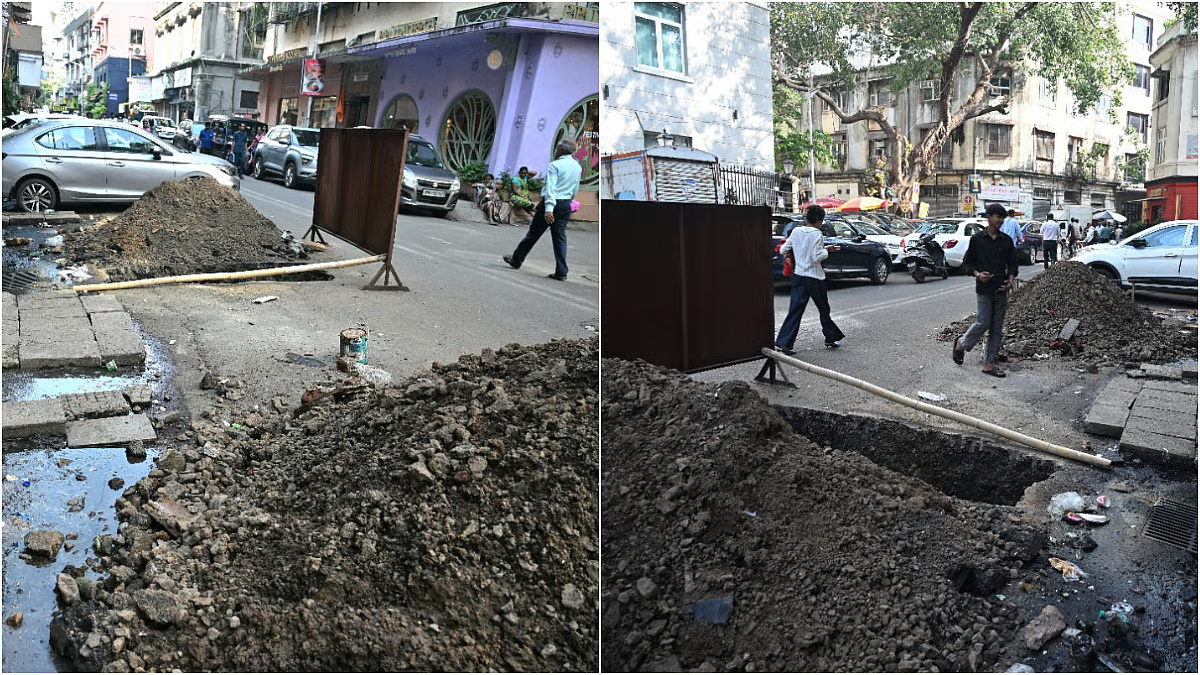
Mumbai’s celebrated heritage district, Kala Ghoda, is facing a crisis of neglect even as the city’s civic body presses ahead with its ambitious beautification initiative. Once renowned for its cultural vibrancy, cobblestone streets, and heritage architecture, the precinct today is battling poor maintenance, persistent drainage overflows, and unregulated parking — undermining efforts to transform it into a pedestrian-friendly, world-class cultural zone.
The Brihanmumbai Municipal Corporation (BMC) has undertaken a multi-phase beautification project to revitalise Kala Ghoda’s streetscape. In the first phase, streets such as V. B. Gandhi Marg, Rutherfield Street, Rope Walk Lane, Saibaba Road, and B. Bharucha Road were upgraded with cobblestone pavements, intended to echo the precinct’s colonial-era charm. However, the very design meant to enhance its heritage appeal has become a challenge. According to civic engineers, the cobblestone streets were designed exclusively for pedestrian use. However, with vehicles continuing to ply during weekdays despite weekend pedestrian-only restrictions, many stones have cracked under pressure. “We are forced to repeatedly barricade and repair sections as the stones dislodge under vehicular weight,” said an official from the BMC’s A Ward.
Even as phase one struggles with execution flaws, phase two of the project is set to expand to key adjoining streets, including Mahatma Gandhi Road, K. Dubash Road, Nagindas Road, and Forbes Street. This phase, estimated at ₹12 crore, will include the development of a parking plaza to support the planned pedestrianisation. Local architects and business owners, however, remain unconvinced. “The design intent mirrors European pedestrian zones, but the context here is different,” noted a heritage architect working in the precinct. “Without solving existing issues like overflowing drains, debris dumping, and haphazard parking, cobblestone upgrades alone will not restore the area’s livability or aesthetic.”
On Nagindas Road, a major commercial stretch, locals have reported persistent drainage overflows for nearly eight months. Several shops have shuttered due to the stench and poor hygiene. In response to mounting complaints, the BMC recently initiated drain replacement work, but progress remains slow. Experts argue that successful urban revitalisation must combine design excellence with long-term maintenance planning. “Beautification should not come at the cost of functionality,” said an urban planner. “A truly sustainable heritage zone is one that balances cultural preservation with civic efficiency and accessibility.”
As the BMC prepares to commence phase two by mid-2026, the Kala Ghoda project stands at a crossroads — between its historic identity and the realities of modern urban governance. The challenge now lies in ensuring that beautification efforts genuinely enhance, rather than erode, Mumbai’s cultural heritage.
BMCs Beautification Drive Fails To Retain Kala Ghodas Heritage Charm Amid Neglect