


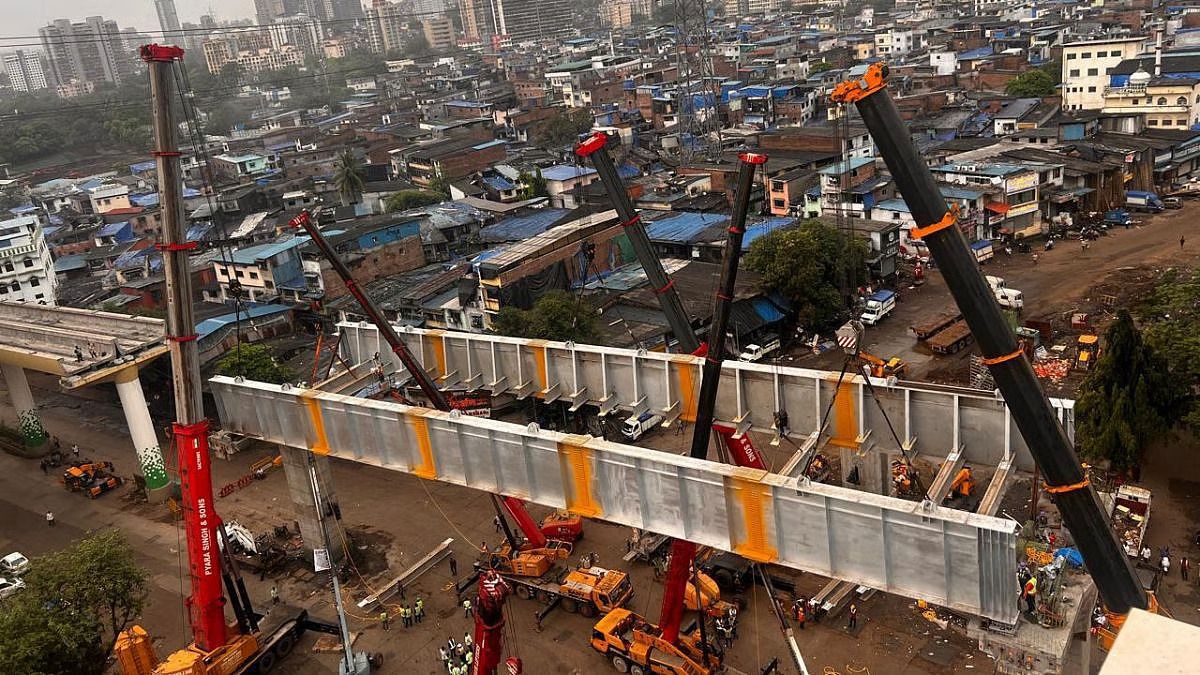
The ambitious Thane–Borivali Twin Tunnel project, developed by the Mumbai Metropolitan Region Development Authority (MMRDA), is moving steadily towards completion, marking a crucial step in easing Mumbai’s daily commute. Designed to drastically reduce travel time between the eastern and western suburbs from over an hour to just 15 minutes, the 11.8-kilometre underground corridor is shaping up as one of India’s most advanced urban mobility initiatives.
Excavation work on the Thane-side tunnel boring machine (TBM) launching shaft, which began in October 2024, is nearing completion. MMRDA officials confirmed that the Thane casting yard is already operational, while civil work at Borivali’s construction site continues apace. Land acquisition on the Thane stretch has been substantially completed, with rehabilitation of project-affected persons progressing on the Borivali end. When complete, the twin tunnels will connect Thane’s Ghodbunder Road directly to the Western Express Highway, bypassing major choke points such as Ghodbunder and the busy arterial routes through Powai and Goregaon. The corridor passes beneath Sanjay Gandhi National Park — a first-of-its-kind feat in Indian tunnelling — with engineers deploying advanced boring technology to ensure minimal environmental impact.
Each tunnel will house three lanes, including an emergency lane, and feature cross-passages every 300 metres. The design integrates modern safety infrastructure such as smart ventilation systems, fire suppression mechanisms, smoke detection sensors, and LED guidance signage. Officials noted that sustainability and safety are embedded at every stage of the project, with an emphasis on reducing vehicular emissions and enhancing commuter comfort. The project has already been hailed as a transformative intervention in the city’s broader effort to modernise its mobility ecosystem. “The tunnel will not only shorten travel time but also ease pressure on existing road networks, lower carbon emissions, and offer a cleaner, faster way to travel,” said a senior MMRDA official.
Beyond its transport benefits, the Thane–Borivali corridor reflects Mumbai’s shift towards more integrated, environmentally conscious infrastructure. By encouraging smoother traffic flow and reducing fuel wastage, the project supports the city’s sustainability objectives and long-term goal of achieving a greener, less congested urban environment. Once operational, the twin tunnel will stand as a milestone in the evolution of Mumbai’s transport infrastructure — a model of how modern engineering and ecological mindfulness can coexist to create a more resilient and connected metropolis.
Also Read: Mumbai Metro 1 May Soon Expand To Six Coaches To Ease Overcrowding
