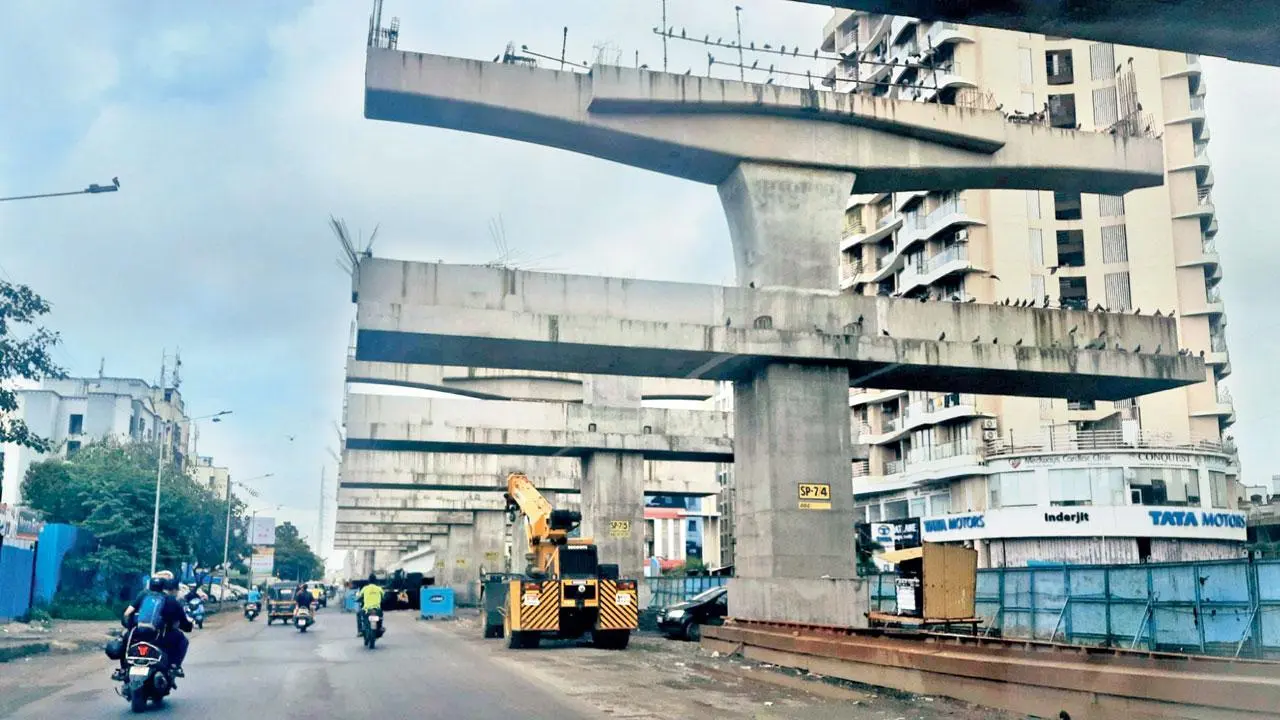
Mumbai To Build 21 Km Double Decker Flyover Linking Navi Mumbai And Bhiwandi Soon
Mumbai Metropolitan Region (MMR), the Mumbai Metropolitan Region Development Authority (MMRDA) has proposed a 21-kilometre double-decker flyover connecting Shil Phata in Thane district to Ranjnoli Junction in Bhiwandi via Kalyan. If completed, it could become India’s longest flyover, improving regional mobility and linking major industrial and residential hubs.
According to senior officials, MMRDA has initiated the process of appointing a consultant to prepare a detailed project report (DPR) for the corridor. The consultant will oversee project design, tendering, and execution. The proposed structure will integrate road traffic on its lower deck and metro lines on the upper level, a first-of-its-kind infrastructure model for the region.The flyover is planned to align with multiple large-scale urban mobility projects, including the Virar–Alibaug multi-modal corridor, the Airoli–Katai Freeway, and the Mumbai–Ahmedabad bullet train alignment. Such integration is expected to create a continuous and efficient transport network, easing pressure on arterial routes and shortening travel time between industrial clusters and suburban neighbourhoods.
As per initial blueprints, the corridor will start at Shil Phata on National Highway 48, pass through Dombivli and Kalyan, and end at Ranjnoli Junction on National Highway 160. The upper deck will accommodate three metro routes Line 5 (Bhiwandi–Kalyan), Line 12 (Kalyan–Taloja), and Line 14 (Kanjurmarg–Badlapur)making it one of the most integrated transit corridors in the Mumbai region.
Officials said the project’s design will consider technical challenges such as rail overpasses at Kalyan and Katai Naka, areas that experience heavy suburban and long-distance train movement. Construction in these zones will require precision planning and coordination with Indian Railways to ensure safety and minimise service disruptions.Urban transport experts have welcomed the proposal, noting that integrated infrastructure combining road and rail systems can significantly reduce carbon emissions by promoting high-capacity public transit over private vehicles. They added that such corridors could support a long-term shift toward sustainable, multimodal commuting in fast-growing cities like Mumbai and Thane.Once implemented, the 21-kilometre link is expected to reshape connectivity across the region connecting dense residential suburbs with upcoming business districts while reducing traffic load on existing highways.