


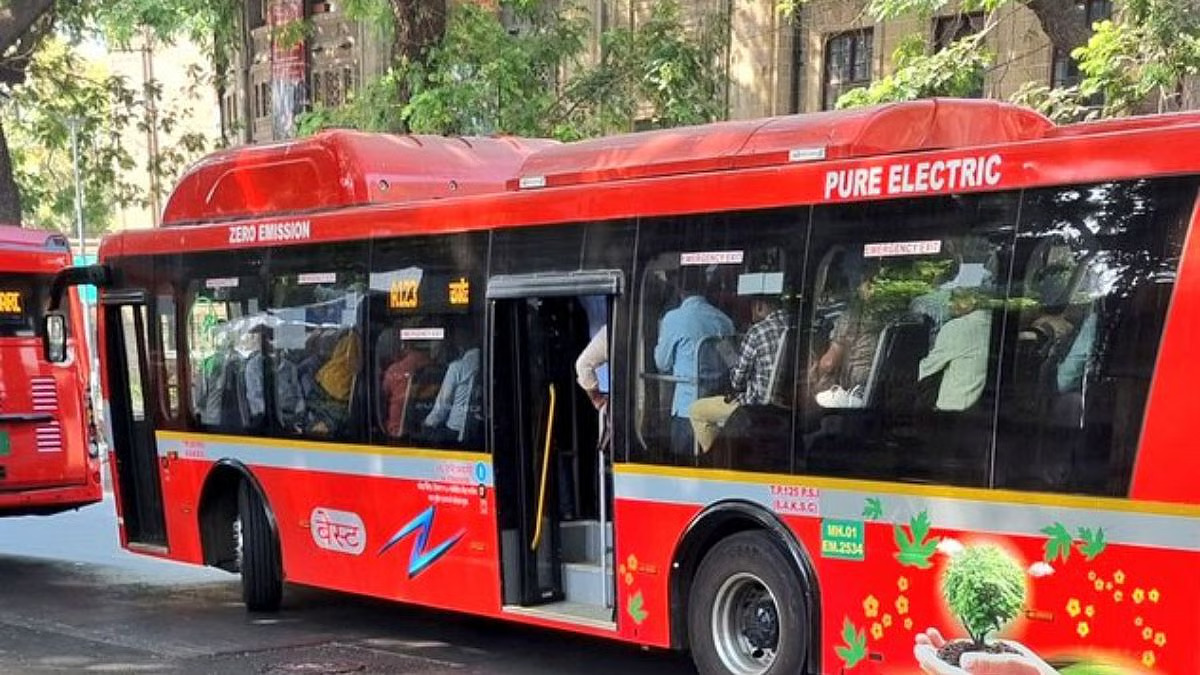
Brihanmumbai Electric Supply and Transport (BEST) Undertaking has announced a comprehensive restructuring of its bus network effective 1 November 2025. The overhaul includes the introduction of a new route—A-101—along with the rationalisation and modification of 23 existing routes across Mumbai, aiming to enhance efficiency, connectivity, and commuter experience.
The new route, A-101, will operate between the World Trade Centre at Cuffe Parade and Chhatrapati Shivaji Maharaj Terminus (CSMT – Bhatiya Baug), passing through key commercial and institutional zones such as Colaba, Y.B. Chavan Pratishthan, Hutatma Rajguru Chowk, and Madame Cama Road. The service will run from Monday to Saturday, catering to heavy weekday commuter traffic in South Mumbai. In addition to the new service, eight routes have been converted to fully air-conditioned operations, reflecting BEST’s focus on comfort and sustainability. Among these are routes linking Bandra, Trombay, Bhandup, and Malvani, providing air-conditioned options for suburban passengers and contributing to a gradual shift towards cleaner, energy-efficient public mobility.
The network overhaul has also rationalised 23 routes to reduce redundancies and improve service frequency. Major changes include extending Route A-30 to Vikhroli Depot, modifying Route A-1 to connect CSMT and Santacruz Depot, and renumbering Route A-60 as A-458, now operating between Deonar and Borivali. Routes A-45 and A-49 will now extend up to Mahul Village, while several others across the western and eastern suburbs have been adjusted to optimise travel patterns and reduce overlaps. In the city’s central and southern corridors, key improvements include extending Route A-69 to Wadala Depot, rerouting A-77 via Jaslok Hospital and Haji Ali, and adjusting Route A-171 to connect Worli Depot with Antop Hill. Officials said these refinements are based on passenger feedback, route demand data, and travel-time analysis.
BEST’s management stated that the initiative forms part of a long-term mobility modernisation strategy. “Our goal is to make public transport more seamless, comfortable, and aligned with the evolving needs of Mumbai’s commuters. Rationalising routes reduces congestion and enables faster, more reliable journeys,” said a senior BEST official. Transport analysts have welcomed the move as a step towards creating a more integrated and sustainable urban transport ecosystem. With rising fuel costs and increasing road congestion, experts note that improving bus reliability and comfort can encourage citizens to shift from private vehicles to public transport — a crucial transition for lowering the city’s carbon footprint.
The undertaking is also exploring the inclusion of more electric and hybrid buses in future route expansions, in line with Mumbai’s broader climate resilience and clean mobility goals. Through this overhaul, BEST seeks not only to restore commuter confidence but also to position itself as a cornerstone of Mumbai’s green mobility transition — one that balances accessibility, efficiency, and environmental responsibility.
Also Read: Navi Mumbai Clears 8000 Hawkers In Civic Campaign
