


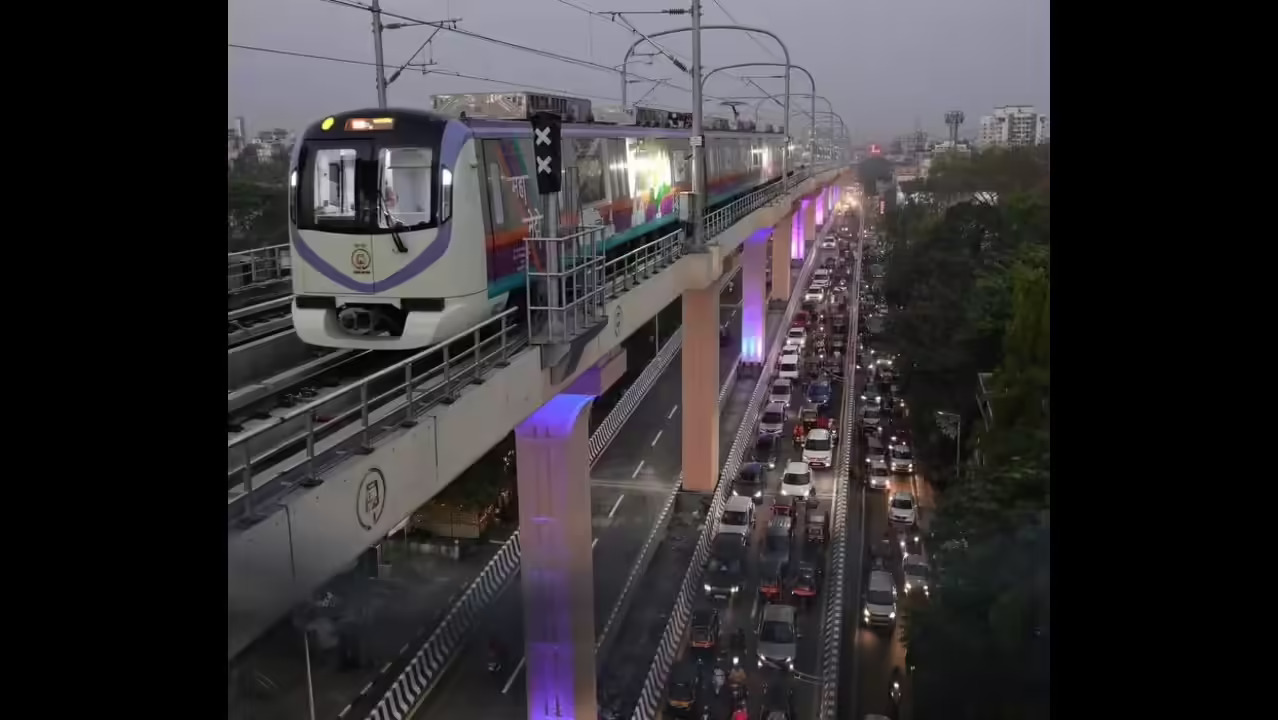
Pune’s metro commuters continue to face last-mile connectivity challenges, with a recent Maha Metro survey revealing that around 30% rely on feeder services such as PMPML buses and autorickshaws to access stations. While these services play a crucial role in daily travel, passengers and experts say their limited frequency and poor integration with train timings are reducing the network’s overall efficiency.
According to Maha Metro officials, the survey was part of an ongoing effort to evaluate passenger travel patterns and improve multi-modal integration across Pune’s expanding urban transport system. The data indicates that nearly one in three metro users depend on some form of feeder service. However, despite the Pune Mahanagar Parivahan Mahamandal Ltd (PMPML) introducing modified routes from key metro stations, low bus frequency during peak hours and limited route coverage remain major concerns. Currently, 30 metro stations are operational across two corridors, carrying nearly two lakh passengers daily. While PMPML operates feeder buses from prominent stations such as Vanaz, Garware College, and Civil Court, passengers report long waiting times, especially during the morning and evening rush. A senior commuter from central Pune noted that some major residential zones within a 3 km radius of stations still lack direct feeder routes, making last-mile travel inconvenient.
A Maha Metro official confirmed that collaborative efforts with PMPML are ongoing to enhance service frequency and extend routes. “We are conducting regular assessments to identify high-demand zones. Discussions are also underway with the Regional Transport Office (RTO) and traffic police to improve autorickshaw integration and fare transparency,” the official said. Plans include the introduction of shared auto options at more stations and the use of digital tools to better synchronise bus arrivals with metro timings. Urban mobility experts say improving feeder connectivity is essential for increasing metro ridership and reducing the city’s carbon footprint. Efficient last-mile transport helps commuters shift away from private vehicles, easing congestion and cutting emissions. However, this requires integrated planning between transport agencies and consistent public feedback.
As Pune expands its metro reach, the success of the system will increasingly depend on how effectively it connects passengers beyond station gates. Experts emphasise that sustainable urban mobility is not just about large-scale infrastructure but also about small, well-coordinated systems that ensure inclusive, low-emission access for all.
Also Read: Mumbai Speeds Up Goregaon Mulund Twin Tunnel Excavation
