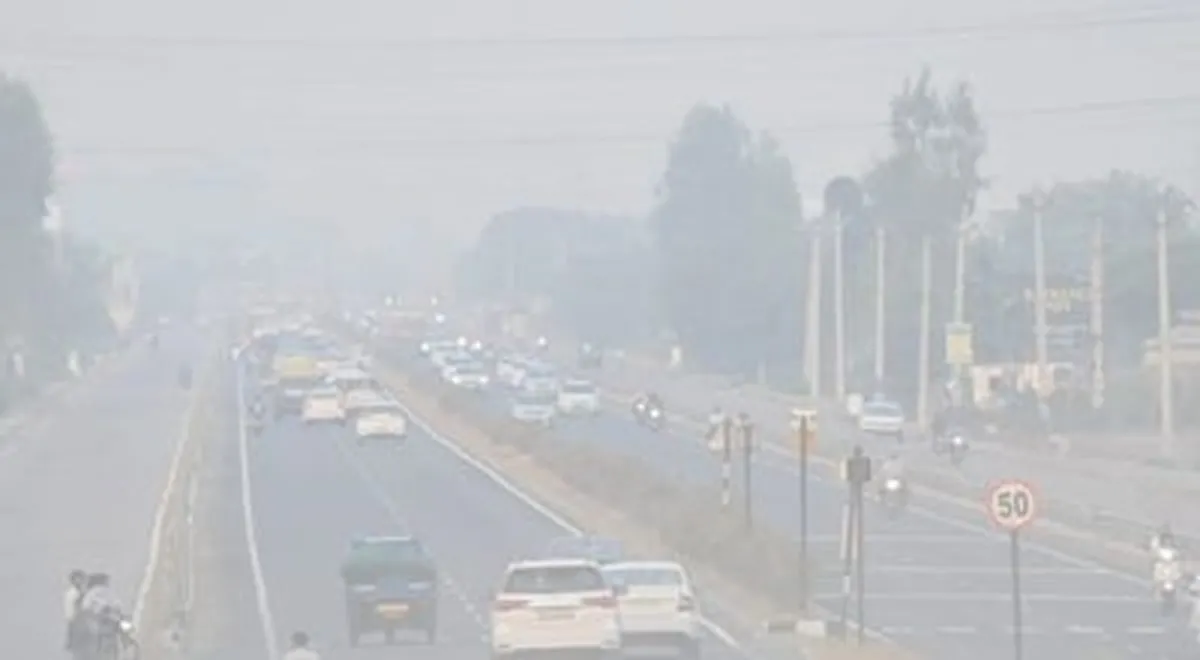
In a decisive move to address the rising pollution levels across the National Capital Region, the National Highways Authority of India (NHAI) has rolled out a comprehensive Standard Operating Procedure (SOP) for highway projects in Delhi-NCR. The framework aims to curb dust emissions, vehicular pollution, and construction-related air contamination through stringent on-ground enforcement and sustainable operational practices.
The SOP, applicable to both ongoing and completed stretches under NHAI’s jurisdiction, mandates strict compliance from contractors, engineers, and field officers. It lays emphasis on mechanised sweeping, dense plantation drives, and the use of green buffers along major interchanges to control dust dispersion. The directive also integrates environmental sustainability by encouraging the use of inert materials and Construction and Demolition (C&D) waste for road building — a measure that reduces the sector’s carbon footprint and promotes a circular economy approach.
To combat particulate pollution from highway construction, the guidelines prescribe the use of anti-smog guns, water sprinklers, and mandatory covering of loose materials with green nets. The SOP also requires that all material-carrying vehicles be covered with tarpaulin sheets to prevent dust from becoming airborne. Periodic inspections will ensure road maintenance standards are upheld, including prompt repair of potholes one of the most overlooked contributors to dust pollution on highways.Officials stated that the move marks a significant step towards creating cleaner, greener, and more sustainable transport corridors. Every project site must now install air-quality monitoring systems to ensure compliance with norms set by the Commission for Air Quality Management (CAQM) and respective State Pollution Control Boards.
In addition to technical directives, the SOP stresses behavioural and institutional accountability. Contractors, authority engineers, and concessionaires will undergo environmental awareness and training programmes. A grievance redressal mechanism linked to the Green Delhi App will also be activated, allowing citizens to report non-compliance in real-time.An NHAI technical official, who chaired the recent compliance review meeting, instructed all field offices to mobilise manpower and resources on a war footing. “Tangible outcomes will depend on the speed and seriousness with which these guidelines are implemented,” the official noted, emphasising that immediate and visible results are expected from both contractors and supervising teams.
The SOP’s introduction comes at a time when Delhi-NCR’s air quality has dipped into the “very poor” category, prompting city-wide emergency responses under the Graded Response Action Plan (GRAP). By institutionalising pollution control at the infrastructure level, NHAI’s strategy signals a shift from reactive measures to preventive action aligning with India’s broader vision for low-carbon, sustainable urban mobility.If enforced effectively, this initiative could transform highways from major pollution sources into cleaner mobility arteries, supporting the long-term goal of building resilient and eco-friendly urban infrastructure.
Delhi NCR gets NHAI’s new SOP to curb highway pollution