


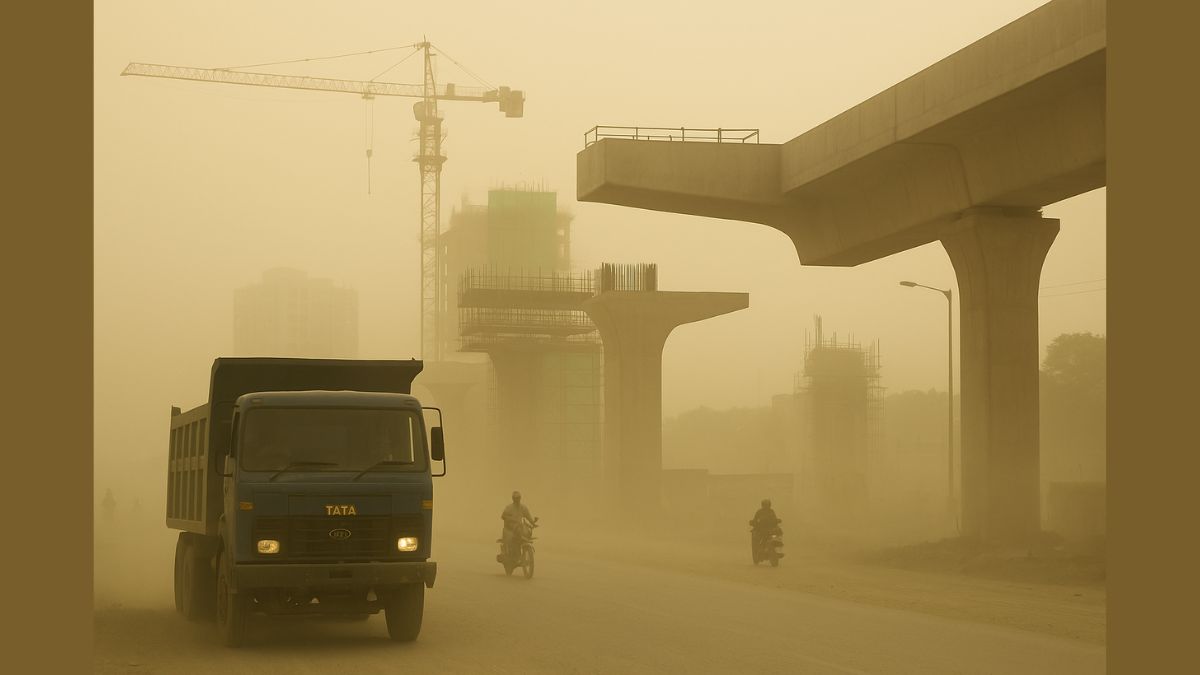
Air quality across Pune and Pimpri-Chinchwad plunged to alarming levels during the Diwali festivities, with suburban areas like Wakad and Hinjawadi reporting some of the city’s worst pollution readings. According to the Central Pollution Control Board’s (CPCB) real-time monitoring data, the Air Quality Index (AQI) at Bhumkar Chowk in Wakad touched 315, categorised as “very poor,” while Hinjawadi consistently hovered above 200 throughout the festive period.
The spike in pollution levels coincided with heavy firecracker activity and ongoing construction works in Pune’s western corridor, home to major IT parks and residential projects. Officials from the Maharashtra Pollution Control Board (MPCB) confirmed that particulate matter (PM 2.5 and PM 10) concentrations surged beyond permissible limits, posing severe respiratory health risks, particularly to vulnerable groups such as children and the elderly. Experts have attributed the worsening air quality to a combination of festive emissions, vehicular congestion, and continuous dust generation from infrastructure projects. Metro expansion work between Pimpri and Nigdi and along the Shivajinagar–Hinjawadi route has intensified particulate pollution, while heavy construction around Wakad and Chovisawadi has contributed to layers of dust settling over streets, homes, and vehicles.
Residents in affected localities have voiced growing frustration over the persistent smog and dust. Complaints about breathing discomfort, eye irritation, and reduced visibility were widely reported. Many have demanded immediate intervention from civic authorities, urging the Pune and Pimpri-Chinchwad municipal corporations, PMRDA, and MIDC to enforce stricter dust control and waste management regulations at construction sites. Environmental experts have also warned that Diwali-related emissions compounded by stagnant weather conditions may prolong poor air quality across the Pune Metropolitan Region (PMR) for several days. The situation is further aggravated by increased vehicular activity and insufficient green cover in newer suburbs.
Officials have advised citizens to take preventive measures such as wearing masks and avoiding prolonged outdoor exposure during early mornings and late evenings when pollutant concentrations are typically higher. They also urged citizens to adopt cleaner modes of celebration and reduce dependence on firecrackers, which remain a primary contributor to the post-Diwali smog. While Pune’s air quality traditionally fares better than Delhi or Mumbai, the recent surge in AQI levels has raised concerns about the city’s unchecked urbanisation and poor enforcement of environmental safeguards. Sustainable urban planning, improved public transport, and stricter emissions monitoring are being seen as vital to ensuring Pune does not slide further into the ranks of India’s most polluted cities.
Also Read : CESL To Float Tender For 10,900 Electric Buses Across Five Cities On November 6
