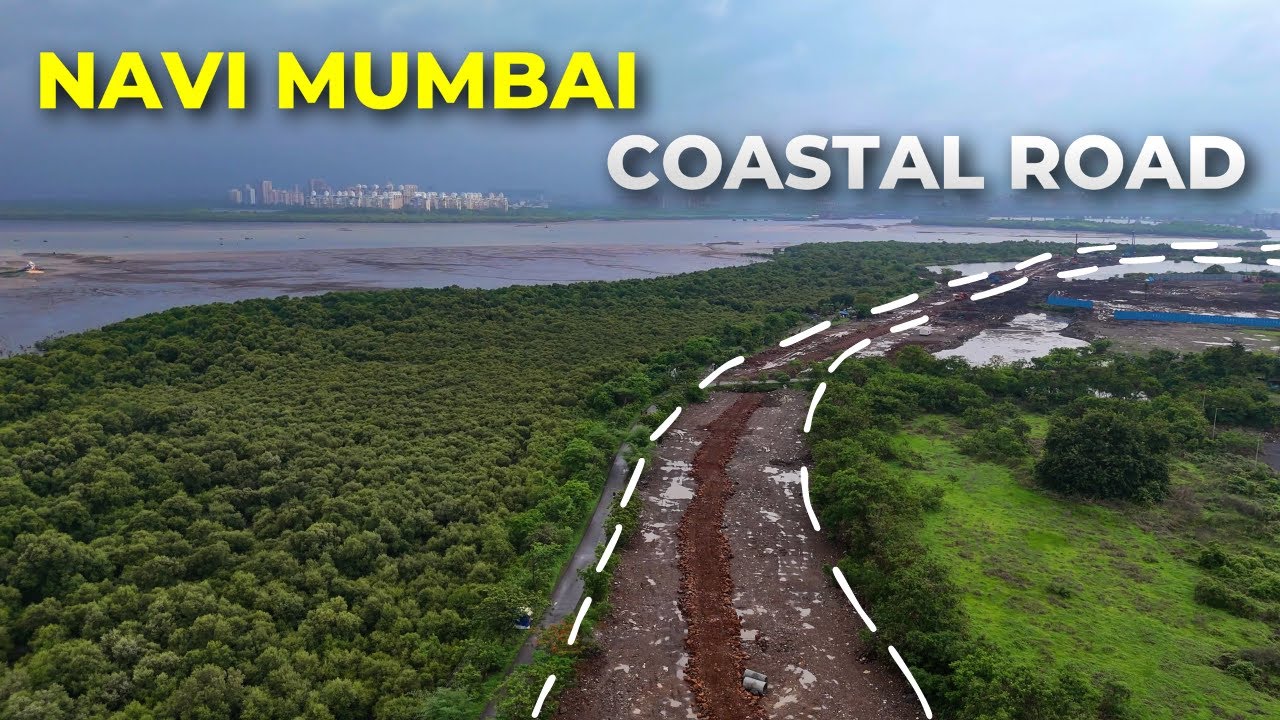
As Navi Mumbai prepares to welcome its first international airport operations this December, the Ulwe Coastal Road has emerged as the linchpin of last-mile connectivity between the Atal Setu and the upcoming Navi Mumbai International Airport (NMIA). Once complete, the 5.8-kilometre stretch complemented by a 0.9-kilometre airport link will drastically reduce travel time by nearly 25 minutes for vehicles arriving via the Mumbai Trans Harbour Link (MTHL), India’s longest sea bridge.
The City and Industrial Development Corporation (CIDCO), spearheading the project, has set a target to open the route for traffic by late 2026. While the Ulwe Coastal Road promises seamless access between Mumbai and the new airport, its journey to realisation has been far from smooth, marked by environmental, regulatory, and infrastructural hurdles.According to senior officials, the initial delays stemmed from obtaining Coastal Regulation Zone (CRZ) clearance, which required the entire road section passing through sensitive mangrove zones to be built on stilts rather than traditional embankments. This redesign, while crucial for environmental protection, pushed project costs from ₹700 crore to nearly ₹1,600 crore.
Despite the cost escalation, planners view the shift as a long-term investment in sustainable urban infrastructure. “The elevated design minimises damage to mangroves and reduces the project’s ecological footprint,” said an official associated with the project, adding that around 3,700 mangroves approved for felling will be offset through compensatory afforestation.The Ulwe Coastal Road will begin at Aamra Marg in Belapur and run through Seawoods, Ulwe, Bamandongri, and Targhar before merging with the Setu interchange at Shivaji Nagar. Once operational, the road will become a critical part of Navi Mumbai’s green mobility network, improving accessibility while aligning with sustainable development goals.
However, navigating through regulatory frameworks has tested the project’s endurance. Coordination with railway authorities for an overbridge above the Nerul–Uran line, as well as negotiations with the local fishing community dependent on the adjoining creeks, required meticulous planning. CIDCO has pledged uninterrupted access to water channels for fisherfolk and formed a compensation committee to address livelihood concerns.
Currently, 60 per cent of Phase I and 30 per cent of Phase II construction is complete. CIDCO officials remain confident that the timeline for full completion by September 2026 will be met.When operational, the Ulwe Coastal Road will not just shorten travel time it will symbolise how infrastructure can evolve responsibly, balancing progress with preservation. For Navi Mumbai, the project represents more than an access route; it’s a step towards a cleaner, connected, and more sustainable urban future.