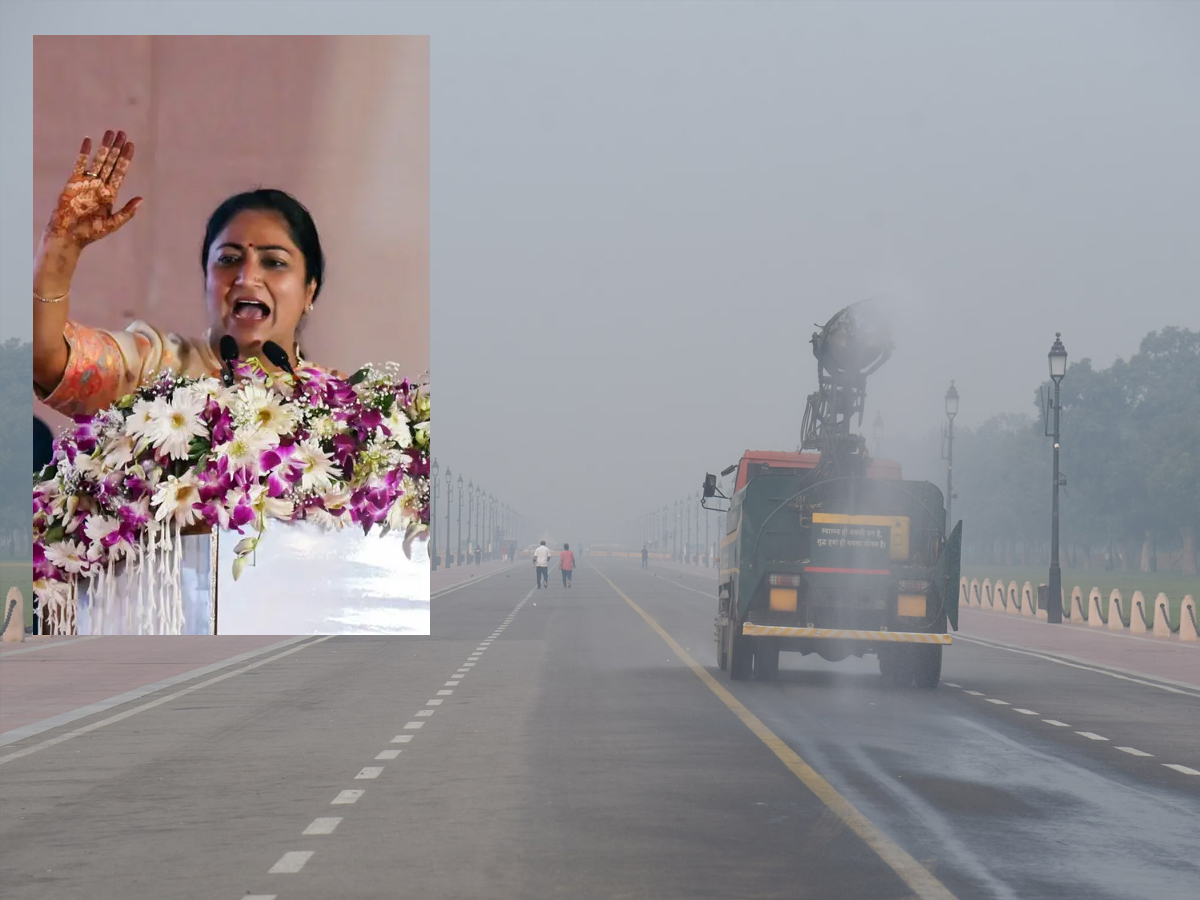
Delhi to Witness First Artificial Rain on Oct 29 to Tackle Pollution Crisis
Delhi is preparing to make weather history. In a bold scientific intervention to combat hazardous post-Diwali smog, the national capital will witness its first artificial rainfall on 29 October, a move that could redefine urban air management in India.
The initiative, developed through collaboration between a leading technical institute and the meteorological department, aims to deploy cloud seeding technology to stimulate rainfall over parts of the city. The project, estimated at ₹3.21 crore, is being closely watched by environmental experts as a test of whether climate engineering can offer temporary relief to Delhi’s toxic skies.Artificial rain, also known as cloud seeding, involves dispersing substances such as silver iodide or potassium iodide into moisture-laden clouds.
These act as nuclei for condensation, increasing the probability of rainfall. Though it doesn’t create clouds, it enhances the rain potential of existing ones. The technique has seen success in countries such as China, the UAE, and the United States, where it has been used to mitigate droughts and reduce dust storms.
Officials describe this experiment as a “historic step” and part of a wider policy to integrate science-led strategies into Delhi’s pollution control measures. Modified aircraft will be used to spray the chemical mixture across selected zones of northwest and outer Delhi, covering nearly 100 square kilometres in one sortie lasting about 90 minutes.
Trial runs earlier this year reportedly yielded encouraging results, prompting the government to schedule additional operational windows on 28 and 30 October depending on weather conditions.The timing couldn’t be more crucial. Delhi’s air quality has plummeted to alarming levels following Diwali celebrations, with the Air Quality Index (AQI) breaching the “Severe” category in several areas. According to the Central Pollution Control Board, readings above 400 were recorded in multiple neighbourhoods, signifying hazardous conditions that can affect respiratory and cardiovascular health.
Environmental experts, however, remain cautiously optimistic. They acknowledge that while artificial rain may help settle particulate matter and improve short-term visibility, it is not a substitute for structural reforms in emission control, transport management, and urban planning. Moreover, cloud seeding’s success depends heavily on atmospheric humidity levels and wind patterns factors that are often unpredictable in Delhi’s dry inland climate.If successful, this initiative could open new pathways for urban climate adaptation, offering a template for other pollution-prone cities such as Mumbai, Lucknow, and Kolkata. More importantly, it underscores an urgent need to combine innovation, policy, and public participation in India’s pursuit of clean and equitable urban air.