


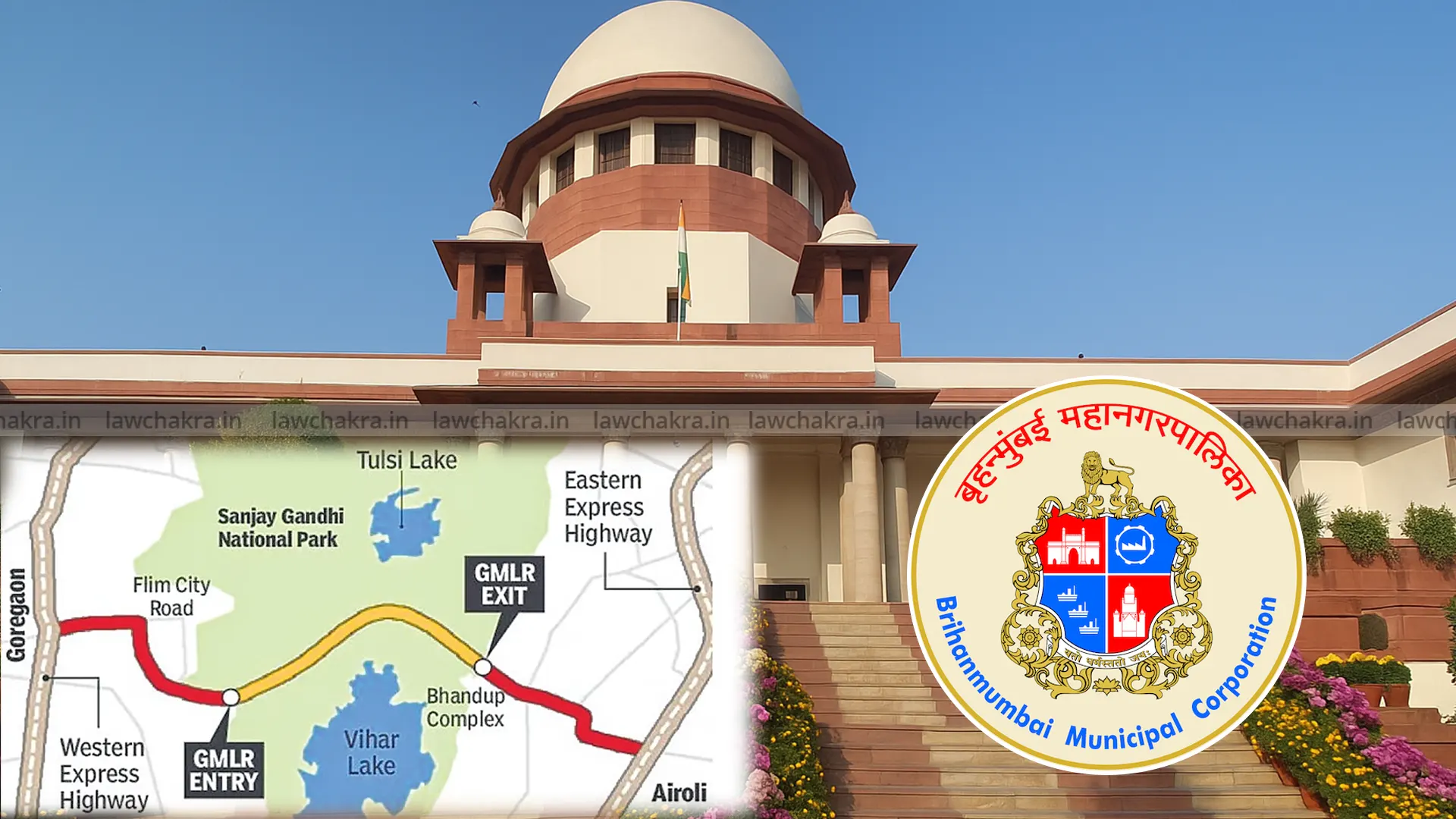
The Supreme Court is scheduled to hear on October 27 a fresh plea filed by the Brihanmumbai Municipal Corporation (BMC) seeking approval to fell additional trees for the ongoing Goregaon–Mulund Link Road (GMLR) project. The civic body has assured that the tree removal will follow strict compensatory afforestation protocols, including geo-tagging of new saplings, to mitigate environmental impact.
The plea, filed shortly after an earlier approval to cut 95 trees in August, seeks permission for further removal to expedite construction of the first phase of the 13-kilometre east–west link road. A bench led by Chief Justice B R Gavai, along with Justices K Vinod Chandran and Vipul M Pancholi, will consider the matter following the Diwali break. Officials have emphasised that the proposed felling will be strictly confined to areas essential for construction, with new plantations compensating for the ecological loss. The GMLR, once completed, is projected to dramatically cut travel time between Goregaon and Mulund from approximately 75 minutes to 25 minutes, offering commuters a direct route between the Western Express Highway and the Eastern Express Highway. Experts note that this infrastructure initiative is expected to relieve congestion in Mumbai’s suburban belt, improving connectivity to major transit hubs, including the proposed Navi Mumbai International Airport, and the Airoli and Kalyan–Dombivli municipal regions.
Beyond travel time reductions, BMC officials argue that the project could provide long-term environmental benefits. By easing traffic bottlenecks, the link road is expected to lower fuel consumption and vehicular emissions, potentially improving urban air quality. The civic body has presented the initiative as part of a broader vision to enhance Mumbai’s sustainable urban mobility infrastructure while balancing ecological considerations. Environmental analysts stress the importance of monitoring tree felling closely. “While urban infrastructure is essential, strict adherence to compensatory afforestation and continuous oversight is critical to preserving biodiversity in city corridors,” said an environmental expert. The GMLR project illustrates the delicate balance between urban development and ecological responsibility, particularly in densely populated metropolitan areas.
The Supreme Court’s upcoming hearing will determine the pace of tree removal, potentially influencing the construction timeline of Mumbai’s much-anticipated link road. Stakeholders from civic bodies, environmental agencies, and urban planners are closely watching the developments, given the project’s impact on commuter efficiency, urban air quality, and sustainable development objectives. With the city’s transport infrastructure under increasing pressure, the GMLR project represents a strategic effort to integrate connectivity, sustainability, and commuter convenience into Mumbai’s suburban landscape, while maintaining accountability for environmental stewardship.
Also Read : Mumbai Records Heavy Rain Over 50 Millimeters In Multiple City Pockets
