


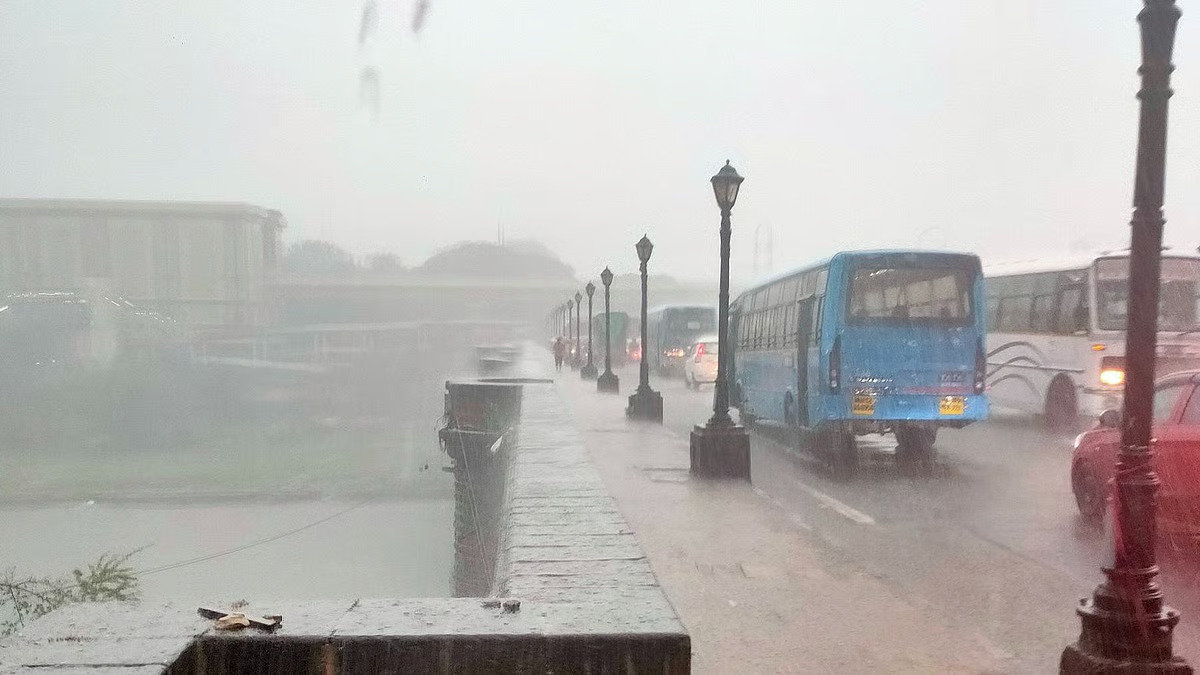
Mumbai experienced a significant bout of heavy rainfall on Friday night, with several pockets recording over 50 millimeters within a span of just one hour. The unseasonal downpour, occurring amid a yellow alert issued by meteorological authorities, triggered waterlogging in key locations, notably along the Eastern Freeway, affecting traffic movement across the city.
According to officials from the Brihanmumbai Municipal Corporation (BMC), areas such as Byculla, Wadala, and Grant Road saw rapid accumulation of rainwater, highlighting the city’s ongoing challenges with urban drainage infrastructure. While the western and eastern suburbs received comparatively lighter showers, the intensity in the central city sectors led to localized congestion and disruption of commuter schedules. The rainfall comes after a day of unusually high temperatures, with maximums reaching 35.3 degrees Celsius, while Colaba observatory recorded 33.8 degrees Celsius. Experts note that this fluctuation between high daytime temperatures and sudden, heavy showers is characteristic of Mumbai’s post-monsoon weather pattern.
Meteorological experts explained that western disturbances are driving the recent unseasonal showers. “These post-monsoon showers are slightly more frequent this year than in previous years,” said an official from the regional meteorological department. “The pattern indicates a potentially colder winter, although these heavy rains are expected to subside in the coming days.” The India Meteorological Department (IMD) has maintained the yellow alert for Mumbai over the weekend, forecasting intermittent moderate rainfall, thunderstorms, and gusty winds. Residents are advised to exercise caution, particularly when commuting through waterlogged areas.
Air quality, which typically deteriorates during Diwali due to firecracker emissions, saw a temporary improvement as rainfall helped reduce particulate matter in the atmosphere. Environmental analysts highlight that frequent post-monsoon showers act as a natural cleanser, lowering PM2.5 and PM10 levels, thereby offering temporary respite from seasonal air pollution spikes. Officials have urged citizens to exercise continued caution on roads prone to flooding and to follow advisory updates from the BMC and IMD. Urban planning experts emphasize the need for long-term infrastructure upgrades, including improved drainage systems and sustainable urban water management, to mitigate recurring flood risks amid extreme weather events.
While the immediate impact of Friday’s heavy rainfall caused temporary disruptions, the event underscores Mumbai’s vulnerability to urban flooding and climate variability. Proactive measures and citizen awareness remain crucial to navigate such weather safely.
Also Read: Delhi Mumbai Expressway Ankleshwar Section To Open By December 2025
