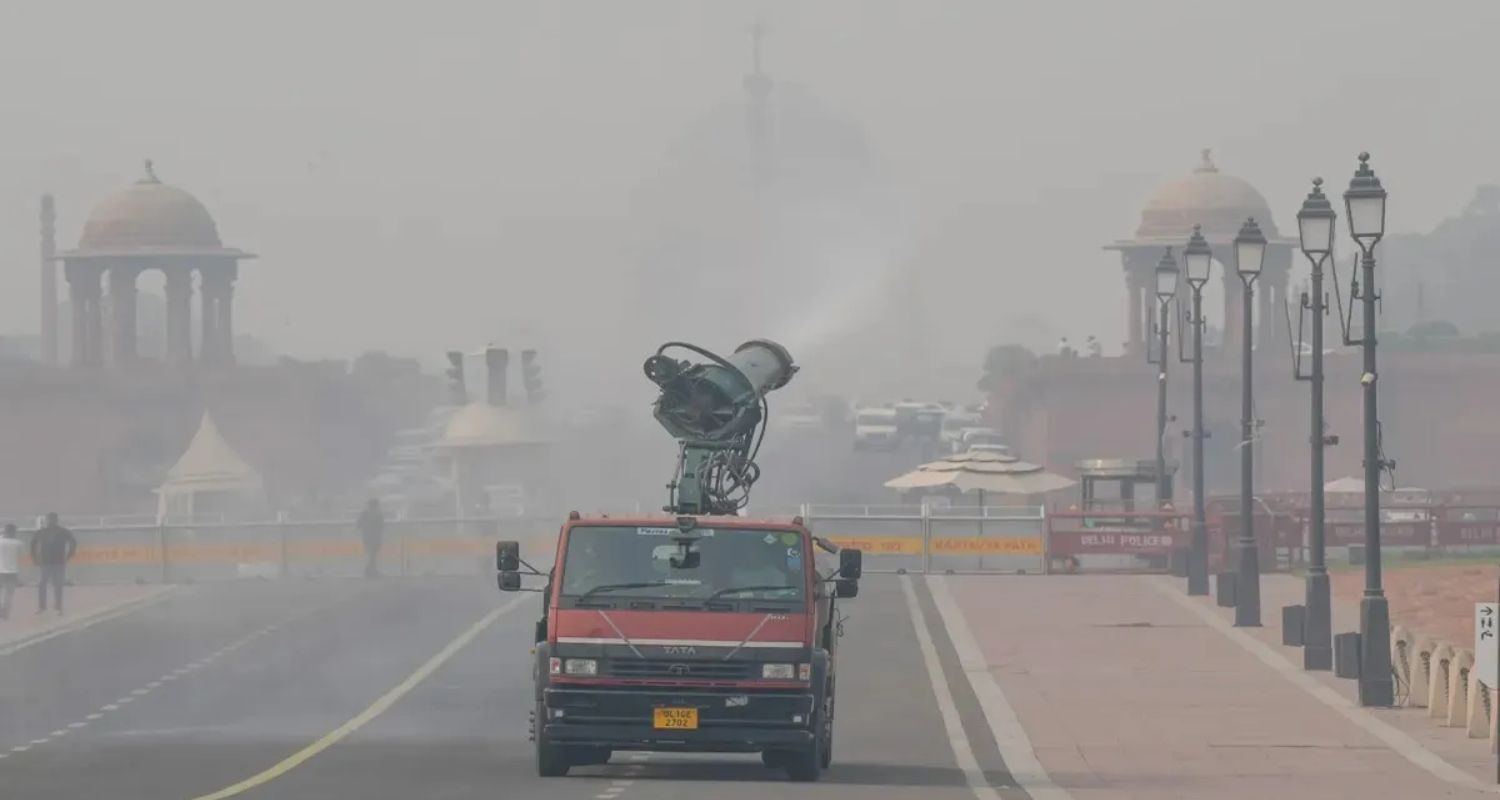
Delhi has entered a critical phase in its annual battle against air pollution as the Commission for Air Quality Management (CAQM) enforced Stage II of the Graded Response Action Plan (GRAP) on October 14. The move comes after air quality readings in Delhi and the National Capital Region (NCR) turned “very poor,” with meteorological forecasts predicting sustained pollution levels over the coming days.
Stage II GRAP triggers 27 preventive measures aimed at reducing particulate matter and vehicular emissions, signalling a proactive approach to safeguard public health.The measures include intensified mechanical sweeping and daily water sprinkling on major roads, strict monitoring of construction and demolition (C&D) sites, and a ban on diesel generator use except for essential services. Public transport availability has been increased, while parking charges are hiked to discourage private vehicle use. Entry of non-compliant inter-state diesel buses is restricted to ensure emissions standards, while residents and residential welfare associations are urged to prevent biomass burning and provide electric heating for staff.
The Transport Department has escalated its enforcement drive, issuing approximately 1.63 lakh pollution under control (PUC) fines in 2025 till July, reflecting a 300% surge from the previous year. Advanced Automatic Number Plate Recognition (ANPR) cameras installed at fuel stations are linked to the national Vahan database via API, enabling real-time verification of vehicle PUC certificates. Violators face automated e-penalties, ensuring swift and accountable enforcement.
Delhi currently hosts 966 PUC testing centres, yet of 8.2 million active vehicles, roughly 2.6 million operate without valid certificates. Vehicles without PUC certificates risk fines up to Rs 2,000 and imprisonment, while black smoke emission violations attract additional penalties of Rs 10,000. Officials note that eight to ten enforcement teams operate daily to ensure compliance, with coordination between the Transport Department and Delhi Police proving critical in identifying non-compliant vehicles.The city’s Winter Action Plan has further intensified scrutiny, targeting older vehicles and C&D waste management. Despite an annual target of 9.8 lakh metric tonnes of recycled C&D waste for 2025–26, only 52,000 MT have been utilised to date. Authorities have ramped up penalties for uncovered C&D waste transportation, reflecting a steep increase in enforcement compared to previous years.
Experts emphasise that these measures represent a combined strategy of regulatory oversight, digital monitoring, and public awareness to combat air pollution. By integrating technology, stricter compliance mechanisms, and inter-agency coordination, Delhi aims to mitigate the health risks posed by rising particulate matter levels and ensure a more sustainable, equitable urban environment.
Delhi Enforces Stage Two Pollution Controls As AQI Turns Very Poor