Pune Public EV Charging Faces Delays Despite High Vehicle Registrations
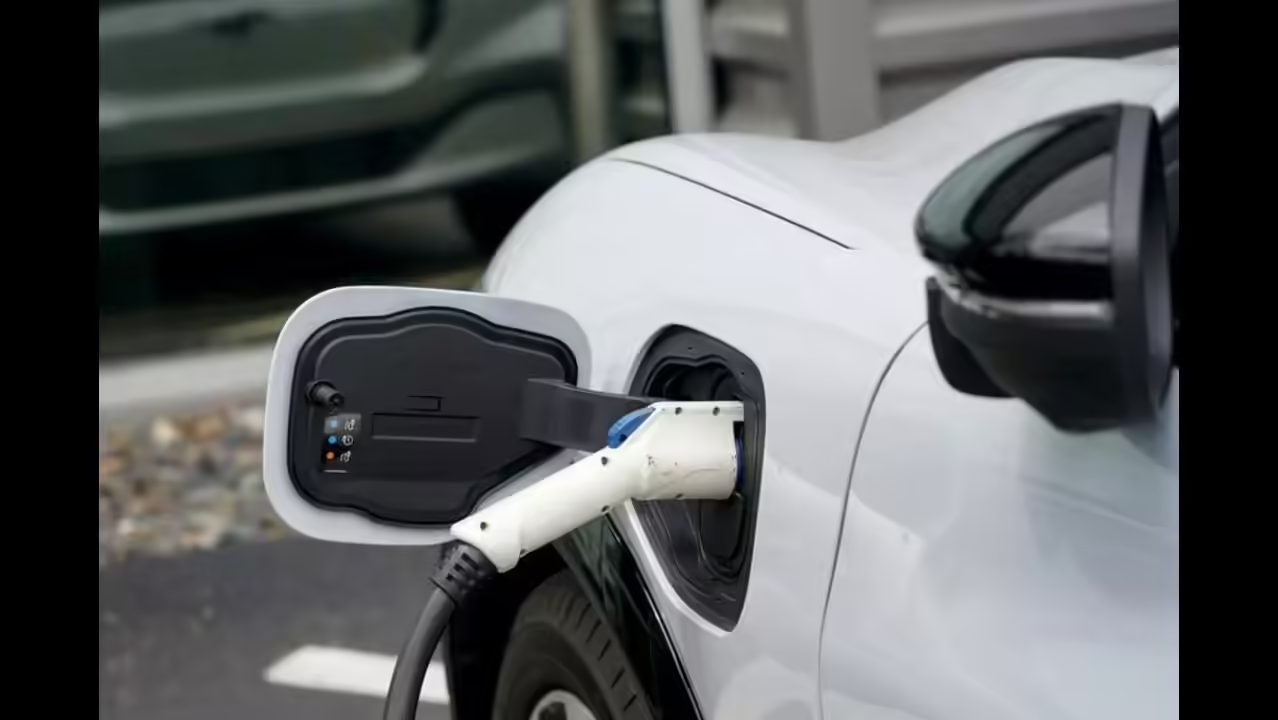
Pune’s ambitious efforts to expand public electric vehicle (EV) charging infrastructure are facing significant delays and underutilisation, raising concerns over the city’s transition to sustainable transport. Officials report that while the Pune Regional Transport Office (RTO) has registered over 96,000 EVs the highest in Maharashtra the civic plan to establish 82 public charging stations across the city remains incomplete after two years.
Municipal authorities say that only 44 charging points are operational so far, hindered by power supply issues with the Maharashtra State Electricity Distribution Company Limited (MSEDCL). Experts highlight that even the stations already installed are experiencing minimal usage, suggesting that public awareness and accessibility are critical gaps in Pune’s EV strategy. Customers are currently charged between Rs13 and Rs19 per unit at existing stations.
Industry observers note that while Pune’s EV adoption is robust, with more than 52,000 vehicles registered under the Pune Municipal Corporation (PMC), the scarcity and inconsistent functionality of public chargers are limiting practical adoption. “Most EV owners prefer charging at home due to the low visibility and limited availability of public points,” said an official from the PMC electrical department. Residents echo these concerns, reporting multiple instances of non-operational stations at petrol pumps and municipal sites.
Analysts argue that the issue reflects broader challenges in urban EV integration. Although EV adoption is increasing rapidly, supporting infrastructure has lagged, impeding seamless city-wide mobility. The situation highlights the need for coordinated planning between municipal authorities, state electricity providers, and private operators to ensure reliability, visibility, and convenience for users.
Officials indicate that alternative options are being studied to improve the network and incentivise usage. Industry stakeholders emphasise the importance of marketing these points effectively, alongside ensuring technical readiness, to build public confidence and promote electric mobility as a viable alternative to conventional fuel vehicles. Experts also suggest leveraging data on EV concentrations to strategically expand the network, particularly in high-demand neighbourhoods.
While the delays are a setback, observers note that Pune remains a leader in Maharashtra’s EV landscape, providing a valuable case study for scaling public charging networks in Indian cities. The city’s experience underscores the importance of not only expanding infrastructure but also addressing operational challenges and creating awareness to foster equitable and sustainable urban mobility.As Pune continues to witness growth in EV adoption, urban planners stress that the success of electrified transport depends on both robust infrastructure and user engagement, ensuring that clean mobility contributes effectively to the city’s sustainability and low-carbon objectives.