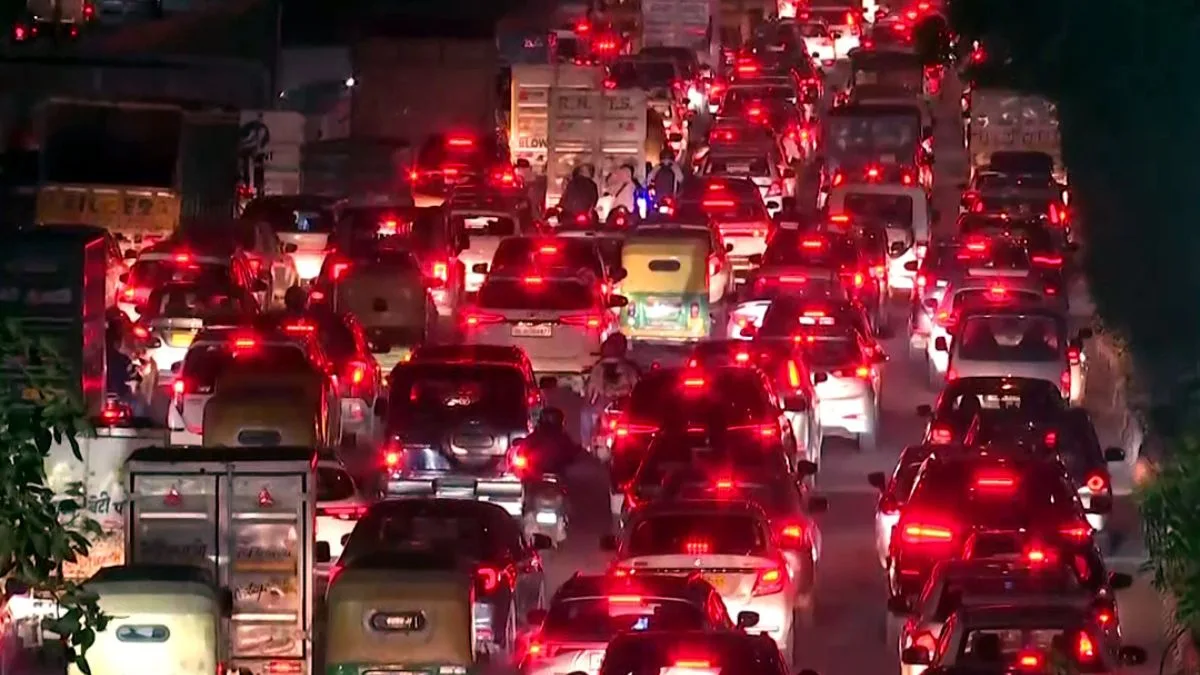
Delhi Moolchand Flyover chokes under heavy traffic ahead of Diwali
As the capital gears up for Diwali, the city’s arterial roads have once again collapsed under festive traffic pressure. Long queues stretched across Moolchand Flyover and major intersections, offering a familiar reminder of Delhi’s chronic congestion and the urgent need for sustainable urban mobility.
The city’s traffic police have been on high alert since Friday, with all leaves cancelled for personnel to manage the festive rush. Officials confirmed that ongoing road repairs and damaged infrastructure have further aggravated the situation, with potholes and broken sewer lines hampering the flow of vehicles in several parts of the city. Commuters were advised to plan their journeys in advance and use navigation apps to avoid gridlocked corridors.
Despite enhanced deployment and patrolling, the magnitude of vehicular load has overwhelmed several routes. Congestion was reported from Bhera Enclave Chowk after a Delhi Jal Board sewer line gave way, forcing diversions through alternate routes such as Peeragarhi and GH-14. Meanwhile, a stalled public bus on Mathura Road near NFC Red Light paralysed traffic during peak hours, reflecting the capital’s fragile transport network.According to officials, the capital witnesses up to a 30 per cent spike in traffic during the Diwali week. As families step out for festive shopping and social gatherings, key commercial zones Lajpat Nagar, Sarojini Nagar, and Connaught Place face severe bottlenecks, compounded by illegal parking and vendor encroachments. To manage crowd density, enforcement has been intensified, with vehicles in no-parking zones being towed away and fines issued via digital challans.
However, experts argue that reactive traffic control is not a long-term solution. They emphasise that Delhi’s mobility crisis reflects a deeper urban design issue one that prioritises private vehicles over public transit and pedestrian safety. The situation underscores the capital’s pressing need for integrated transport planning, including improved public transport reliability, pedestrian-friendly markets, and the adoption of low-emission travel options such as e-buses and shared mobility.Urban planners stress that sustainable solutions, such as time-based vehicle restrictions, dedicated cycling corridors, and smart parking systems, could reduce congestion while also cutting the city’s carbon footprint. As Delhi prepares to celebrate the festival of lights, its choked streets serve as a stark reminder: cleaner, safer, and more equitable mobility is as essential to urban life as festive cheer itself.