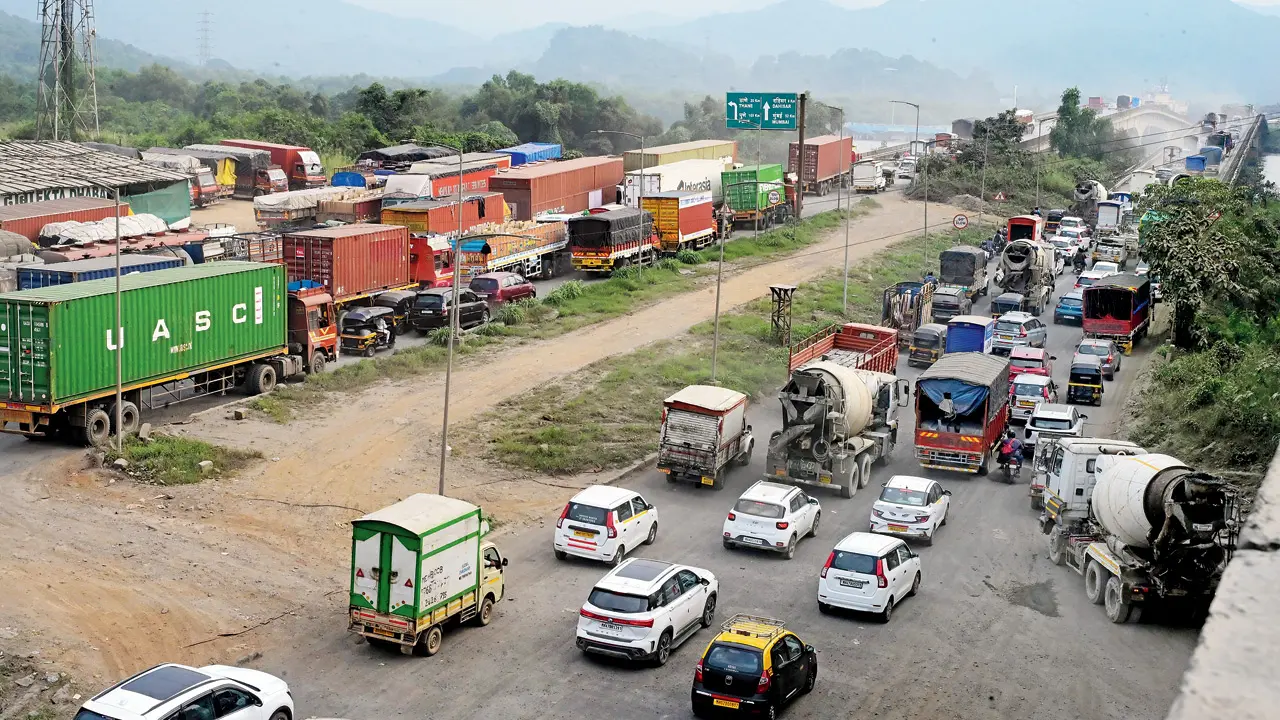
Mumbai-Ahmedabad Highway Gridlock Enters Fifth Day Stranding School Buses Ambulances
The Mumbai–Ahmedabad Highway (NH-48), one of India’s busiest economic lifelines, has been crippled by relentless gridlock for five consecutive days, paralysing transport and exposing chronic urban infrastructure failings. The congestion near Vasai and Palghar has trapped school buses, ambulances, and goods carriers for hours, creating a humanitarian and logistical nightmare for thousands of commuters.
Officials attribute the crisis to road repair works and the diversion of heavy vehicles, but the explanation has failed to pacify public anger. The sheer duration of the traffic paralysis points to deeper structural issues from inadequate route planning to delayed infrastructure upgrades and poor coordination between municipal and highway authorities.The situation escalated earlier this week when multiple school buses carrying students returning from excursions were stranded overnight without food or water. Local volunteer groups distributed water and snacks to the stranded children as parents waited anxiously for updates. The incident has prompted several schools across Mumbai to suspend educational trips until after the festive season.
Urban mobility experts say the chaos is symptomatic of a larger urban planning deficit that prioritises expansion over sustainability. According to a senior transport analyst, the absence of contingency mechanisms and weak last-mile connectivity have made major corridors such as NH-48 vulnerable to prolonged collapse. He added that the crisis underlines the urgent need for resilient, eco-friendly urban transport frameworks aligned with India’s zero-carbon and sustainable mobility goals.
For residents of Vasai-Virar, the highway remains the only dependable link to Mumbai. Overcrowded alternatives, including the Ro-Ro ferry service, are struggling to cope, with vehicle queues stretching for over a kilometre. Truck drivers, daily commuters, and intercity passengers continue to face uncertainty as congestion worsens despite official assurances of restoration.Experts argue that India’s infrastructure push must now focus on integrated mobility systems that balance economic growth with environmental sustainability. Investment in smart traffic management, multimodal transport corridors, and green logistics could mitigate such crises and enhance long-term urban resilience.As the gridlock drags on, it has become more than just a traffic story it’s a mirror reflecting the fragility of India’s urban arteries. Without decisive and sustainable interventions, such recurring bottlenecks risk undermining both productivity and quality of life in one of the country’s most vital economic corridors.