


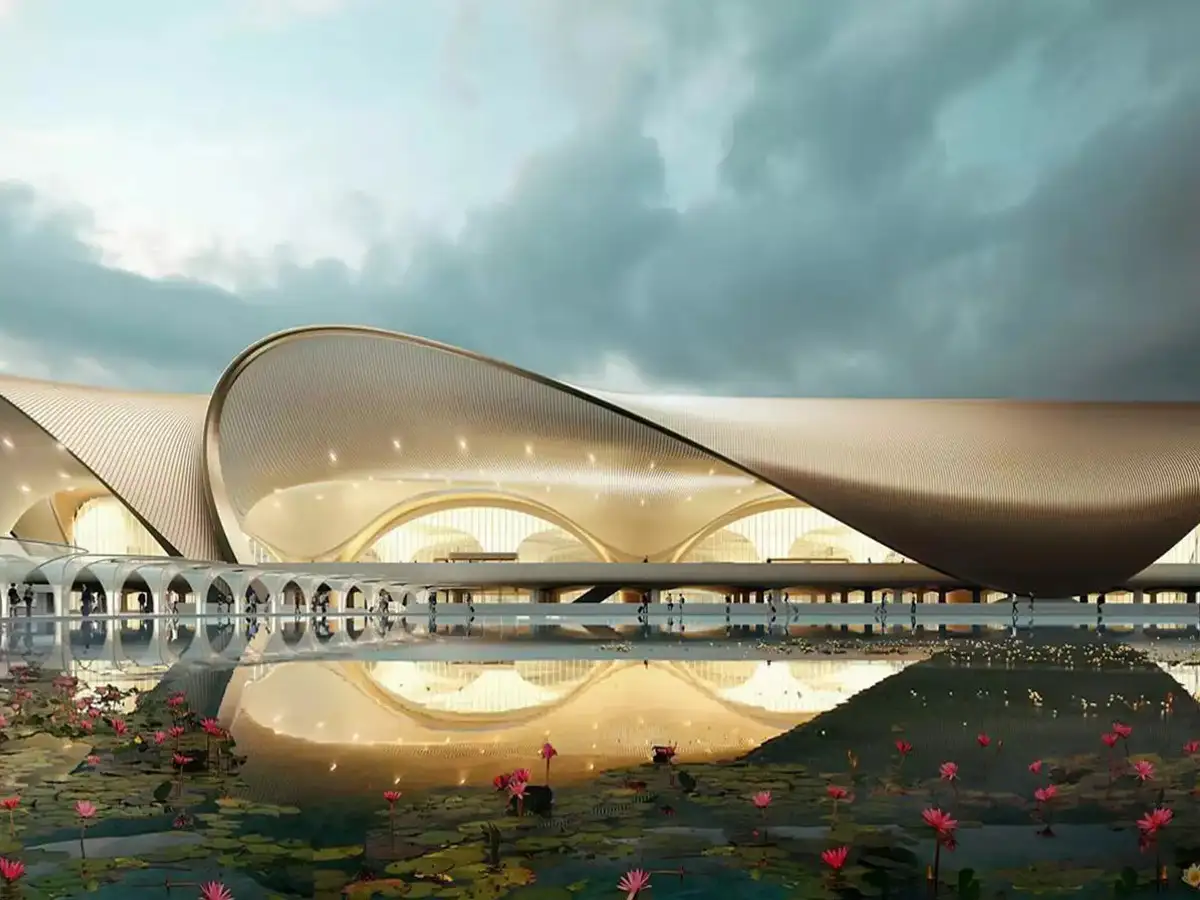
Mumbai’s long-awaited Navi Mumbai International Airport (NMIA) is on the cusp of transforming regional air travel and urban connectivity. Scheduled to be inaugurated this October, the airport is expected to commence commercial operations by December 2025. Authorities have confirmed that it will be renamed Loknete DB Patil Navi Mumbai International Airport, in honour of the leader who envisioned the project.
What sets this airport apart is its strong emphasis on multimodal connectivity — a network of metro lines, suburban trains, roadways, and waterways designed to give passengers a faster, greener, and more seamless journey. The state government and planning agencies have adopted a strategy that treats the airport as an integrated mobility hub rather than a standalone aviation facility. Among the most ambitious projects under this vision is the Metro Line 8, also known as the Gold Line, which will connect Mumbai’s existing Chhatrapati Shivaji Maharaj International Airport directly with NMIA. Once operational, this high-speed metro will reduce travel time between the two airports to just 30 minutes — a significant improvement over the current 90-minute road journey.
In parallel, rail connectivity will receive a major boost through the nearby Targhar railway station, located within minutes of the NMIA site. The station’s construction work is nearly complete, and once commissioned, it will serve as a convenient access point for suburban train commuters. This link is expected to be crucial for airport employees and budget travellers relying on the city’s extensive railway system. Adding another eco-friendly layer to the plan, a water taxi service is being developed between South Mumbai and Navi Mumbai. The service will connect jetties near the Gateway of India to the airport waterfront in roughly 40 minutes, offering an alternative to road congestion while promoting low-carbon travel. The boats are expected to run on electric or hybrid engines, reinforcing Maharashtra’s push towards clean mobility solutions.
Inside the airport premises, passengers will move between terminals using Automated People Movers (APMs) — driverless, underground trains that will connect all four terminals. This will not only reduce transfer time between flights but also enhance accessibility for differently-abled and senior passengers, underscoring the project’s inclusive design. Experts suggest that NMIA’s connectivity blueprint could become a model for sustainable airport development across India. By integrating rail, metro, water, and automated transport systems, Mumbai is taking a decisive step toward reducing road dependency and curbing vehicular emissions.
The challenge now lies in execution — synchronising multiple agencies, finalising operational timelines, and ensuring commuter-friendly pricing and scheduling. If realised as planned, the Navi Mumbai International Airport could emerge as India’s first truly multimodal, zero-carbon-ready aviation gateway — one that connects people as efficiently as it connects cities.
Also Read: Thane To Link Mhatardi Bullet Train Station With Railway And Metro Networks
