


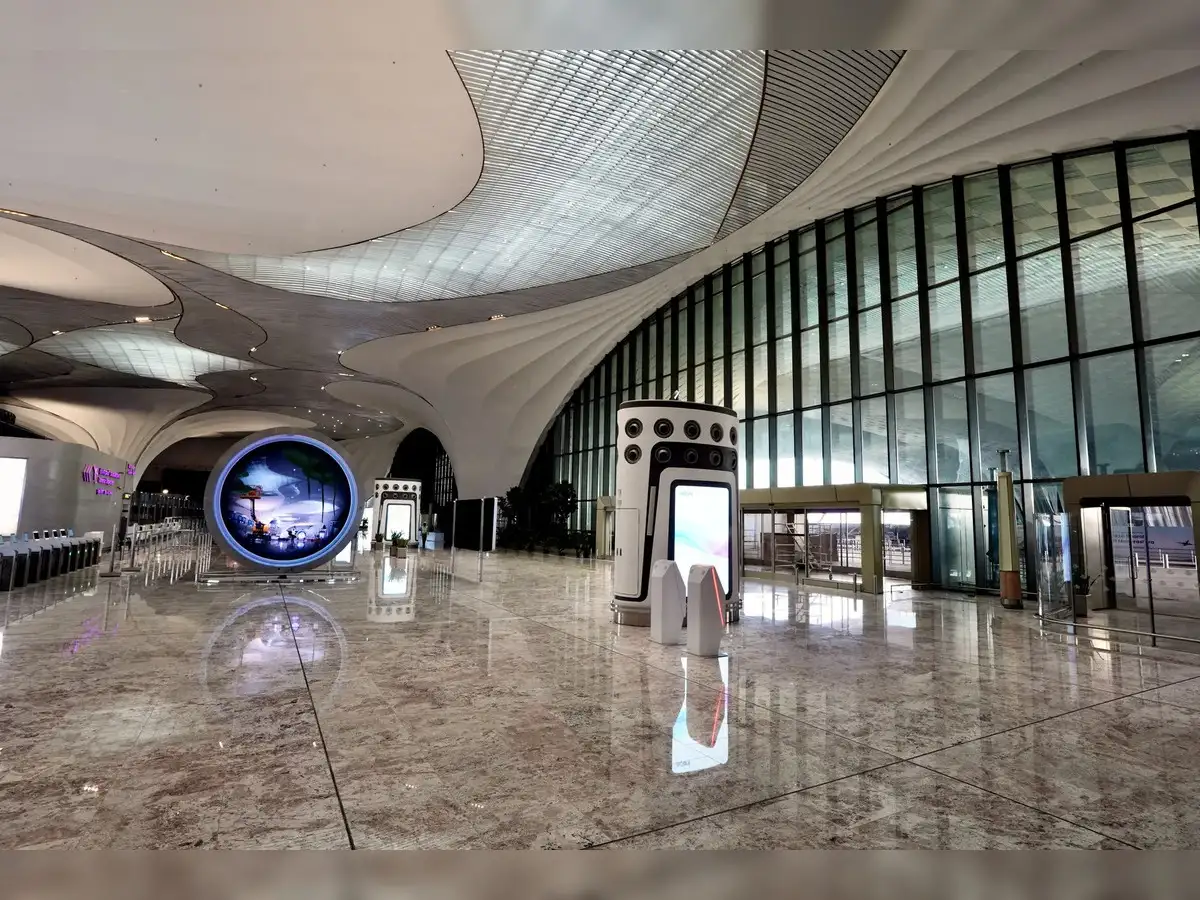
Navi Mumbai is poised to transform India’s aviation landscape with the inauguration of the country’s first fully digital airport on 8 October and commercial operations slated to begin in December. The new facility promises seamless, paperless processing—from online check-in and baggage drop to virtual queuing and automated immigration—underscoring Mumbai’s ambition to emerge as a technology-driven aviation hub.
At the heart of this endeavour is the goal of delivering an “anxiety-free” journey for passengers. Queuing time monitors and slot-based virtual queues will allow travellers to plan their progress through security and immigration rather than waiting in line. Parking slots may also be pre-booked, enabling smoother ground access. The airport will be Digi Yatra compliant, with 100 per cent gate automation, and baggage tracking via mobile alerts indicating the carousel number for arriving luggage. Spread over 1,160 hectares at Ulwe in the Mumbai Metropolitan Region, the airport is being built in phases, with the first terminal targeting a capacity of 20 million passengers annually. In full build-out, it aims to handle up to 90 million passengers and over 3 million tonnes of cargo.
Initially, operations will run 12 hours a day (8 am to 8 pm), with 8–10 aircraft movements per hour. As the systems stabilise, air traffic control may extend hours. Around 40 per cent of traffic at launch is expected to be international, scaling to 75 per cent over time. Major domestic carriers—IndiGo, Air India and Akasa—have already confirmed their commitment to begin operations from day one, while international airlines are expected to join once night-time slots are cleared. Slot allocation is forecast to saturate quickly, capturing demand estimated at 15–20 million latent passengers in the Mumbai region. The existing Mumbai airport’s Terminal 1 will continue operations until at least 2029, when Navi Mumbai’s Terminal 2 is expected to be ready. Only then will demolition and transition begin. Meanwhile, general aviation and cargo operations from Mumbai are expected to migrate gradually to the new facility.
From a sustainability and resilience perspective, the new airport is designed to meet several ambitious targets. It is elevated to 8.5 metres to guard against extreme rainfall, and features rainwater harvesting, wastewater reuse, electric airside vehicles, solar power generation, and extensive green cover. The walking distance from any gate is capped at 500 metres, emphasising passenger convenience and accessibility. Urban planners and transport authorities are already working to integrate the airport into the regional mobility grid. A comprehensive mobility plan for Navi Mumbai and its airport influence area is underway, with focus on multimodal transport, non-motorised options, and equitable access. A proposed Gold Line metro corridor will link Mumbai Airport and NMIA, enhancing connectivity across the city region.
Yet, challenges persist. Local environmental and safety concerns, such as the presence of informal slaughterhouses near the airport and bird-strike risk, remain under scrutiny, with regulators conducting intensive mitigation measures. Ensuring that rapid growth does not override eco-sensitive planning—especially in a densely populated region—is a delicate balance. As Mumbai transitions into a dual-airport metropolis, the new digital airport is more than just infrastructure. It is a statement of intent: to marry high technology with green design, deliver equitable passenger experience, and set a benchmark for sustainable cities. If all systems perform as intended, the public may soon wonder not just where they fly from—but how digital travel became the new norm.
Also Read: Bengaluru Indian Railways Launches Special Trains For Diwali Travel Surge
