Jammu Schools Closed As Cyclone Shakhti Weakens Over Arabian Sea
Delhi and the National Capital Region (NCR) experienced intermittent rainfall early Monday, as predicted by the India Meteorological Department (IMD). Heavy downpours in parts of Delhi, Noida, Ghaziabad, and Gurugram caused minor waterlogging and disruption, while authorities issued a yellow alert warning of thunderstorms, gusty winds, and lightning. The system responsible for this weather activity is linked to a strong western disturbance affecting northwest India.
The IMD forecast indicated that Delhi and adjoining Gautambudh Nagar would continue to experience light to moderate showers and occasional thunderstorms over the next 48 hours. Wind speeds are expected to reach 30–50 kmph, which may further complicate commuting and outdoor activities. Partly cloudy skies are predicted by midweek, but the immediate weather pattern necessitates vigilance from both residents and urban planners.In Jammu, the administration has ordered the closure of all government and private schools from October 6 to 7, following heavy rainfall in the Rajouri region. Officials cited significant infrastructure damage, including sunken roads, damaged homes, and landslides blocking several routes. Emergency services are on alert to manage transport disruptions and ensure the safety of residents in vulnerable zones.
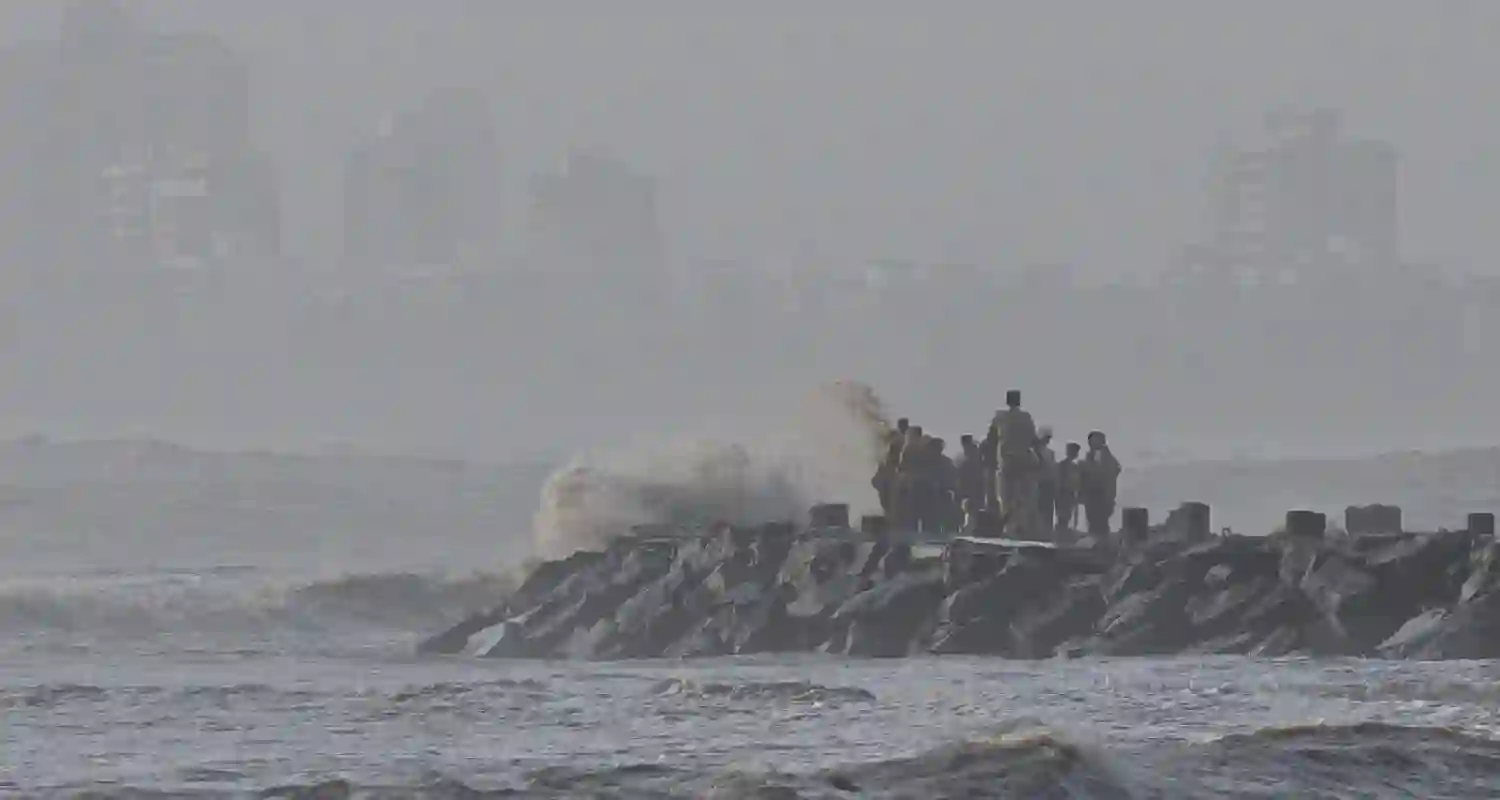
Cyclone Shakhti, meanwhile, has weakened as it moves west-southwestwards over the northwest Arabian Sea. Currently located approximately 850 km west of Dwarka and 780 km southwest of Karachi, the storm is expected to further weaken into a cyclonic storm by the morning of October 6. By October 7, it is forecast to reduce to a depression while recurve eastwards over the Arabian Sea. Experts noted that this weakening trend reduces the immediate threat to India’s western coast, though monitoring continues to anticipate any unexpected intensification.
The recent rains have provided a temporary reprieve for Delhi’s air quality, which briefly improved to a satisfactory level after persistent post-Dussehra pollution. Authorities observed a drop in the 24-hour average Air Quality Index (AQI) from 138 to 88, highlighting the potential for rainfall and wind to cleanse urban air, even as the city faces ongoing environmental challenges.
Weather experts emphasised that the combination of western disturbances and cyclonic systems will continue to influence northwest India’s climate in the coming days. Residents are advised to follow official updates, avoid unnecessary travel during heavy rain, and stay clear of vulnerable areas, such as landslide-prone zones and waterlogged streets.Urban planners and environmental analysts argue that these recurring weather disruptions underscore the importance of resilient infrastructure and climate-adaptive urban design. Enhancing drainage, reinforcing roads, and integrating early-warning systems remain critical to mitigating the impact of sudden downpours and extreme weather events in Delhi-NCR and neighbouring states.While the immediate impact of Cyclone Shakhti on India has lessened, the rainfall in Jammu and the NCR highlights the continued vulnerability of urban and semi-urban areas to climatic fluctuations. Officials remain on high alert to safeguard lives, property, and essential services, ensuring that residents can navigate these conditions with minimal