


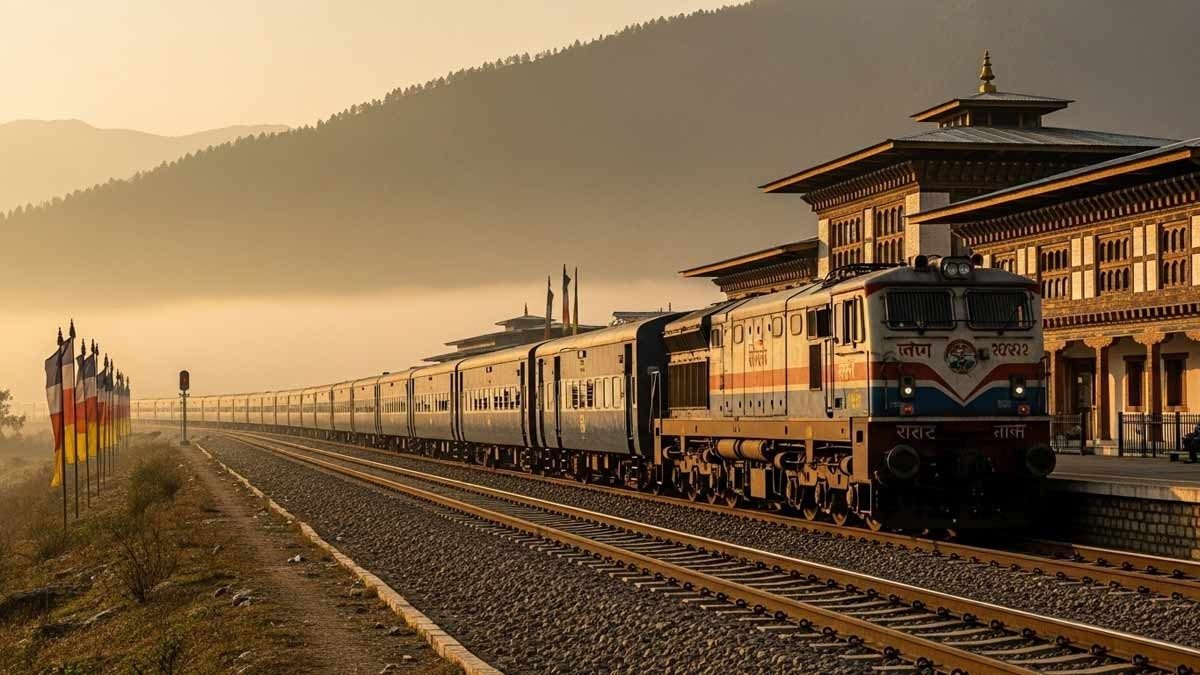
India and Bhutan are set to strengthen bilateral trade and connectivity with the construction of two landmark cross-border railway lines. These projects, valued at INR 4,033 crore (USD 454 million), mark the first-ever rail links connecting the two nations, signalling a new chapter in regional transport integration and economic cooperation.
The first line, spanning 69 km, will link Assam’s Kokrajhar with Gelephu in southern Bhutan. The alignment will include six stations, two major bridges, two viaducts, 29 additional large bridges, 65 smaller bridges, two goodsheds, a road-over-bridge, and 39 road-under-bridges, with roughly 2.39 km traversing Bhutanese territory. Projected completion is four years, at an estimated cost of INR 3,456 crore. Officials emphasise the strategic importance of this corridor, which is expected to facilitate smoother goods transport, improve passenger mobility, and deepen socio-economic interactions between border communities. The second railway line will connect West Bengal’s Banarhat to Bhutan’s Samtse, covering 20 km with two intermediate stations. This corridor is projected to cost INR 577 crore and is expected to be operational within three years. Experts note that both lines will contribute significantly to regional economic corridors, promoting trade in agriculture, forestry, and small-scale industries while opening avenues for eco-tourism and sustainable transport solutions.
India continues to serve as Bhutan’s largest development partner, providing assistance worth INR 10,000 crore under the 13th Five-Year Plan (2024–29). This includes project-tied funding, economic stimulus programmes, and community development initiatives, representing a 100% increase over the previous plan. Officials highlight that the rail projects are part of a broader strategy to reinforce India-Bhutan ties, ensure climate-resilient transport infrastructure, and expand low-carbon mobility networks. Transport authorities indicate that the new lines are being designed with environmental safeguards to minimise ecological impact, especially in sensitive border regions. Bridges, tunnels, and alignment corridors will be engineered to preserve natural habitats, reduce deforestation, and integrate advanced drainage and stormwater management systems.
The cross-border railway initiative is expected to reshape trade dynamics, reduce travel times for freight and passengers, and create employment opportunities in both nations. Analysts suggest that beyond economics, these corridors may also strengthen regional cooperation in disaster response, energy exchange, and sustainable development. With construction underway, officials from both countries are coordinating land acquisition, environmental clearances, and design finalisations to ensure timely execution.
Also Read: Tata Power To Develop 80 MW Clean Energy Project For Mumbai At 1200 Crore
