


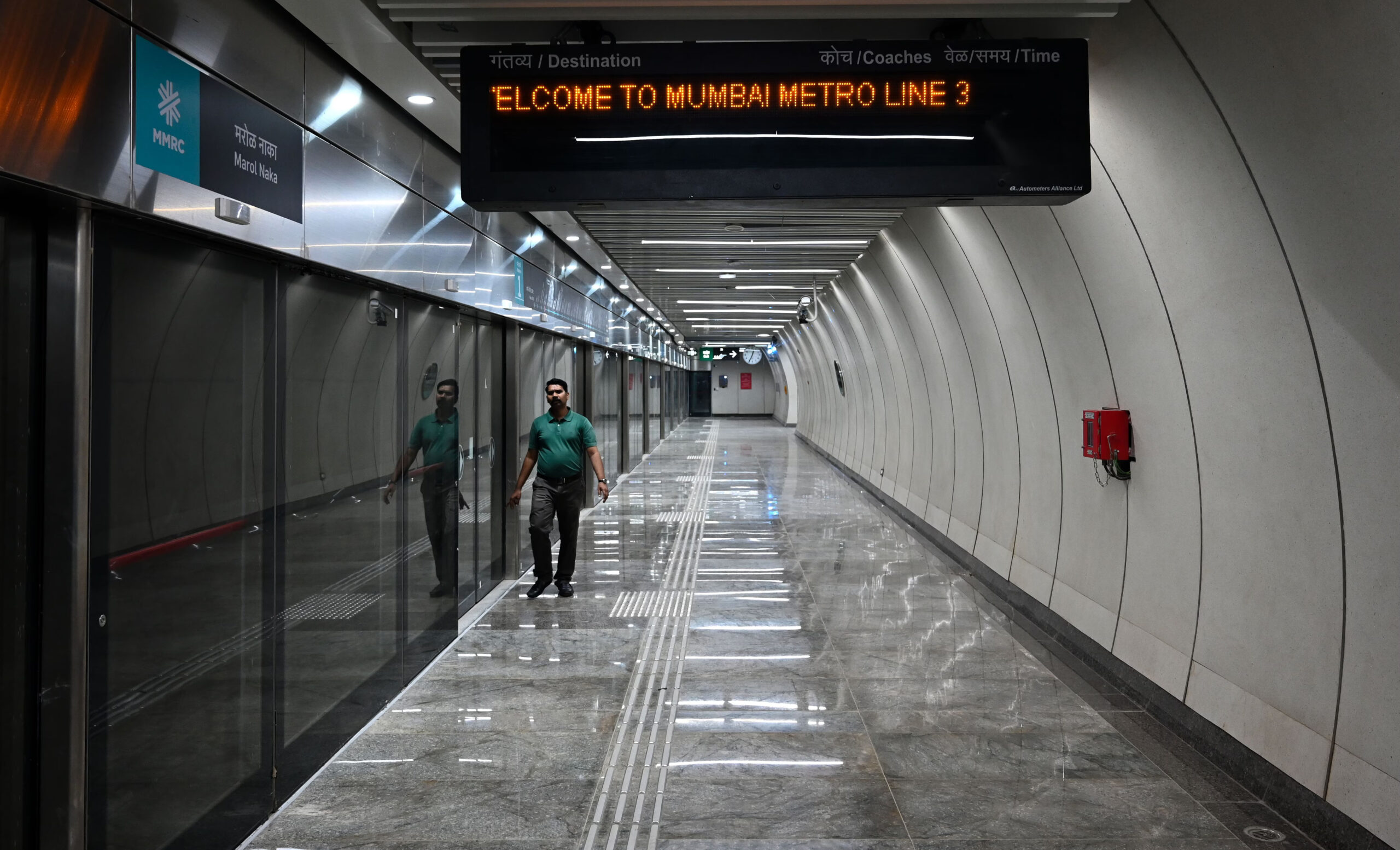
Mumbai is on the brink of a historic transport milestone as Metro Line 3, the city’s first fully underground metro corridor, prepares for inauguration on 8 October 2025. The final stretch between Science Museum and Cuffe Parade will be unveiled, completing the 33.5-kilometre Aqua Line that links Aarey in the north to South Mumbai’s business districts.
The corridor, built by the Mumbai Metro Rail Corporation Limited (MMRCL), has been under construction since 2017. It features 26 underground stations and one at grade, covering critical nodes such as Mumbai Central, Girgaon, Kalbadevi, Churchgate, and CSMT. For the first time, residents and office-goers will be able to travel from Cuffe Parade to the Domestic Airport in just 45 minutes, slashing travel time by more than an hour compared to road journeys. Officials emphasise that the project is not only about speed but also about inclusivity and sustainability. Passenger-friendly features such as women-only coaches, priority seating for senior citizens and persons with disabilities, and enhanced security through CCTV monitoring are integrated across stations and trains. Moreover, the underground design shields commuters from the monsoon disruptions that often cripple Mumbai’s road and rail networks, offering reliability throughout the year.
The Rs 37,276 crore project has been financed in part by the Japan International Cooperation Agency (JICA), which extended an Official Development Assistance loan of $4.53 billion. Experts describe the initiative as a case study in Indo-Japanese collaboration, with global engineering expertise deployed alongside local workforce contributions. At peak construction, 17 tunnel boring machines were operational simultaneously—setting a national record. The project, however, has not been without challenges. The metro line passes beneath some of Mumbai’s most congested and heritage-rich neighbourhoods, requiring precision tunnelling under structures in Kalbadevi, Girgaon, and D.N. Road. Geological complexities ranging from hard basalt to reclaimed land added to the difficulties, while water ingress during monsoons repeatedly stalled progress. Legal disputes, environmental concerns, and the need for multi-agency clearances further stretched the timeline beyond eight years.
Despite these hurdles, officials underline that the Aqua Line’s completion will represent a leap forward in urban mobility. By drawing commuters off crowded roads, the metro is expected to cut vehicular emissions, ease congestion, and contribute to cleaner air in central Mumbai. Transport analysts argue that this underground corridor is vital for moving towards a more sustainable, low-carbon city. As the inauguration date approaches, the anticipation reflects the scale of the achievement. For Mumbaikars, the Aqua Line will mean more than just a faster commute—it symbolises resilience, international cooperation, and the promise of a greener urban future.
Also Read: Mumbai Metro Line 3 To Open In 2025 With 34 Kilometres Underground
