Delhi To Repair Yamuna Ghats Despite Repeated Floodplain Damage Risks
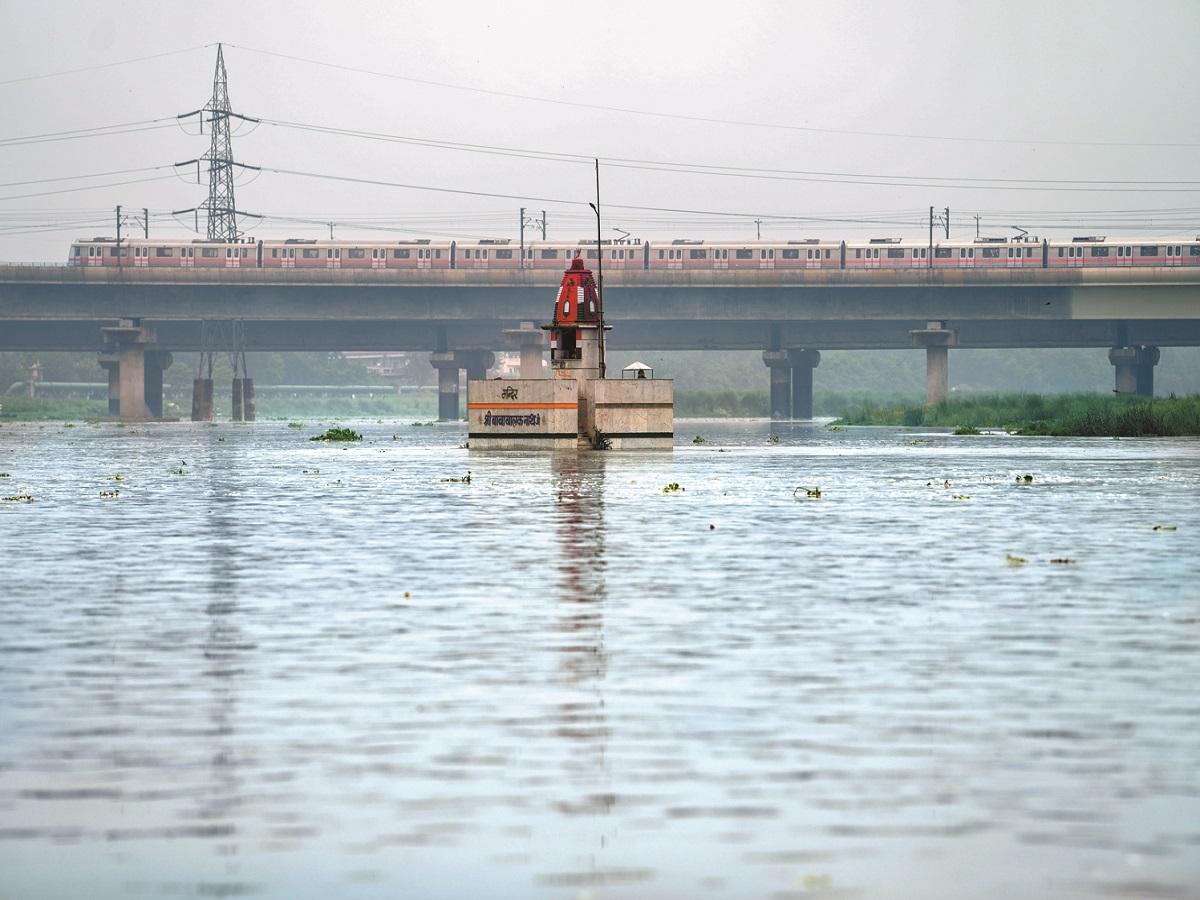
Delhi is once again preparing to repair its riverside ghats on the Yamuna, even as experts warn that repeated concretisation of floodplains could deepen the capital’s flood vulnerabilities. The Delhi Development Authority (DDA) has announced that it will restart repair and maintenance works at Vasudev and Asita ghats, both damaged by swollen river waters earlier this month.
The Yamuna rose beyond danger levels during heavy rains in early September, submerging landscaped parks, cycling tracks and stone ghats built under the riverfront development programme. The inundation damaged pathways, cracked paving, uprooted plantations and buried newly laid lawns under layers of silt. Decorative signboards and sculptures were swept away, forcing the agency to allocate fresh funds for restoration.
Officials have said the planned work will include cleaning silt, relaying interlocking tiles, repairing stone steps and installing signages. Contracts worth nearly ₹80 lakh are expected to be awarded for the two sites. Vasudev Ghat, which opened earlier this year as a 16-hectare leisure space near the ISBT, and Asita East, a larger 200-hectare riverfront park, were both conceived as urban breathing spaces for residents.Urban planners and environmental experts, however, caution that the cycle of flood damage and restoration risks becoming an expensive annual ritual.
They argue that repeated laying of concrete and ornamental landscaping undermines the very resilience of the floodplains. By sealing natural soil, the floodplain’s capacity to absorb excess water is diminished, forcing higher water levels during peak monsoon and heightening flood risk for adjacent settlements.Experts emphasise that what Delhi witnessed was less a conventional flood and more the river backflowing due to encroachment on its natural pathways. The Yamuna, they argue, is shallow and spreads laterally when water levels surge. With ghats, parks and concrete steps occupying its banks, submergence becomes inevitable each season.
Environmental specialists have also urged that future development should move away from ornamental plantings and embrace vegetation that can withstand seasonal inundation. Native grasses and flood-tolerant species regenerate naturally after submergence, creating more sustainable riverfronts. They note that when planned sensitively, parks and public spaces can coexist with flooding rather than collapsing under it.For a city that struggles with climate variability, Delhi’s handling of the Yamuna floodplains will be a test case of balancing urban aspirations with ecological realities. Each round of retiling and rebuilding may restore aesthetics temporarily, but without a shift towards resilience-based planning, the capital risks locking itself into a costly and unsustainable cycle.