


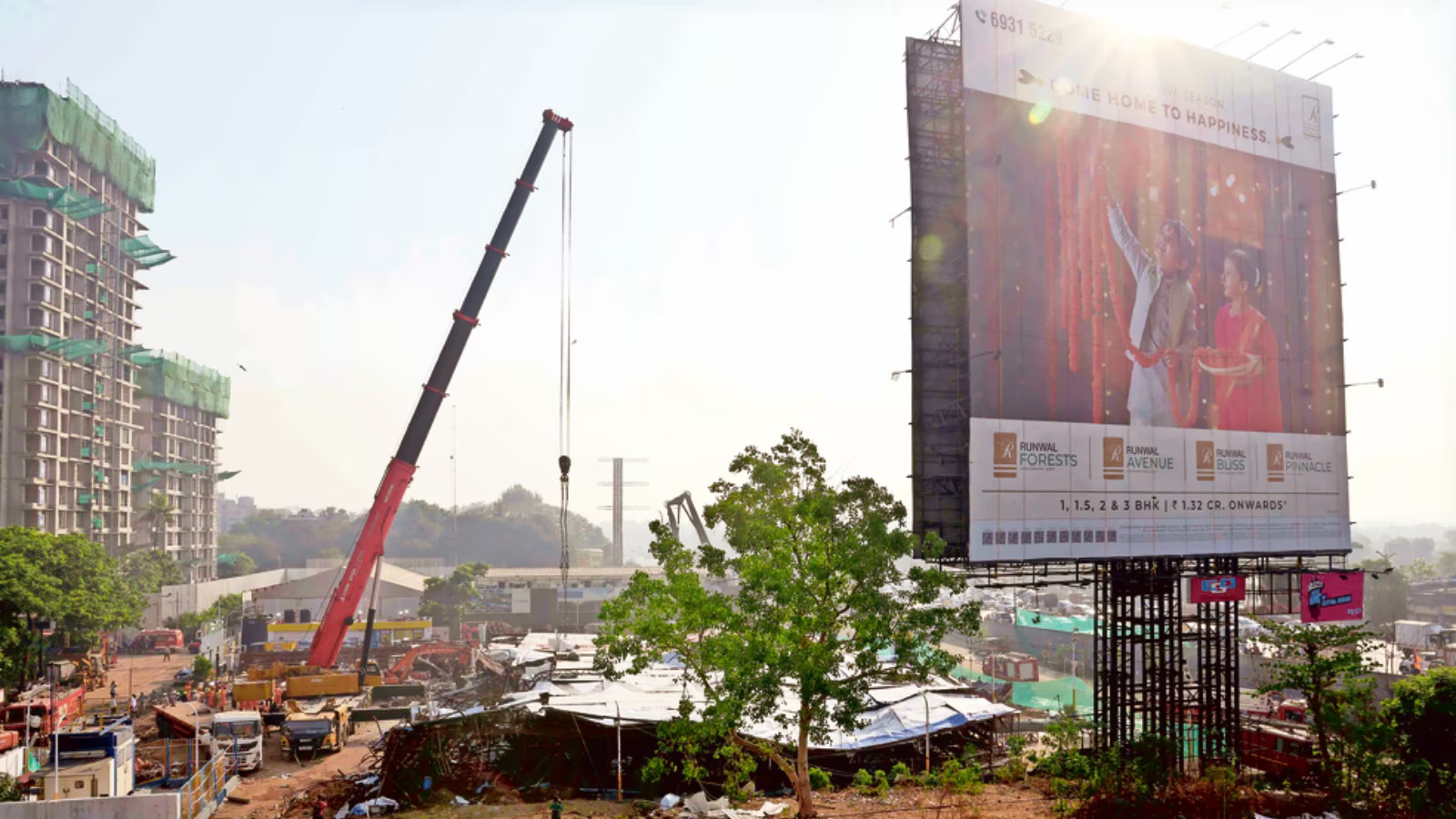
A high-level inquiry into the Ghatkopar hoarding collapse has highlighted multiple regulatory lapses, raising urgent questions about structural safety and public accountability in urban Mumbai. The committee, led by a retired judge, identified that several approvals for hoardings were granted without proper structural verification, formal tender processes, or adherence to legal protocols, putting commuters and residents at risk.
The committee’s findings reveal that government land was misclassified as railway property, allowing hoardings to be erected without the mandatory structural stability certificates. This effectively bypassed safety regulations that are intended to prevent such incidents. The investigation further noted that relaxations were granted unilaterally by railway officials without consultation with senior police authorities or adherence to proper tendering processes. Urban safety experts say these oversights reflect a systemic failure in infrastructure governance. The lack of coordinated checks between municipal authorities, railway departments, and law enforcement has created loopholes, allowing commercial interests to override public safety imperatives. Officials now face the challenge of restoring public confidence while ensuring that similar lapses do not recur.
According to the report, the committee emphasised the necessity of rigorous compliance checks, especially for hoardings erected on government or quasi-government land. The lapses identified are particularly concerning given the dense pedestrian and commuter traffic in Ghatkopar, a major transit hub connecting multiple suburban lines. The hoarding collapse, which fortunately did not result in fatalities, underscores the importance of enforcing safety certifications and structural audits before any commercial installation is approved. The inquiry also recommended that all pending hoarding projects undergo independent engineering audits and adhere to transparent tender processes. Experts noted that similar incidents across the city highlight the urgent need for policy reforms to integrate safety standards, digital monitoring, and accountability mechanisms into urban infrastructure projects.
Railway and municipal authorities are now reviewing their internal protocols and considering a centralised monitoring system for all hoardings on government land. The initiative aims to align with broader urban development goals, ensuring gender-neutral, sustainable, and eco-friendly urban spaces. While regulatory authorities have promised stricter oversight, urban safety analysts stress that without proactive enforcement, Mumbai’s public spaces remain vulnerable to commercial and infrastructural hazards. The Ghatkopar incident could serve as a catalyst for systemic reforms, but sustained public and administrative vigilance will be crucial to prevent recurrence.
Also Read:MRVC Launches Feasibility Study To Convert South Mumbai Rail Corridors Underground
