


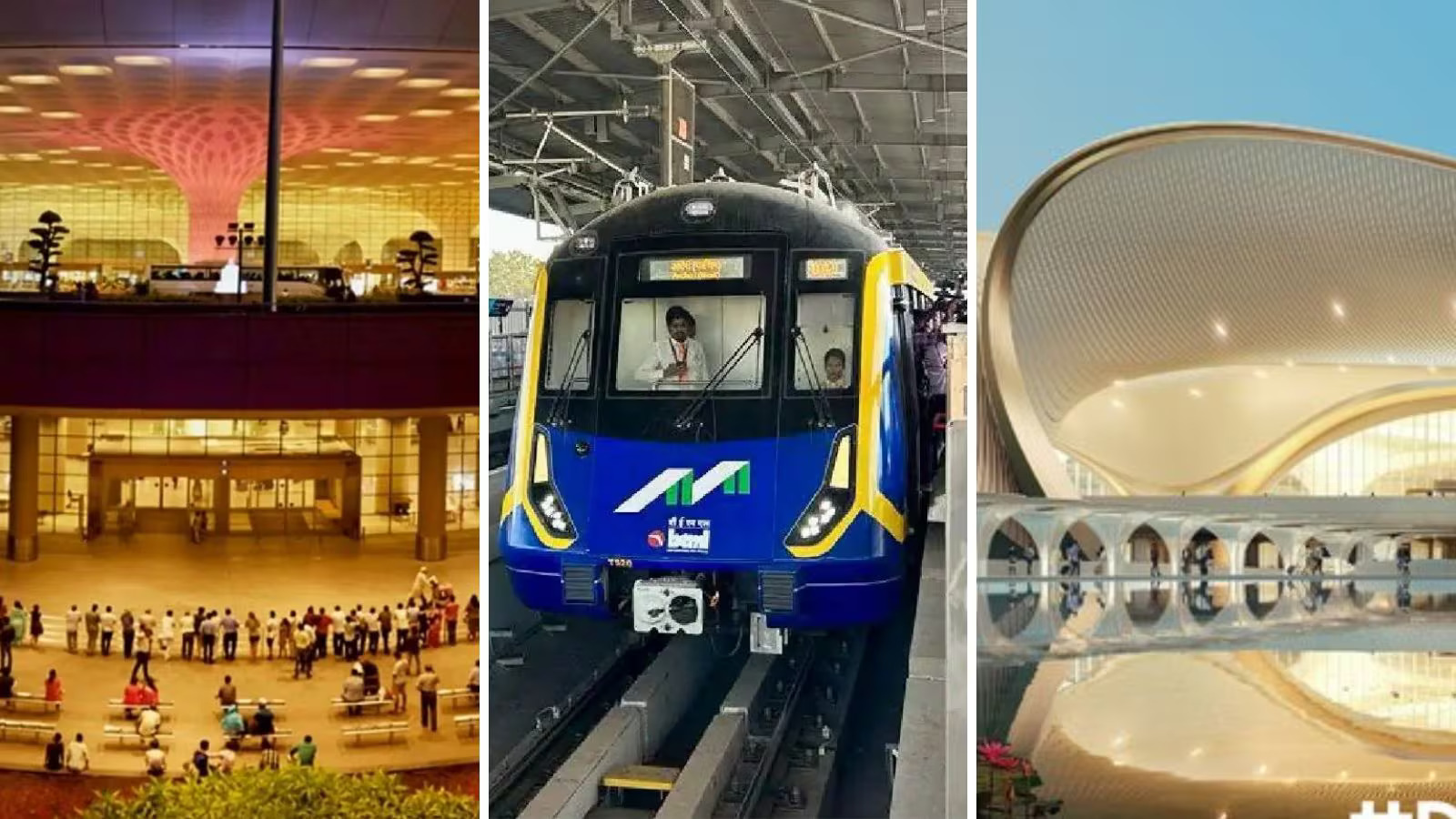
Mumbai is preparing for a significant leap in airport connectivity as authorities have invited consultants to reassess the long-planned Metro Line 8, which will connect Chhatrapati Shivaji Maharaj International Airport (CSMIA) with the upcoming Navi Mumbai International Airport (NMIA). The project, envisaged as a high-speed airport express corridor, is designed to reduce travel time between the two airports from nearly two hours by road to just about thirty minutes.
According to officials, the 35-kilometre line is estimated to cost Rs 15,000 crore and will be implemented under a public-private partnership (PPP) model. The tender process launched this week signals a fresh review of the project, with the consultant expected to re-examine the detailed plans, evaluate feasibility, and help shape the execution roadmap. Once construction begins, the project is likely to take at least six years to complete. Metro Line 8 will begin underground at Terminal 2 of CSMIA in Andheri before emerging onto an elevated stretch beyond Chedda Nagar. It will run through strategic locations such as Kurla, Lokmanya Tilak Terminus (LTT), Mankhurd and Vashi, before linking with the Navi Mumbai airport zone. Authorities are also considering integration with the planned Line 1A at Sagar Sangam, which would enhance connectivity for suburban commuters.
Earlier, responsibilities for different stretches were divided between the Mumbai Metropolitan Region Development Authority (MMRDA) and the City and Industrial Development Corporation (CIDCO). The Delhi Metro Rail Corporation had prepared the detailed project report for a 10-kilometre section from CSMIA to Mankhurd. With the state government granting approval for PPP implementation earlier this year, CIDCO is now leading the renewed effort to revive the plan. Designed for speeds of up to 90 km/h, the metro will operate as a limited-stop service with trains running at 15-minute intervals. Officials highlight that the express nature of the corridor will ensure consistent travel times regardless of road congestion or weather conditions. Preliminary fare estimates suggest short-distance rides could start at Rs 20, while an airport-to-airport journey may range between Rs 150 and Rs 180, although the final tariff structure has not been decided.
Experts argue that the project reflects Mumbai’s broader push for integrated, climate-resilient transport. By offering a sustainable alternative to road travel, the metro can reduce vehicular emissions, ease congestion on arterial highways, and set a benchmark for low-carbon urban mobility. At the same time, the reliance on a PPP model demonstrates how large infrastructure projects are increasingly balancing public oversight with private sector efficiency. For a city struggling with rising passenger volumes at its existing airport and mounting road congestion, Metro Line 8 represents more than a transport link—it signals a strategic shift towards faster, greener, and more equitable urban connectivity.
Also Read: Mumbai Under Orange Alert As Heavy Rains Expected To Intensify This Week
