


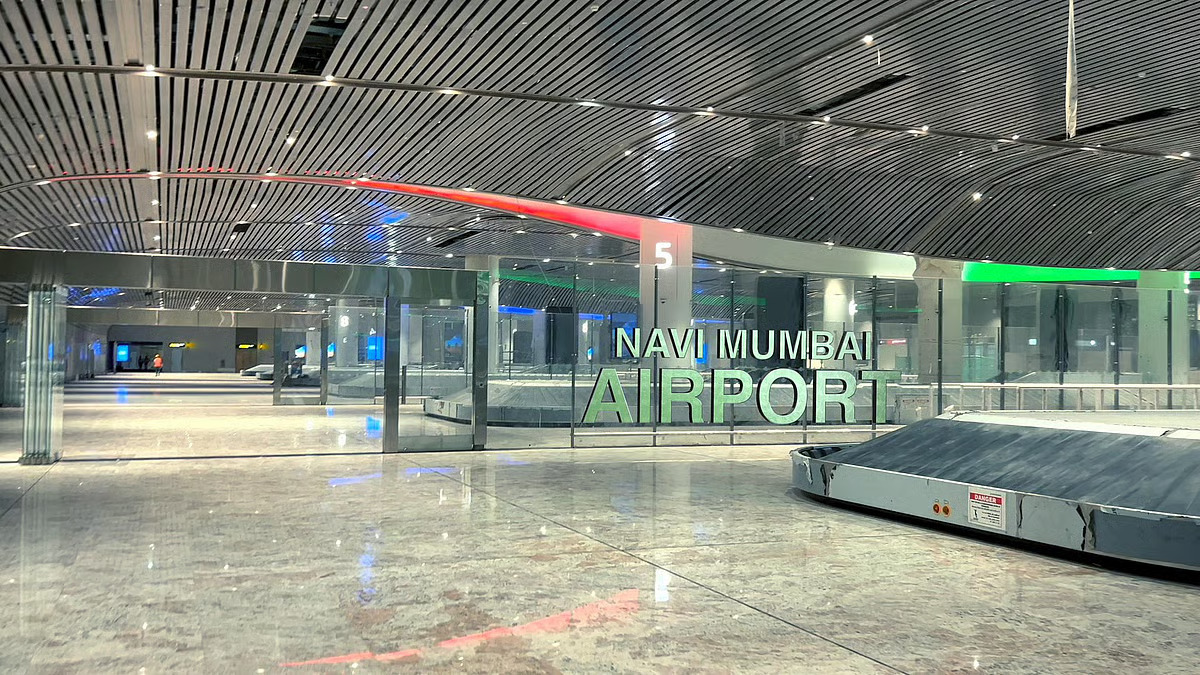
The upcoming launch of the Navi Mumbai International Airport (NMIA) on September 30 is being seen as a transformative development by residents of Pune and Pimpri-Chinchwad, who anticipate reduced travel time, improved connectivity, and enhanced global access. Designed with a lotus-inspired terminal and developed with an emphasis on modern, eco-friendly infrastructure, the airport is poised to become a game-changer for travellers and industries alike.
For years, flyers from Pune and its industrial belt have been reliant on Mumbai’s Chhatrapati Shivaji Maharaj International Airport, often enduring four-hour road journeys through heavy traffic. NMIA now offers a faster alternative, with Pune residents expected to reach the airport in nearly two and a half hours via the Mumbai-Pune Expressway. Industry experts note that this cut in travel time will encourage many passengers, especially those flying to Europe and other long-haul destinations, to choose Navi Mumbai over Mumbai or Bengaluru airports. Officials highlight that the airport’s first phase is nearly complete, with 60 daily flights expected to commence operations initially. Within six months, this number could rise to 300 daily services, dramatically increasing regional capacity. Phase one alone is designed to handle two crore passengers annually, while subsequent phases, with dual runways and four terminals, are projected to scale up the capacity to nine crore passengers per year.
Pune’s Lohegaon Airport, limited by a shorter runway and operational constraints, often witnesses delays and cancellations, creating bottlenecks for travellers. Residents believe NMIA will ease this strain by offering a supplementary international hub that can cater to both passenger and cargo demand. The city’s thriving industrial clusters in Talegaon, Chakan, and Bhosari are also expected to benefit significantly. With several multinational corporations hosting global executives, the proximity of NMIA provides a more efficient transit hub. Business leaders argue that improved access will not only save time but also strengthen Pune’s positioning as an international business destination.
Exporters in the region, particularly farmers supplying perishable goods such as fruits and vegetables, also view NMIA as a crucial development. Experts note that reduced distance and faster transit times will cut logistics costs and minimise spoilage, particularly for shipments with short shelf lives. This aligns with the broader sustainability narrative of reducing wastage and optimising supply chains. Authorities have announced that NMIA will be seamlessly connected through metro, rail, and dedicated bus services, including routes linking Pune, Dadar, Vashi, and Panvel. With a 47-MV solar power capacity integrated into its design, the airport further positions itself as a model for energy-conscious infrastructure in Maharashtra.
As Pune and Pimpri-Chinchwad brace for the start of operations, the NMIA is being seen not just as an airport but as a symbol of inclusive growth, sustainable urban connectivity, and a critical expansion of Maharashtra’s aviation capacity.
Also Read: Mumbai BEST To Run 25 Extra Buses Daily For Mahalakshmi Yatra Navratri
