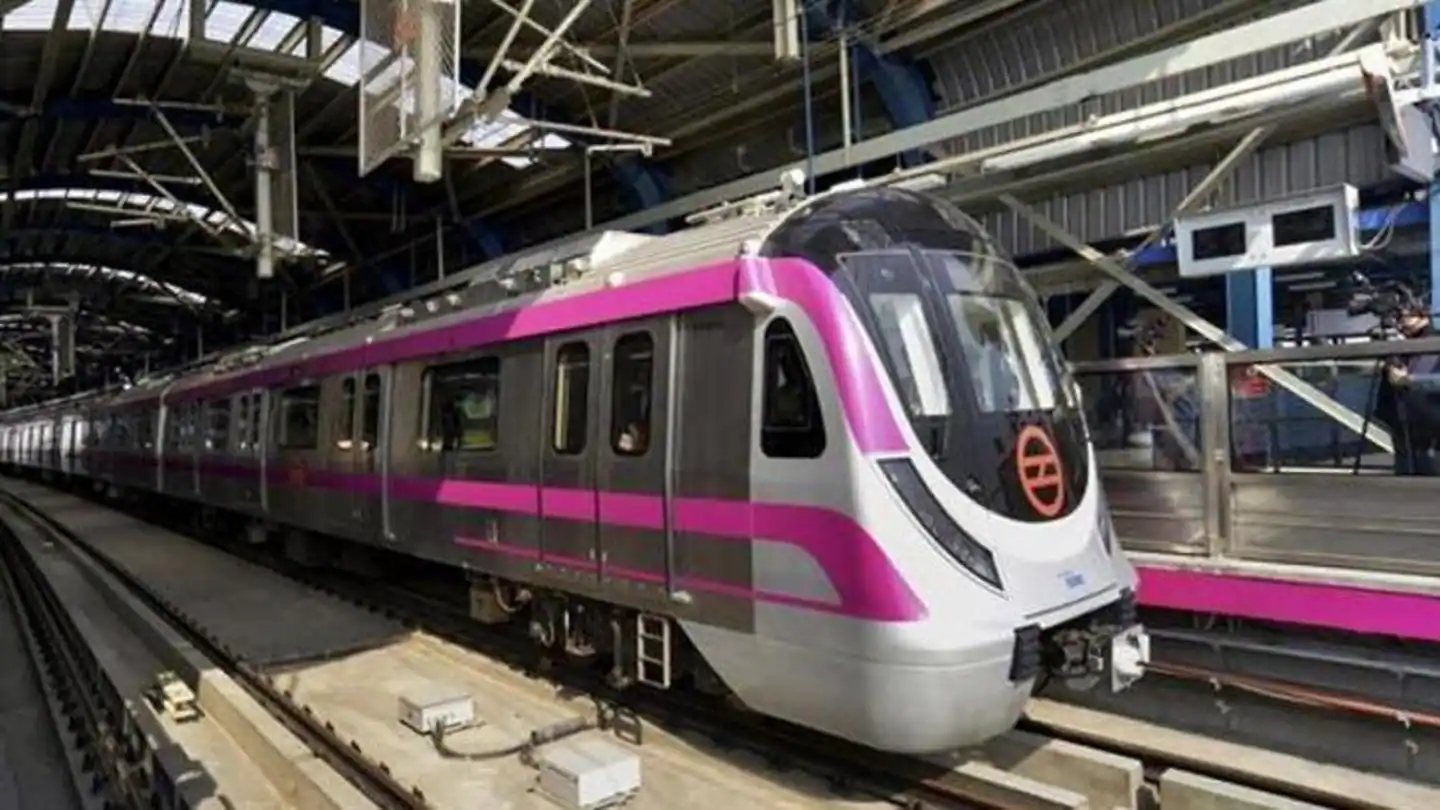
Delhi Pink Line Becomes Longest Metro Corridor With Twelve Interchange Stations
Delhi Metro is poised to set a new benchmark in urban connectivity as the Pink Line prepares to become the city’s longest corridor, spanning 71.6 kilometres with 46 stations. With the opening of the Majlis Park-Maujpur segment this month, the Pink Line will also achieve a network milestone by hosting 12 interchange stations, surpassing all other lines in the Delhi Metro Rail Corporation (DMRC) network.
Interchange stations play a pivotal role in facilitating efficient travel, allowing commuters to switch lines without exiting stations. Current DMRC analysis indicates that while 20–30% of passengers travel entirely on one corridor, the majority use metro lines to transfer, highlighting the importance of well-connected interchanges for urban mobility.Presently, the Pink Line has ten interchange stations, including Azadpur, Netaji Subhas Place, Punjabi Bagh West, Rajouri Garden, Dilli Haat-INA, Lajpat Nagar, Mayur Vihar I, Anand Vihar ISBT, Karkardooma, and Welcome. The upcoming stops at Maujpur and Majlis Park will extend connectivity further, making it the network’s most strategically linked line. By comparison, the Blue and Yellow Lines the busiest corridors have ten and eight interchanges, while the Red Line and Grey Line have four and one respectively.
The Pink Line’s phased development began in March 2018, with its first Majlis Park-Durgabai Deshmukh South Campus section opening that year. While land acquisition challenges temporarily split the corridor, the completion of the Trilokpuri-Sanjay Lake to Mayur Vihar Pocket 1 section in August 2021 ensured a contiguous route. With the current extension, the Pink Line will also become the city’s first circular metro route, enhancing operational efficiency and passenger convenience.
DMRC’s Phase IV expansion will further augment interchange capacity, increasing the number of interchange stations to 47. Key projects include the Tughlaqabad-Aerocity Golden Line with seven interchanges and the Janakpuri West-RK Ashram Magenta Line extension with three interchanges. Once completed, several stations including Azadpur, Lajpat Nagar, and New Delhi are expected to become triple interchange points, further boosting network fluidity.The expansion underlines Delhi Metro’s commitment to sustainable urban mobility.
By increasing interconnectivity and providing efficient alternatives to private vehicles, the Pink Line extension is expected to reduce congestion, lower emissions, and enhance commuter experience. Analysts predict that this development will also support equitable access to transportation, reinforcing the city’s vision for environmentally responsible and socially inclusive urban growth.With its extended reach and enhanced interchange capabilities, the Pink Line is set to transform daily commuting patterns, setting a new standard in Delhi’s public transport landscape.